China export growth beats forecasts in May on AI boom, Gulf war stockpiling
But beyond artificial intelligence, there are signs of strain in other sectors that suggest momentum may be starting to fade
 Add BT as a preferred source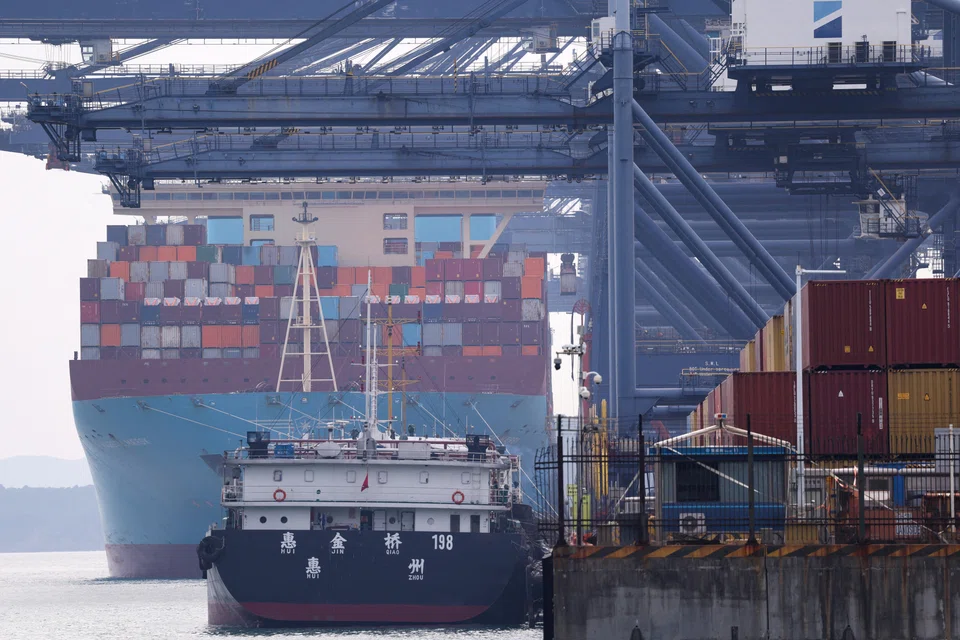
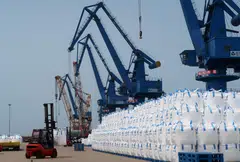
[BEIJING] China’s export growth accelerated in May, buoyed by robust demand for chips, autos and other high-tech goods fuelling the global artificial intelligence boom, providing policymakers some relief as energy price shocks from the Iran conflict weigh on broader demand.
A surge in global AI investment has helped the world’s top manufacturer offset the export hit many had expected from the Middle East turmoil. But signs are emerging that stockpiling linked to higher energy costs is fading, with prices rising and overseas buyers starting to run down inventories as they hold out for a ceasefire.
Exports expanded 19.4 per cent from a year earlier in US dollar value terms, customs data showed on Tuesday (Jun 9), outpacing the 14.1 per cent gain in April and a 15 per cent rise tipped by economists.
Imports notched another strong month, climbing 27.4 per cent versus a rise of 25.3 per cent a month prior. Economists had forecast growth of 25 per cent.
“Chip price increases continue to support exports, with memory prices rising 20 per cent month-on-month, pushing integrated circuit export growth to 111 per cent for the month,” said Xing Zhaopeng, ANZ’s senior China strategist.
China’s exports of automated data processing equipment soared 66.1 per cent in value terms year on year, high-tech products rose 50.9 per cent and shipments of cars jumped 39 per cent, the data showed.
“Looking ahead, the AI story is far from over – chips are rewriting China’s trade landscape,” Xing added.
The AI boom has driven strong demand for semiconductors powering data centres and advanced electronics, playing to China’s manufacturing strengths.
But beyond AI, there are signs of strain in other sectors that suggest momentum may be starting to fade. Furniture exports, for example, rose just 1.9 per cent year on year in May, while toy shipments fell 7 per cent and footwear exports dropped 10.4 per cent.
SEE ALSO





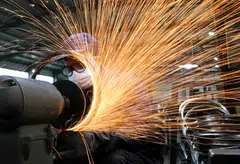
Separate factory activity data also showed a steep drop in new export orders last month from April’s two-year peak, when warehouse managers reported “booming” business amid a scramble by foreign factories to lock in supplies.
Strong exports powered China’s US$20 trillion economy past forecasts in the first quarter, but pockets of weakness in the export engine have reinforced concerns that fragile domestic demand leaves it exposed to weaker global conditions and increases the likelihood of further policy support.
China’s excess capacity stokes trade friction
Beijing is under growing international pressure to strengthen domestic consumption, as critics warn its heavy reliance on imported inputs and re-exports is distorting trade and squeezing other emerging economies out of higher-value manufacturing.
“Close attention must be paid to the risk of escalation between China and major trading partners such as Europe,” said Zhang Zhiwei, chief economist at Pinpoint Asset Management.
The Organisation for Economic Cooperation and Development amplified that concern last week, noting in a report that nearly 60 per cent of Chinese firms’ “market share gains can be explained by subsidies received”.
A new US Federal Reserve paper found that China’s trade surplus – measured against global GDP – has topped 1 per cent, well above the peaks Japan and Germany hit in the late 20th century, and shows little sign of narrowing.
China’s trade surplus, which topped US$1 trillion last year, came in at US$105.43 billion in May, up from US$84.8 billion a month prior and from a forecast of US$92.1 billion.
The latest trade figures suggest Chinese industrial overcapacity probably accounts for at least some of the shipments.
Exports to Europe rose 7.6 per cent year on year in May, while those to the US climbed 35.4 per cent and to South-east Asia increased 24.3 per cent.
Purchases from South Korea surged 83.6 per cent. China is Korea’s biggest chips market.
Rare earths flashpoint
China’s economic heft is also rippling through oil markets, with the world’s top energy buyer surprising traders by holding back purchases. Crude imports in May plunged 29 per cent to their lowest level in eight years, helping temper global prices and partially cushion the energy shock triggered by US President Donald Trump’s war in Iran.
A closely watched meeting last month between Trump and Chinese leader Xi Jinping helped cool tensions between the two superpowers but produced no meaningful breakthroughs, whether on tariff disputes or cooperation over ending the Iran conflict.
That said, China’s rare earth exports climbed to a four-month high, with the world’s top producer shipping 5,490 tonnes of the 17-element group essential for electric vehicles, wind turbines and defence technologies – another flashpoint in Beijing’s trade tensions with the West.
China’s relative advantages in scale, deep supply chains and industrial capacity leave it well-positioned to absorb trade frictions with the West, including proposed US tariff hikes over forced-labour concerns, said Sheana Yue, senior economist at Oxford Economics. “We still expect exports to be China’s primary growth driver in 2026, anchored by continued high-tech and clean-tech products despite war-related headwinds to global demand.” REUTERS
Decoding Asia newsletter: your guide to navigating Asia in a new global order. Sign up here to get Decoding Asia newsletter. Delivered to your inbox. Free.
Share with us your feedback on BT's products and services