Chinese exports to EU and S-E Asia will keep growing, and not just as transhipments
Economists say that US tariffs and supply chain integrations are setting up Chinese exports in the long run

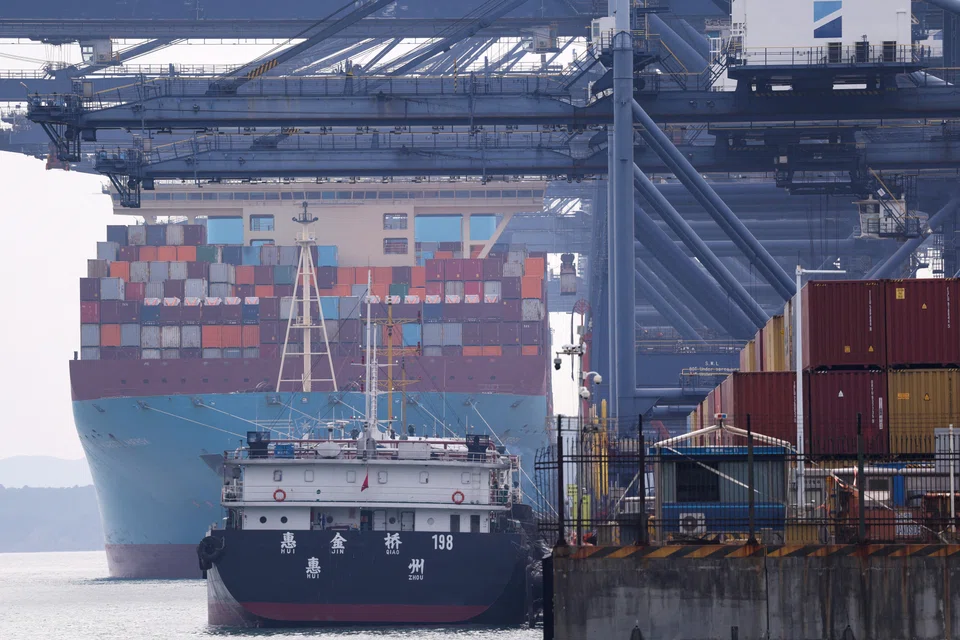
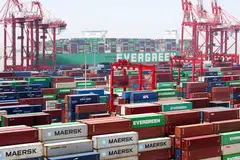
[SINGAPORE] More Chinese goods are set to enter global markets in South-east Asia and Europe – not just as transhipments rerouted into the US, but as trade diverted into these destinations for consumption.
Alan Taylor, professor of economics at Columbia University, said in a lecture on Friday (Jan 16) that while these trends can already be observed worldwide since US President Donald Trump’s tariffs were imposed in April 2025, such trade diversion is likely to continue in the next few years.
Prof Taylor noted in his lecture, organised by the National University of Singapore’s East Asian Institute, that the EU and the UK are also likely destinations for such trade diversions.
Such trade diversions have appeared historically when global trade flows were impeded by tariffs – such as during the Great Depression in the 1930s.
“Lots of different countries and blocs put up barriers against everybody else,” he noted.
Over several years, trade barriers resulted in countries raising the share of trade they carried out with allied economies, typically within their empires.
He suggested that while these trade diversions have already begun to shape global markets, the full impact of such trade realignments could take around 12 to 18 months to appear.
“These trade shocks could still be coming through in 2026 and 2027,” Prof Taylor noted.
“Trade networks don’t rearrange themselves overnight,” he added. “This is a slow burning phenomenon, and you can see it in history.”
The transhipment question
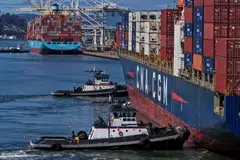
Within South-east Asia, trade dynamics are significantly driven by transhipments, where differences in US tariffs imposed on the region’s countries – compared to tariffs imposed on China – draw Chinese imports into the region for re-routing into the US.
“It is extremely challenging to quantify transhipment because trade data captures only the immediate destination, not the final market, and complex supply chains blur the line between re-exports and local consumption,” said Bank of America (BOA) economists Anna Zhou and Helen Qiao in a report on Friday.
They noted that the most common goods being re-exported to the US are likely smartphones and computer products, which enjoy tariff exemptions on consumer electronics.
Still, Prof Taylor noted that an uplift in Chinese exports to the EU and the UK – where transhipments are less common compared to regions such as South-east Asia – suggest that Chinese goods are entering new markets as an end destination.
A BOA report in November 2025 found that in the first 10 months of 2025, China’s exports to the US fell 17.8 per cent from the previous year, while exports to the EU and South-east Asia rose 7.5 per cent and 14.5 per cent on the year, respectively.
“It is more visible that the EU has become the key substitute for the US in terms of the developed market export destinations,” the BOA economists said in the report.
But South-east Asia’s integration with Chinese goods is not just happening along trade corridors. Instead, China’s supply chains are steadily becoming more deeply ingrained in the region’s countries – a structural tailwind for the region even if the tariff gap closes.
“Firms are increasingly establishing production facilities closer to their end markets to mitigate geopolitical uncertainty and trade-policy risks,” said Zhou and Qiao.
They noted that South-east Asia’s growing demand for Chinese goods has created more deeply entrenched manufacturing ecosystems in the region, particularly in sectors such as electric vehicles and batteries.
This integration is likely to keep China’s exports to South-east Asia strong in the year ahead, even if trade relations between the US and China normalise further, the BOA economists noted.
Trump is slated to meet Chinese President Xi Jinping four times this year, with an upcoming visit in April. Relations between the two countries have steadied after a trade truce in South Korea last October.
Decoding Asia newsletter: your guide to navigating Asia in a new global order. Sign up here to get Decoding Asia newsletter. Delivered to your inbox. Free.
Copyright SPH Media. All rights reserved.