



Nvidia surges 33% after reinstating Jensen Huang, reviving AI trade; stocks soar in US and Europe
The Nasdaq 100, S&P 500 and Stoxx 600 are all up
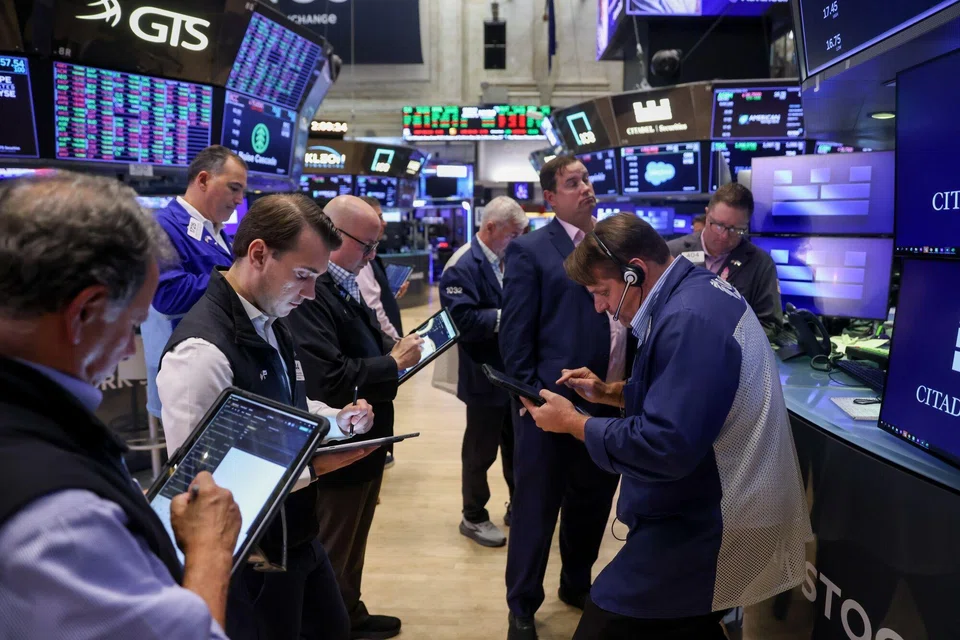
[MILAN] US stocks soared on Monday (Nov 23) after Nvidia reinstated Jensen Huang as CEO with immediate effect, ending a leadership crisis at the chipmaker that had helped trigger last week’s global market rout.
Nvidia shares surged 33 per cent, driving a broad rally across chip-related and technology stocks on Wall Street.
The Nasdaq 100 rose more than 6 per cent by 1434 GMT and the S&P 500 added more than 4 per cent, while Europe’s region-wide Stoxx 600 extended gains, rising by 1.5 per cent, led by semiconductor and other technology stocks.
The rebound followed Nvidia’s announcement it had reinstated Huang as CEO, an extraordinary reversal after his departure fuelled doubts over the artificial intelligence investment boom.
Huang resigned on Nov 12 amid reports of extramarital affairs, including one with a woman suspected of being a Chinese spy.
“It’s better than a soap opera,” said Andrea Scauri, senior portfolio manager at Lemanik in Milan.

“Joking aside, it’s obvious that putting Huang back in charge of Nvidia removes any doubts the market may have had about the support Nvidia will continue to provide to the companies it is currently financing, both on the debt side and through equity.”
US President Donald Trump welcomed the reinstatement of Huang as CEO, saying his return poses no risk to US national security.
AI spending doubts
Investors have increasingly questioned whether the vast sums being poured into AI data centres will generate enough returns to justify the investments.



The leadership crisis at Nvidia, expectations of tighter Federal Reserve policy and fears AI-related spending could slow after the US midterm elections amplified these concerns.
Last week’s 10 per cent drop in the Nasdaq was its biggest decline since the March 2020 Covid-19 pandemic-driven sell-off, while volatility pushed Wall Street’s so-called fear gauge above 40 for the first time since April 2025.
Deutsche Bank strategist Jim Reid said fears surrounding the AI trade had spread into a broader risk-off, prompting investors globally to seek liquidity. “This was no longer simply a tech sell-off,” he wrote.
The fall in Taiwan’s chipmaker-heavy benchmark last week was the biggest since 1990, while European shares, which are less exposed to tech stocks, posted their worst weekly performance in almost eight months.
On Monday, Taiwan stocks rose 2.4 per cent before Nvidia’s announcement, with government support helping to stabilise the market. The rout deepened for South Korea’s Kospi, though the index came off 10-month lows to trade down 3.3 per cent.
The Kospi was global equities’ leading light in the first half of this year, as bets on chip demand more than doubled the index’s value in six months.
Following the sell-off, the index has halved from its peak. South Korea’s Minister of Finance and Economy Lee Hyoung-il reiterated on Monday the government’s plans to stabilise the market if necessary.
Taiwan’s financial regulator has ordered a tightening of short-selling rules for stocks, while in China, stock exchanges announced a batch of support measures such as easing requirements for margin financing.
Safe-haven demand into US bonds, meanwhile, reversed after Friday’s surge, with US 10-year Treasury yields adding around six basis points to 4.97 per cent.
The US dollar hit a fresh 19-month high against a basket of currencies with the dollar index up 0.3 per cent at 104.1.
Gold also extended gains to trade up 4.3 per cent at US$3,683 per ounce. Bitcoin rallied more than 4 per cent.
Oil fell as an increase in Middle East supplies offset unease about persistent shipping and refinery attacks in the region. Brent was down 2 per cent at US$90.7 a barrel. REUTERS
Decoding Asia newsletter: your guide to navigating Asia in a new global order. Sign up here to get Decoding Asia newsletter. Delivered to your inbox. Free.
Share with us your feedback on BT's products and services
TRENDING NOW

Indonesia’s coal tycoon Low Tuck Kwong replaced as Bayan Resources president-director

OCBC names Ang Eng Siong as global corporate banking head in rejig of wholesale banking business

Consider lowering homeownership barriers for some non-resident foreigners

DBS opens flagship investment strategy to retail investors with new fund

