



Iran warns US Navy to stay clear of Hormuz after Trump says US to help stranded ships
A tanker was reportedly hit by unknown projectiles in the strait soon after Trump’s comments
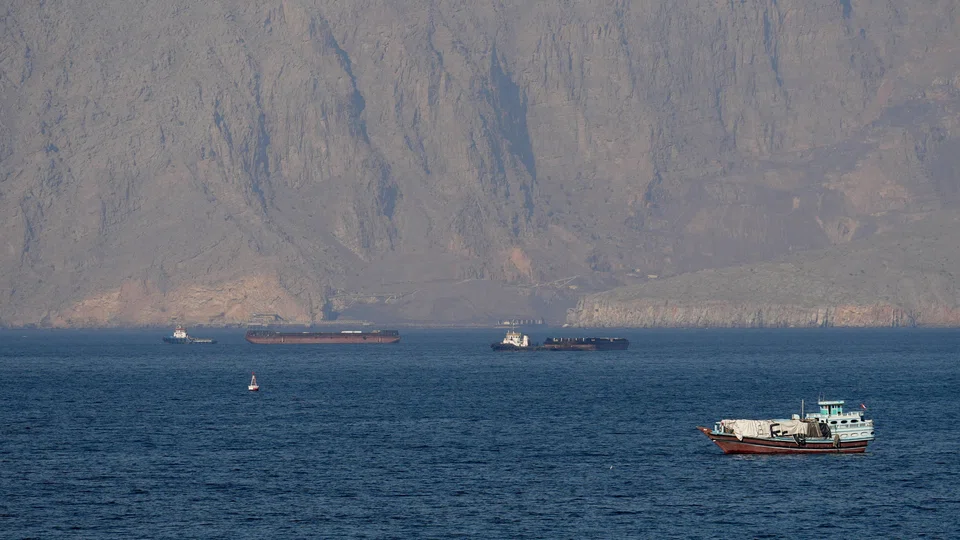
[DUBAI/DORAL, Florida] Iran’s military warned US forces on Monday (May 4) not to enter the Strait of Hormuz after President Donald Trump said the US would start helping to free ships stranded in the Gulf by the US-Israeli war on Iran.
Trump gave few details of the plan to aid ships and their crews that have been “locked up” in the vital waterway and are running low on food and other supplies.
“We have told these Countries that we will guide their Ships safely out of these restricted Waterways, so that they can freely and ably get on with their business,” Trump said in a post on his Truth Social site.
The unified command of Iran’s armed forces responded by warning US forces to stay out of the strait.
Its forces would “respond harshly” to any threat, it added, telling commercial ships and oil tankers to refrain from any movement in the absence of coordination with Iran’s military.
“We have repeatedly said the security of the Strait of Hormuz is in our hands and that the safe passage of vessels needs to be coordinated with the armed forces,” Ali Abdollahi, the head of the forces’ unified command said in the statement.
“We warn that any foreign armed forces, especially the aggressive US army, will be attacked if they intend to approach and enter the Strait of Hormuz.”
US Central Command said it would support the effort with 15,000 US military personnel, more than 100 land and sea-based aircraft along with warships and drones.
“Our support for this defensive mission is essential to regional security and the global economy as we also maintain the naval blockade,” Admiral Brad Cooper, the Centcom commander, said in a statement. Hundreds of ships and as many as 20,000 seafarers have been unable to transit the strait during the conflict, the International Maritime Organization says.
SEE ALSO



Soon after Trump’s comments, the United Kingdom Maritime Trade Operations agency said a tanker had reported being hit by unknown projectiles in the Strait.
The agency said all crew were reported safe in the incident, which occurred 78 nautical miles north of Fujairah, in the United Arab Emirates, but few details were immediately available.
Iran has been blocking nearly all shipping from the Gulf apart from its own for more than two months, sending energy prices soaring.
Some vessels attempting to transit the Strait have reported being fired on, and Iran seized several other ships. In April, the US imposed its own blockade of ships from Iranian ports.
The Trump administration has been seeking help from other countries to form an international coalition to secure shipping in the strait. Centcom said the latest effort would combine “diplomatic action with military coordination.”
It was not immediately clear which countries the US operation would aid or how the operation would work. It will not necessarily include US Navy ships escorting commercial ships, Axios reporter Barak Ravid said in a post on X.
The White House did not immediately respond to a request for comment. Trump threatened that any interference with the US operation would “have to be dealt with forcefully.”
Iran reviewing US response on peace proposal
Equity markets edged higher on Monday while crude oil prices were little moved, having surged back above US$100 a barrel in the week of Apr 27 amid uncertainty over when and how the conflict will be resolved.
On Sunday, Iran said it had received a US response to its latest offer for peace talks a day after Trump said he would probably reject the Iranian proposal because “they have not paid a big enough price.”
Trump, responding to shouted questions from reporters, said on Sunday evening that talks were going “very well” without elaborating.
Iranian state media reported that Washington had conveyed its response to Iran’s 14-point proposal via Pakistan, and that Teheran was now reviewing it. There was no immediate confirmation from Washington or Islamabad of the US response.
“At this stage, we do not have nuclear negotiations,” state media quoted Iran’s Foreign Ministry spokesperson Esmaeil Baghaei as saying.
The comment was an apparent reference to Iran’s proposal to set aside talks on nuclear issues until after the war has ended and the foes have agreed to lift opposing blockades of Gulf shipping.
The US and Israel suspended their bombing campaign against Iran four weeks ago, and US and Iranian officials held one round of talks. But attempts to set up further meetings have so far failed.
Teheran’s proposal and Washington’s demands
The proposal to delay talks on nuclear issues until a later phase would appear at odds with Washington’s repeated demand that Iran accept stringent restrictions on its nuclear programme before the war can end.
Washington wants Teheran to give up its stockpile of more than 400 kg of highly enriched uranium, which the US says could be used to make a bomb.
Iran says its nuclear programme is peaceful although it is willing to discuss some curbs in return for the lifting of sanctions. It had accepted such curbs in a 2015 deal that Trump abandoned.
While saying repeatedly he is in no hurry, Trump is under domestic pressure to break Iran’s hold on the Strait of Hormuz, which has choked off 20 per cent of the world’s oil and gas supplies and pushed up US gasoline prices. Trump’s Republican Party faces the risk of a voter backlash over higher prices in midterm congressional elections in November.
Iranian media said Teheran’s 14-point proposal includes withdrawing US forces from nearby areas, lifting the blockade, releasing frozen assets, paying compensation, lifting sanctions, ending the war on all fronts including Lebanon and creating a new control mechanism for the strait. REUTERS
Decoding Asia newsletter: your guide to navigating Asia in a new global order. Sign up here to get Decoding Asia newsletter. Delivered to your inbox. Free.
Share with us your feedback on BT's products and services
TRENDING NOW

LTA proposes combining car COE categories, adding rebate-surcharge system

StarHub to acquire MyRepublic’s mobile business amid ongoing telco consolidation

DBS, OCBC, UOB rout lops billions off STI as inflation, rate concerns spook investors

Grab CEO’s wife Chloe Tong on life with Anthony Tan and finding her purpose

