



US Treasury’s Bessent, Chinese Vice-Premier He Lifeng hold talks in South Korea ahead of Trump-Xi summit
The discussions are expected to cover a range of issues to prepare for talks in Beijing
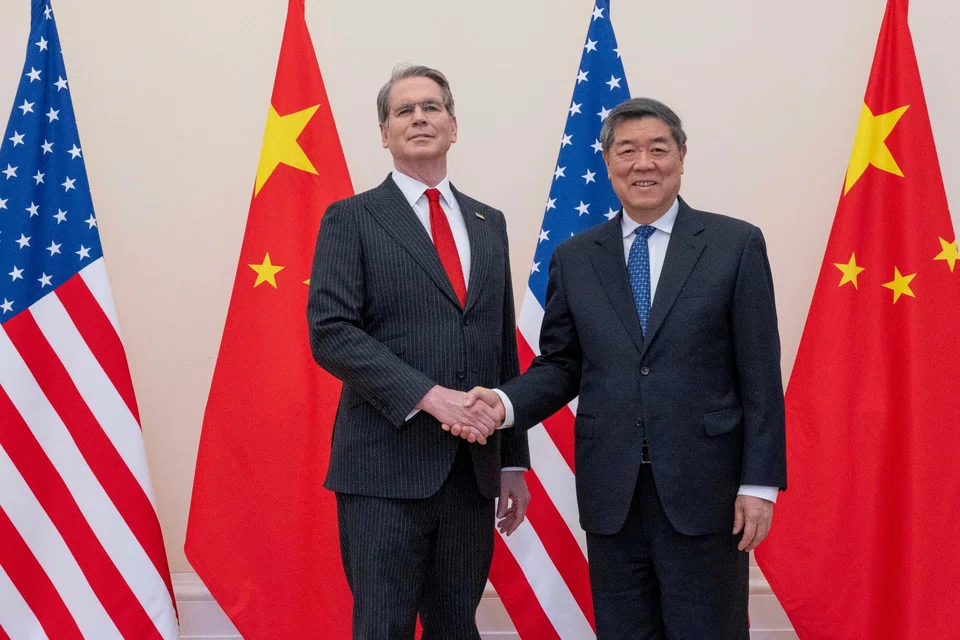
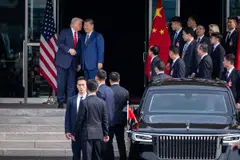
[INCHEON, South Korea] US Treasury Secretary Scott Bessent and Chinese Vice-Premier He Lifeng started talks in South Korea on Wednesday (May 13) to lay the groundwork ahead of this week’s summit of the leaders of the world’s two biggest economies in Beijing.
Bessent and He began the talks at Incheon airport after each met South Korean President Lee Jae-myung at the presidential Blue House, Reuters witnesses said.
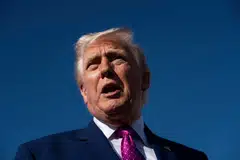
The discussions are expected to cover a range of issues to prepare for talks in Beijing between US President Donald Trump and Chinese President Xi Jinping that are set to run from Thursday to Friday.
The talks between Bessent and He were likely to be exploratory with limited immediate outcomes, said Kim Tae-hwang, a professor of international trade at Myongji University in Seoul.
“Both sides are essentially in a holding pattern ahead of the summit, sounding each other out, rather than seeking breakthroughs,” he said.
China’s lead trade negotiator, Vice-Commerce Minister Li Chenggang, and Vice-Finance Minister Liao Min were among the officials accompanying He.
At the Beijing summit, the leaders are expected to agree to set up forums to ease mutual trade and investment, while China is expected to announce purchases related to Boeing airplanes, American agriculture and energy, US officials have said.
Beijing also wants the US to relax curbs on exports of advanced semiconductors, and has raised concerns about a Bill to keep critical chip-making equipment from China.
They are considering extending a truce on China’s export curbs on rare earths at the summit, but Chinese customs data shows Beijing is still throttling shipments of the materials vital for defence and manufacturing.
SEE ALSO


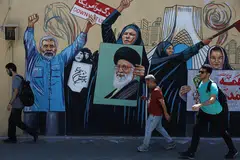
The summit talks may also encompass the Iran war, as China, which maintains ties with Iran, is a major buyer of its oil.
Trump said on Tuesday, however, he did not think he would need China’s help to end the conflict, even as hopes for a lasting peace deal dwindled and Teheran tightened its grip over the Strait of Hormuz.
Neither side has strong incentives to make early concessions, however, said Kim, the academic, adding that the US is unlikely to ease curbs on key technologies such as semiconductors.
China, in turn, buoyed by relatively resilient growth and trade performance, is under less pressure to offer significant compromises, he said. REUTERS
Decoding Asia newsletter: your guide to navigating Asia in a new global order. Sign up here to get Decoding Asia newsletter. Delivered to your inbox. Free.
Share with us your feedback on BT's products and services
TRENDING NOW

DBS, OCBC, UOB rout lops billions off STI as inflation, rate concerns spook investors

Grab CEO’s wife Chloe Tong on life with Anthony Tan and finding her purpose

OCBC sheds S$8 billion in value as shares close nearly 6% down; analysts cautious on banks

Deal between tycoon friends sparks scrutiny of Philippine power sector

