Wall Street is helping China build a global renminbi
US companies are issuing more yuan-dominated bonds to tap into vast Chinese savings
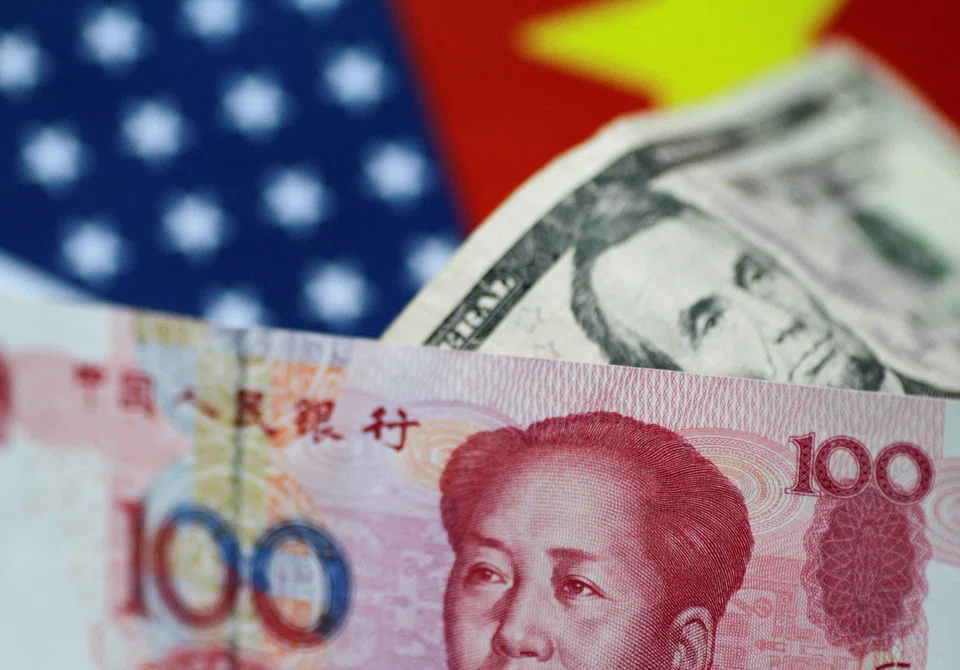
IT WAS a hamburger giant that introduced corporate America to dim sum – not the dumplings, but the offshore renminbi debt commonly known by that name.
And now, after two turbulent eras and multiple rebirths, it is Wall Street’s turn to tap the market in Hong Kong – though for reasons very different from when McDonald’s sold these bonds 16 years ago.
The world’s systemically important banks have raised 134 billion yuan (US$20 billion) in dim sum bonds so far this year, nearly treble their total for all of 2025.
Citigroup, Barclays and BNP Paribas are the biggest issuers, indicated data compiled by Bloomberg. Wells Fargo has seen its issuance jump by more than 10 times, while Goldman Sachs has roughly trebled its volume.
Consider how improbable this looks geopolitically. Globalisation is supposedly in retreat. The US and China are locked in strategic competition over everything from artificial intelligence to the future of the global monetary system.
So why are Western banking institutions embracing the Chinese currency? Bank of America, itself a major issuer, noted that the offshore renminbi has overtaken the British pound to become the third-largest funding currency for global banks.

This all feels very different from previous cycles. In the aftermath of the 2007 to 2008 global financial crisis, investors saw the reminbi as close to a one-way bet – they expected it to steadily appreciate and were therefore willing to accept minuscule coupons.
Corporate America was an unlikely beneficiary. Companies expanding in China – such as McDonald’s – could borrow cheaply in renminbi and spend the proceeds there, matching their debt with local currency revenues.
Others could swap the proceeds back into US dollars, effectively turning investors’ appetite for renminbi appreciation into synthetic US dollar funding at a steep discount to US borrowing costs.
SEE ALSO
The shock 2015 devaluation of the renminbi ended that craze. To prevent the more freely traded offshore currency – the CNH – from becoming a weapon for speculators betting against the onshore renminbi, Beijing engineered a brutal liquidity squeeze, briefly driving overnight CNH borrowing costs in Hong Kong to 66.8 per cent in 2016.
A second boom, fuelled by Chinese developers seeking alternatives to US dollar debt, ended with the collapse of China Evergrande Group.
Access to Chinese savings
The third era rests on a very new foundation. Forget the financial engineering that drove the first boom – the currency-swap arbitrage that once turned cheap renminbi debt into even cheaper US dollar funding has largely disappeared.
The prize today is access to China’s vast, captive reservoir of savings. Chinese technology giants such as Tencent and Alibaba are already drawing on it to finance their AI expansion at coupon rates far below comparable US dollar yields.
Increasingly, Wall Street wants access to that pool of money, too.
Ready issuers are finding willing investors. With mainland property in a deep funk and domestic yields near historic lows, Chinese insurers, asset managers and wealthy individuals are starved for returns.
Yet, Beijing cannot allow that money to flow freely overseas without risking destabilising capital outflows. Its solution is a calibrated pressure valve: the Southbound Bond Connect, which lets mainland investors put money to work offshore while largely keeping it within the renminbi ecosystem.
The consequences are transforming the financial centre at the heart of the West’s engagement with China. For the first time, banks in Hong Kong are on course to arrange more bond sales in renminbi than in US dollars.
The shift could accelerate as Beijing, having recently allowed mainland pension savings to flow south, makes fuller use of the city’s deep capital markets to expand the renminbi’s role as an international funding currency.
Recycling Chinese savings offshore is only half the equation. Beijing also wants to reduce its exposure to Western sanctions. Russia provided a harsh lesson: After the invasion of Ukraine, the G7 and its partners immobilised about US$300 billion of Russian central bank reserves.
For China, the implication was difficult to ignore. In a confrontation with the West, dependence on US dollar assets, correspondent banks and Western-dominated payment networks could become a strategic vulnerability.
Alternative payment rails such as Project mBridge, the multi-central-bank platform that can reduce reliance on the US dollar-dominated correspondent-banking system, offer part of the answer.
But plumbing alone is not enough. As China encourages more trade and energy contracts to be settled in renminbi, the recipients of that currency need somewhere attractive to put it.
That requires deep, liquid renminbi capital markets where offshore wealth can earn a return without first being converted into US dollars.
This is already happening. Mainland-linked investors in Hong Kong, Singapore and Taiwan still absorb the lion’s share of dim sum notes, but sovereign wealth funds, central banks and other buyers across Belt and Road markets are gaining ground.
Institutions outside Asia, which accounted for just 3 to 4 per cent of primary allocations before 2022, now take 8 to 10 per cent of new-issue books, indicated trading platform Tradeweb.
The renminbi is nowhere near challenging the greenback. Its share of global central banks’ reserve assets is a little over 2 per cent.
However, the search for an alternative to the US dollar is real, and the irony is hard to miss.
Even as Washington debates financial decoupling and policymakers fret about the renminbi’s expanding international role, America’s megabanks are tapping the very pools of Chinese capital that are helping to deepen the offshore market in Hong Kong.
Instead of retreating from globalisation, Wall Street is quietly helping Beijing turn the renminbi into a viable funding currency – one dim sum bond at a time. BLOOMBERG
Decoding Asia newsletter: your guide to navigating Asia in a new global order. Sign up here to get Decoding Asia newsletter. Delivered to your inbox. Free.
Share with us your feedback on BT's products and services