

Implementation is the next test for Asean’s digital economy pact, power grid: PM Wong
He urges countries to pursue practical projects to boost regional digital and energy connectivity

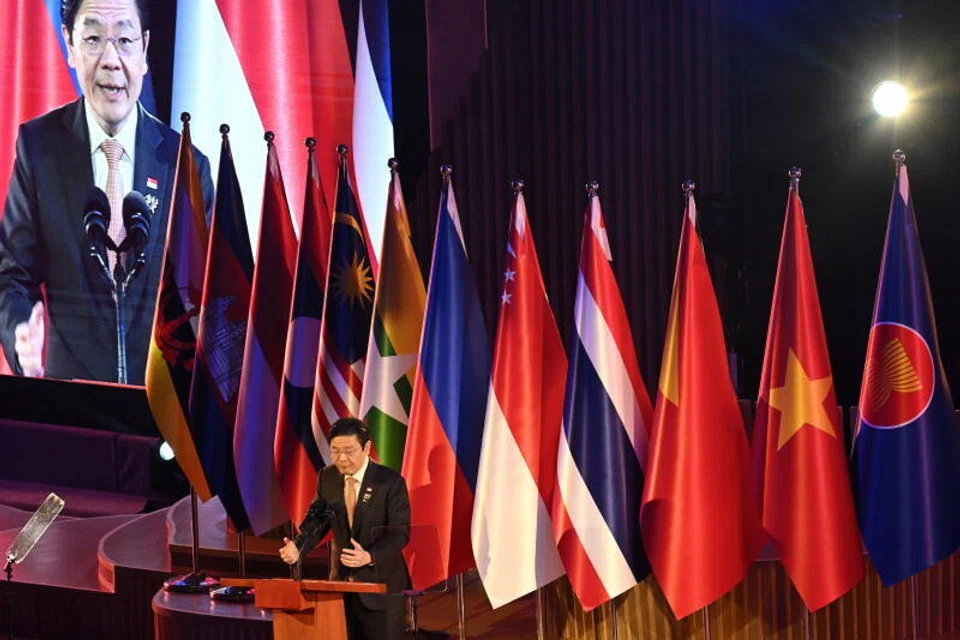
[MANILA] Turning Asean’s newly signed digital economy agreement into tangible benefits will be the region’s next test, Prime Minister Lawrence Wong said on Tuesday (Nov 17), as he urged countries to pursue practical projects to strengthen economic connectivity.
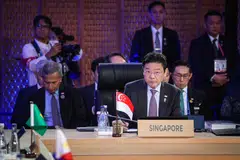
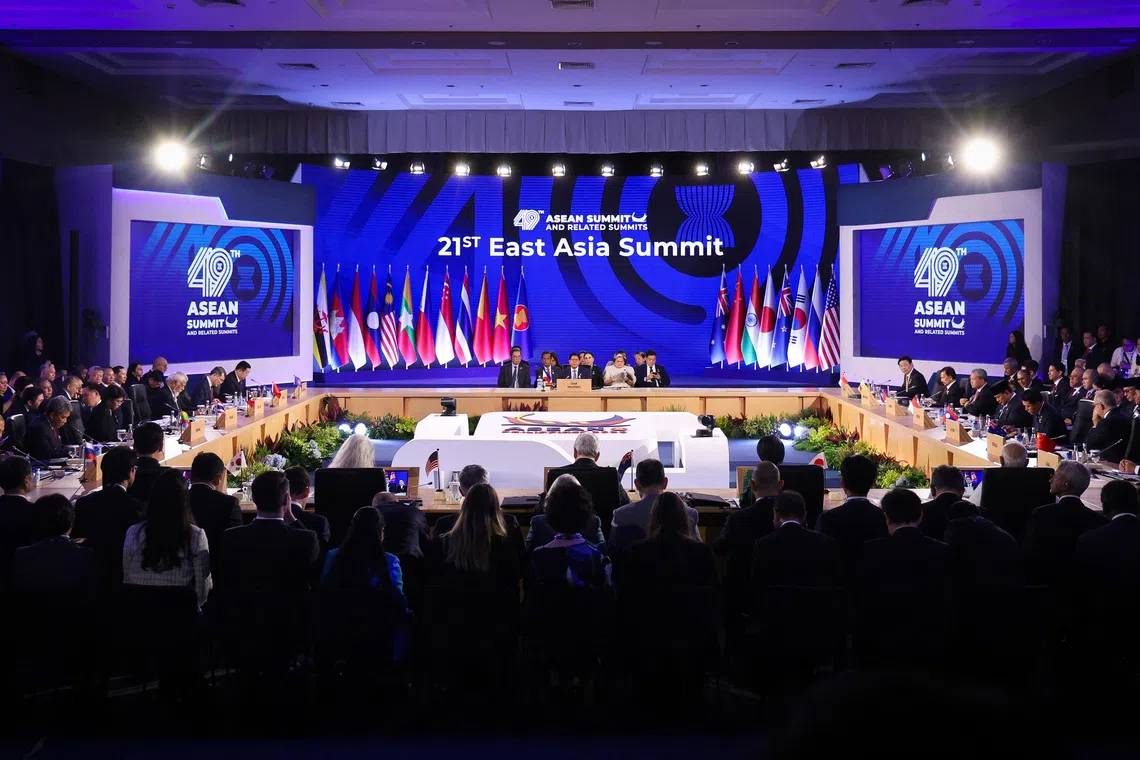
Speaking at the 21st East Asia Summit (EAS) on the final day of the 49th Asean Summit in Manila, PM Wong said that the Asean Digital Economy Framework Agreement (Defa) is an important step towards regional integration, but implementation would be crucial.
“The next test is implementation,” he noted, calling for closer cooperation with external partners to improve digital connectivity and interoperability across the region.
Defa, which was signed on Nov 14, aims to make cross-border digital trade and transactions easier by reducing barriers and bringing countries’ digital rules and systems closer together.
PM Wong said that a similar push is needed on energy, particularly through the Asean Power Grid, a project targeted for full integration by 2045 that seeks to connect national electricity networks and enable power to be traded across borders.
Asean is working on cross-border connections, regulatory arrangements for electricity trade and financing, he added.

EAS partners could contribute technical expertise while gaining new investment opportunities. “So we should task our relevant ministers to identify practical projects that EAS members can take forward together, drawing on our complementary strengths.”
The EAS brings together Asean and eight partners, including China, Japan, India and the US for discussions on strategic and economic issues.
PM Wong said that Singapore will co-host a seminar with Indonesia and Australia next week on submarine power cables and the Asean Power Grid.
SEE ALSO
Making energy projects viable
At the Asia Zero Emission Community (AZEC) Leaders Summit, PM Wong explained why renewable energy projects have struggled to get off the ground, even as demand for electricity rises with the spread of digital technologies and artificial intelligence.
Asia remains heavily reliant on fossil fuels, including imported oil and gas vulnerable to supply disruptions, he said. Countries must therefore strengthen energy security while pressing ahead with decarbonisation.
Many South-east Asian countries have considerable renewable energy potential, but projects have struggled to attract sufficient investment.
“Many of these projects are not yet commercially viable or bankable,” pointed out PM Wong. “And the key to commercial viability is to aggregate our demand across the region through a power grid.”
By linking markets, a regional grid could give renewable energy producers access to more buyers, making projects more attractive to investors, he said.
PM Wong cited emerging connections involving Laos, Thailand, Malaysia and Singapore; Vietnam, Malaysia and Singapore; as well as southern Mindanao in the Philippines and Sabah in Malaysia. But greater efforts are needed to scale up implementation and overcome regulatory hurdles, he said.
Singapore is also seeking to mobilise private investment through its Financing Asia’s Transition Partnership, which uses concessional capital, offered on more favourable terms than commercial funding, to lower financing costs for energy transition projects.
PM Wong welcomed Japan and Australia’s participation in the platform.
Working with external partners
The focus on turning plans into projects also featured at the 29th Asean-Japan Summit, where PM Wong said Japan’s expertise would be valuable in implementing the Asean Power Grid.
Defa will create opportunities for businesses to reach a more connected regional market, while the Asean-Japan AI Safety and Security Cooperation Framework will help support responsible use of the technology, he explained.
Asean and Japan also adopted a Joint Statement on Realising Economic Resilience, covering cooperation on energy, food and supply chains.
At the 29th Asean Plus Three Summit, involving China, Japan and South Korea, PM Wong welcomed efforts to strengthen the Chiang Mai Initiative Multilateralisation. The regional currency swap arrangement serves as a financial safety net for members facing liquidity pressures.
Leaders also adopted statements on food and energy security, as well as maritime trade and logistics connectivity.
PM Wong said that Asean could draw on the three partners’ strengths in digital infrastructure, advanced manufacturing and AI to advance Defa and the power grid.
Meanwhile, at the 23rd Asean-India Summit, he called for a timely and substantive conclusion to the review of the Asean-India Trade in Goods Agreement. The pact, concluded in 2009, aims to reduce trade barriers, while the review seeks to update it to reflect changes in both economies and unlock further trade and investment opportunities.
PM Wong also urged Indian businesses to use Defa to invest in South-east Asia and expand their digital services, and called for closer cooperation on maritime security and disaster preparedness.
Beyond trade and energy, he raised the impact of AI on jobs and livelihoods at the East Asia Summit. He suggested that participating countries develop common AI literacy competencies, share approaches to including AI in school curricula and strengthen teacher training.
He also welcomed an EAS statement on combatting online scams and related offences.
As Singapore prepares to chair the EAS in 2027, PM Wong said that it would seek to advance practical cooperation while keeping the forum open and inclusive. “By working together on shared challenges, we can build trust, manage our differences wisely, and advance our common interests in a peaceful, stable and prosperous region.”
Decoding Asia newsletter: your guide to navigating Asia in a new global order. Sign up here to get Decoding Asia newsletter. Delivered to your inbox. Free.
Copyright SPH Media. All rights reserved.
TRENDING NOW
‘If there’s a price to be paid, so be it’: George Yeo says Singapore must safeguard its reputation

South-east Asia has lost Nvidia’s best salesman
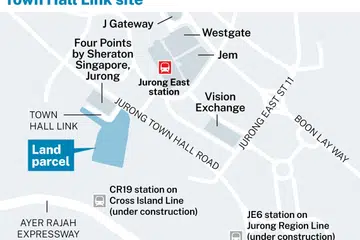
CapitaLand, Far East, Sing Holdings team up for S$1.8 billion bid at S$910 psf ppr for Jurong Lake District site

Beyond the greenback, Vietnam’s big borrowers turn to Asian-currency bonds

