

No seat, no cards at the table: Europe fears being the loser in Trump-Xi deal-making
What now unsettles Europe’s governments is the prospect of a Sino-American accommodation, on terms set by Washington and Beijing
[BRUSSELS] For years, the nightmare scenario feared by European governments was that of a major confrontation between the United States and China: Trade tariffs spiralling ever higher, supply chains severed, a clash over Taiwan that would divert US attention from Russia – Europe’s biggest threat.
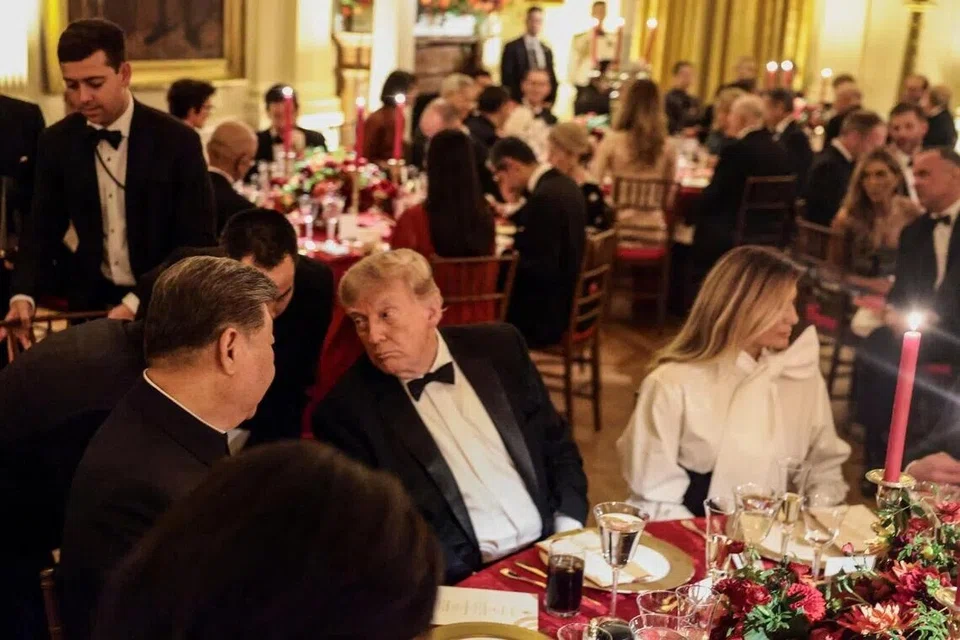
This week’s state visit by Chinese President Xi Jinping to Washington has suddenly inverted that fear. What now unsettles Europe’s governments is the prospect of a Sino-American accommodation, on terms set by Washington and Beijing but with the costs exported to everyone else.
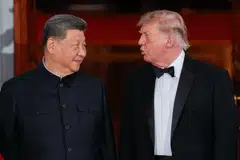
Officially, Europe is maintaining diplomatic silence. No European leader has applauded the sight of President Donald Trump walking down a red carpet to greet Xi at the aircraft steps, an extraordinary courtesy last accorded to a European – a British prime minister – more than six decades ago.
The European Commission, the European Union’s executive body, has also kept its counsel. But the silence is that of a spectator anxious about the outcome of a spectacle.
European policy experts point out that the very fact the latest Washington summit produced few tangible outcomes is a danger for the “old continent”.
European decision-makers fear a summit that settles nothing in particular, but confirms Washington and Beijing’s intention to keep bargaining – at the Asia-Pacific Economic Cooperation meeting in Shenzhen in November and the Group of 20 summit in Miami in December – entrenches a pattern in which the world’s two largest economies trade concessions between themselves and present the resulting bill to third parties.
Alicia García-Herrero, a noted economist affiliated with Bruegel, a prominent Brussels-based think-tank, summed up well the European predicament in her Substack posting. The EU’s market access to critical inputs, she wrote, “is being negotiated in a bilateral channel where Europe has no seat, and the cards for that negotiation (arms sales to Taiwan, tariffs, Middle East cooperation) are not Europe’s”.
On debates about artificial intelligence, Garcia-Herrero added, Europe is “non-existent” as a dialogue partner.
Yet every US trade tariff that is applied to China is – as seen from Brussels – a Chinese diversion export impetus to Europe.
Back of the queue
The EU’s deficit with China now runs at roughly €1 billion (S$1.46 billion) a day, a level that Commission President Ursula von der Leyen warned on Sept 18 had reached a “tipping point”. Brussels opened negotiations with Beijing in June and set an October deadline for tangible progress.
Europe had hoped to approach this deadline in step with Washington. That hope appears to have evaporated in Washington this week. Worse still, a US-China diplomatic truce reduces Beijing’s incentive to offer Brussels anything.
Discussions between China and the US over access to rare earth materials and magnets further expose Europe’s weakness. Whatever access Washington extracts from Beijing will serve US firms. European industry, including a European defence sector now expected to rearm the continent’s armed forces, remains at the back of the queue in access to critical materials.
But the biggest concern for the Europeans is the security implications of the latest China-US summit. The Sanctioning Russia and Iran Act, which Trump signed on Sept 18, authorises tariffs of up to 100 per cent on major buyers of Russian oil and gas, and China is the largest single customer for Russian crude.
Yet although Ukraine was reportedly discussed in the White House meetings between Xi and Trump, there is no indication that the US will put pressure on China to reduce Beijing’s support for Russia’s war machine.
Ultimately, the Europeans have only themselves to blame for their marginalisation. EU officials in Brussels want Washington to be tough on Chinese trade practices, but do not want the US to impose the tariffs that divert Chinese goods to Europe.
Europe also wants Beijing to restrain Moscow, but the EU does nothing to impress upon China that it stands to pay a punitive economic price for covertly sustaining the Russian war against Ukraine while expecting the US to do so.
The EU wants to be treated as a key actor in a multipolar global order while doing very little to enhance its own political levers.
The Chinese leadership understands very well. Most of Xi’s latest pronouncements in Washington consisted of assertions that the US and China share a “historic responsibility” for managing a world from which European influence has been largely brushed out.
For years, European leaders worried that they would one day be forced to choose between Washington and Beijing. The latest Sino-US summit points to a less flattering fate, one in which neither China nor the US care much about what Europe is thinking. THE STRAITS TIMES
Decoding Asia newsletter: your guide to navigating Asia in a new global order. Sign up here to get Decoding Asia newsletter. Delivered to your inbox. Free.
Share with us your feedback on BT's products and services
TRENDING NOW

Grab CEO’s wife Chloe Tong on life with Anthony Tan and finding her purpose
Canada is upping oil flows to Asia, but South-east Asia’s refineries aren’t ready to handle them yet
TRX and Labuan IBFC join forces to boost Malaysia’s regional financial ambitions

Crystal Jade Fine Dining faces charge for failing to file income tax return on time

