



Singapore to inherit South China Sea code talks with key issues unresolved
Asean and Beijing have reached provisional agreement on about 80% of the draft’s paragraphs

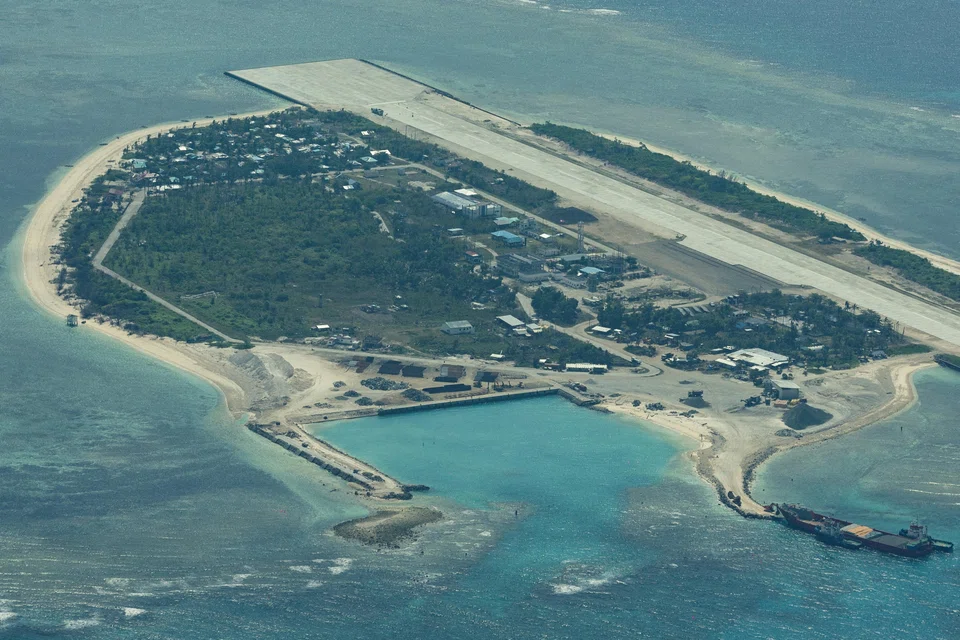
[MANILA] Singapore will inherit negotiations on a long-awaited South China Sea Code of Conduct (COC) when it assumes the Asean chairmanship in 2027, but several contentious issues remain unresolved despite progress made under the Philippines’ leadership.
Asean and China have reached provisional agreement on about 80 per cent of the paragraphs in the draft code, said Philippine Foreign Secretary Maria Theresa Lazaro on Sunday (Nov 15), the first day of the 49th Asean Summit in Manila.
However, only one of four major negotiating issues has been resolved, with questions including whether the agreement should be legally binding still outstanding.
“We leave this almost 80 per cent finished document to Singapore as the next chair,” Lazaro told reporters at a press conference following the summit’s plenary and retreat sessions.
She expressed confidence that Singapore would be able to complete the negotiations, although she stopped short of setting a deadline. “I trust that Singapore will be able to finish the discussions,” she said.
The proposed code is intended to establish rules governing the conduct of countries in the disputed South China Sea, where competing territorial claims have been a longstanding source of regional tensions.

Negotiations have been under way for more than two decades, following the adoption of the Declaration on the Conduct of Parties in the South China Sea (DOC) by Asean and China in 2002.
China claims much of the resource-rich waterway, with these claims overlapping those by the Philippines, Vietnam, Malaysia and Brunei.
An international tribunal ruled in 2016 that Beijing’s sweeping maritime claims had no legal basis under international law, but China has rejected the ruling.

Lazaro said the proportion of the draft agreed upon had risen from roughly 50 per cent before the Philippines took over the Asean chairmanship this year.
Under Manila’s leadership, negotiators held nine rounds of talks and two senior officials’ meetings; discussions took place monthly. But Lazaro acknowledged that differences among Asean member states and China had prevented the negotiations from being concluded this year.
She said some countries had particular sensitivities over the proposed agreement, including the implications of making it legally binding, which could require ratification by individual member states.
Of the four major negotiating issues, the parties have reached agreement only on the relationship between the existing DOC and the proposed COC.
Under the provisional agreement, the DOC provides the foundation for the new code, which will build on its principles and introduce more substantive provisions to guide conduct in the South China Sea.
The parties have also agreed that the COC will be a platform for practical maritime cooperation, with activities undertaken voluntarily and in accordance with applicable laws.
Lazaro stressed that the agreement is intended to help manage differences at sea rather than settle territorial disputes. The parties will continue negotiations with the aim of concluding an effective and substantive code at the earliest possible opportunity, she added.
Decoding Asia newsletter: your guide to navigating Asia in a new global order. Sign up here to get Decoding Asia newsletter. Delivered to your inbox. Free.
Copyright SPH Media. All rights reserved.
TRENDING NOW

Ex-Nvidia CEO Jensen Huang carried a secret for more than a year. It led to his downfall

Higher rates, weaker spending: Is the Philippines entering stagflation?

Nuclear potential, data centre boom may be addressed in new Asean energy master plan

Demand, tech capabilities position Apac and AI as Skyscanner’s next growth frontiers: CEO Bryan Batista

