

Singapore taking first steps on ‘nutrition label’ for AI apps with voluntary roll-out, Asean engagement
The key lies in what efforts are made to build trust in the technology: Josephine Teo

[JAKARTA] Singapore is looking to engage South-east Asia and the rest of the world to explore the efficacy of labels for artificial intelligence applications.
Such “nutrition labels” may require service providers to disclose the capabilities and limitations of their AI-enabled applications.
This will likely begin as a voluntary framework in Singapore, as the government continues ongoing consultations with the industry.
The labels are intended to help users understand what AI-enabled services can and cannot do, similar to how labels for food or medicine inform consumers.
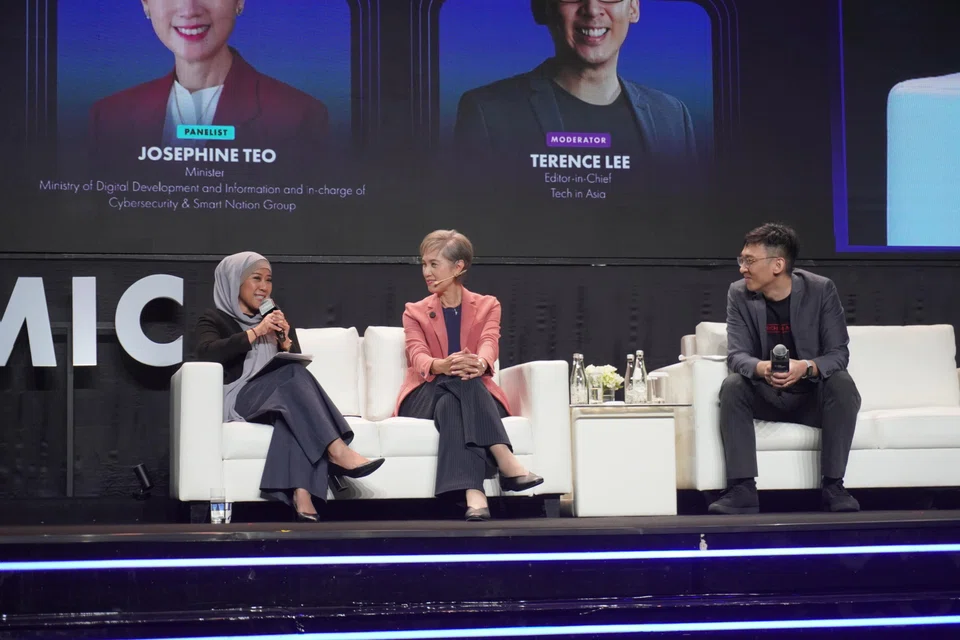
Singapore’s Minister for Digital Development and Information Josephine Teo raised this initiative during a panel discussion on Wednesday (Jun 17) about regional digital infrastructure.
She added that Singapore would “love to discuss with our colleagues in Asean and other parts of the world” to see if such labels would be useful.
Teo, who is also the minister-in-charge of cybersecurity and the Smart Nation Group, described these attempts as “baby steps”, adding that the government can consider taking further action after their effectiveness is assessed.
She also said that the government is engaging application developers to see what they can reasonably share with consumers on these labels without forcing them to give away proprietary information.
Noting that consumers feel safe using various appliances because products undergo testing, Teo pointed out that AI today is “reaching the hands, heads and hearts of millions of people”.
SEE ALSO




“We are not really sure whether it has been properly tested – so the question for me is what efforts we are making in order to ensure that this technology can truly be trusted.”
Teo was speaking alongside Indonesia’s Minister of Communication and Digital Affairs Meutya Hafid at a panel discussion on how upgrading physical networks and data systems can create a foundation for AI-driven growth.
The discussion was moderated by Tech in Asia’s overall lead and editor-in-chief Terence Lee. It was one of several held at the second edition of the Asia Economic Summit organised by the English-language technology media company.
Held at Fairmont Jakarta, this year’s summit was themed “Where South-east Asia’s Economic Decisions Take Shape”.
The day-long event, which convened some 250 regional policymakers, business leaders, investors and technology stakeholders, was aimed at aligning policy intent with investment priorities and execution pathways across South-east Asia.
Decoding Asia newsletter: your guide to navigating Asia in a new global order. Sign up here to get Decoding Asia newsletter. Delivered to your inbox. Free.
Copyright SPH Media. All rights reserved.
TRENDING NOW

Once staunchly pro-China, Malaysian Chinese businesses are now distancing themselves from Beijing

Looking beyond looming CEO succession, should UOB potentially pursue a transformative merger?

Could stablecoins be the future of money?

Grab CEO’s wife Chloe Tong on life with Anthony Tan and finding her purpose

