

Trump once vowed to ‘own’ Greenland. He’s settled for something much less
The US president’s latest deal falls well short of his demands to turn the island into American territory
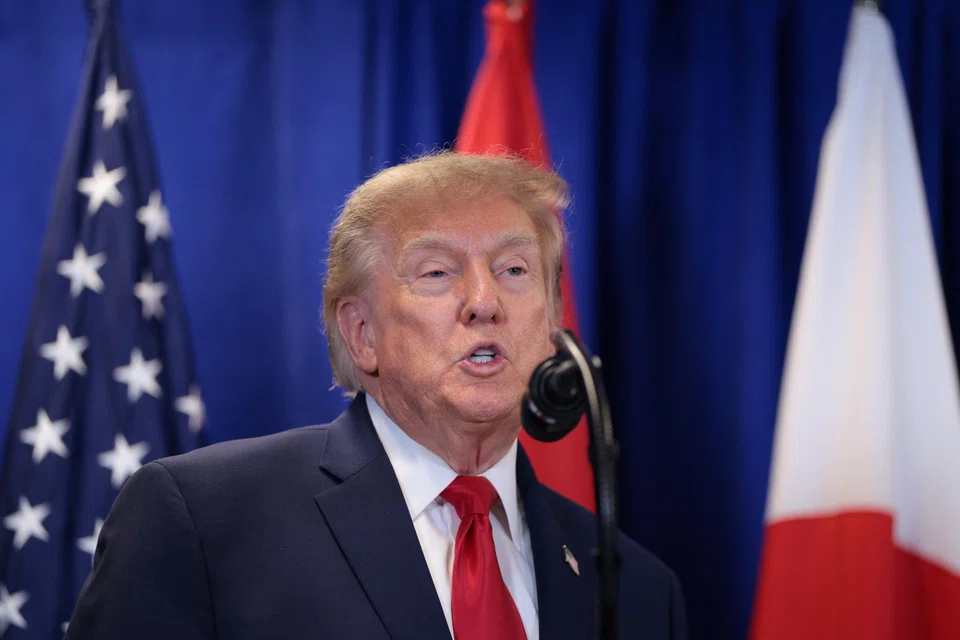
IN JANUARY, US President Donald Trump was clear about his need to take over all of Greenland, and to make it US territory.
“That’s what I feel is psychologically needed for success,” he said. “Ownership gives you things and elements that you can’t get from just signing a document, that you can have a base.”
On Tuesday (Sep 22), he signed a document that paves the way to expanding the US military presence on the island, opening new bases. But it explicitly stops short of conveying any territory to the US.
And no one – especially Denmark, which governs the vast but empty space – wanted to emphasise that point, for fear that Trump might renounce the agreement he had just hailed as “tremendous for Europe and for the United States”.
For Trump, it was a major retreat. He first raised the possibility of buying Greenland during his first term and never let go of the idea.
Even before he was inaugurated, he was making a national security case for making the territory part of the US, acutely aware that, if he could get it, it would be an acquisition on the scale of Thomas Jefferson’s Louisiana Purchase.
And few issues did more to galvanise European allies against the Trump administration, especially once they feared that he might make a military move against a Nato ally. There is no evidence he ever seriously considered that step. But that did nothing to alleviate the fears.
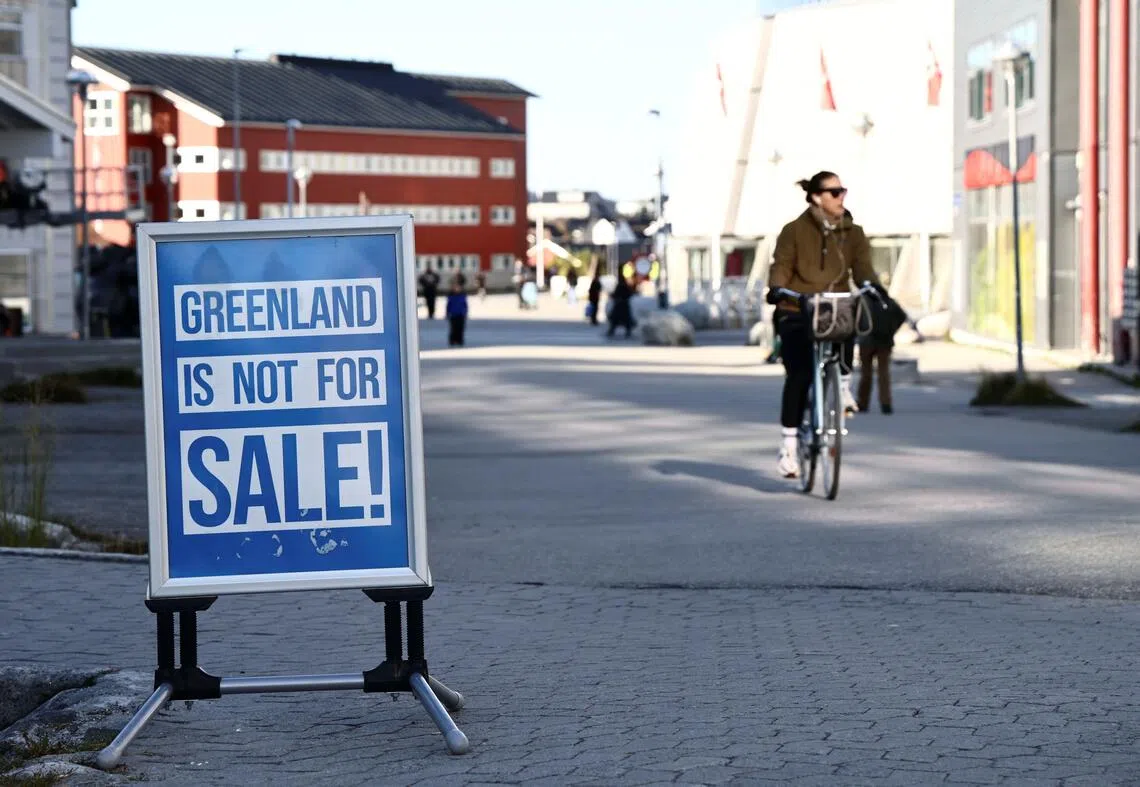
Diplomats involved in the process of drafting the 10-page agreement released on Tuesday said they spent months on the language – and then waited for what they hoped would be the right moment to present it to Trump.
And even then they were nervous, acutely aware that after the US had signed an agreement on nuclear energy with Saudi Arabia over the summer, Trump announced, the next day, that he was changing key terms.

The diplomats spoke on the condition of anonymity to discuss sensitive negotiations.
Whether Trump has permanently dropped his insistence on owning Greenland is anyone’s guess, the diplomats concede. But their hope was to give him enough to boast about, even if many of the provisions were implicit in the 1951 agreement and its successors.
Mikkel Runge Olesen, a researcher at the Danish Institute for International Studies, described the final document as only a moderate improvement for the US, achieved at considerable political cost.
“It is an extraordinarily high price to pay for relatively limited changes,” he said, maintaining that Trump’s threats did lasting damage to relations with Denmark, Greenland and Europe.
The 1951 accord essentially gave the US the right to build bases across Greenland, and at the height of the Cold War there were more than a dozen. At one point, there was even a plan for an under-the-ice nuclear weapons base.
But expense, and then the end of the Cold War, led to the abandonment of many of the facilities. US Vice-President JD Vance visited one of the remaining ones, Pituffik Space Base, in March 2025, declaring that the US had to “wake up” to China’s and Russia’s designs on the island.
“We can’t just bury our head in the sand,” he said, “or, in Greenland, bury our head in the snow.”
Vance’s visit touched off even more concern about US intentions. But in recent days, the reactions to the accord have been broadly positive in Denmark and Greenland.
For Naaja Nathanielsen, a member of the Danish parliament and part of Greenland’s left-leaning pro-independent party, the most significant part of the agreement is the signature page: For the first time, Greenland, alongside Denmark, is a direct signatory of a legally binding international agreement.
That was a huge win for Greenland’s population, which has always felt marginalised, constantly debating whether Denmark had its best interests in mind.
“This is the first time we have actually had a seat at the table,” Nathanielsen said. “That is something we are proud of,” one that she thinks will set a precedent for greater Greenlandic autonomy in foreign policy.
One key change in the new document is an explicit description of how Greenland would be bound by the terms of the accord even if it became independent of Denmark.
“In case Greenland exercises its right to self-determination to become independent, the government of the Kingdom of Denmark and the government of Greenland shall together ensure that the independent Greenlandic state will agree to remain in Nato,” the document read.
The document specified two areas where the US military wants to expand: Narsarsuaq and Mestersvig.
Narsarsuaq, in southern Greenland, is an old base where the US military maintained a large airfield during World War II. The base closed decades ago.
Mestersvig, in eastern Greenland, is an area where the Americans never had a permanent presence but would allow US forces a strategic perch overlooking the waters between Greenland, Norway and Iceland.
Mestersvig is sometimes used by the Danish military for its dog sled patrols, which Trump has ridiculed as inadequate. NYTIMES
Decoding Asia newsletter: your guide to navigating Asia in a new global order. Sign up here to get Decoding Asia newsletter. Delivered to your inbox. Free.
Share with us your feedback on BT's products and services
TRENDING NOW

Once staunchly pro-China, Malaysian Chinese businesses are now distancing themselves from Beijing

Looking beyond looming CEO succession, should UOB potentially pursue a transformative merger?

Could stablecoins be the future of money?

Grab CEO’s wife Chloe Tong on life with Anthony Tan and finding her purpose

