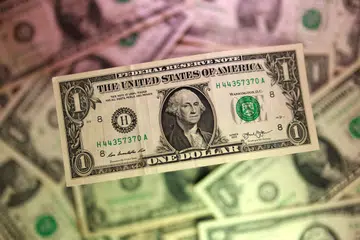
Why investors are seeking refuge from the US dollar as ‘debasement trade’ returns to Wall Street
The term captures the idea of investors fleeing from the greenback due to fear that it is being devalued
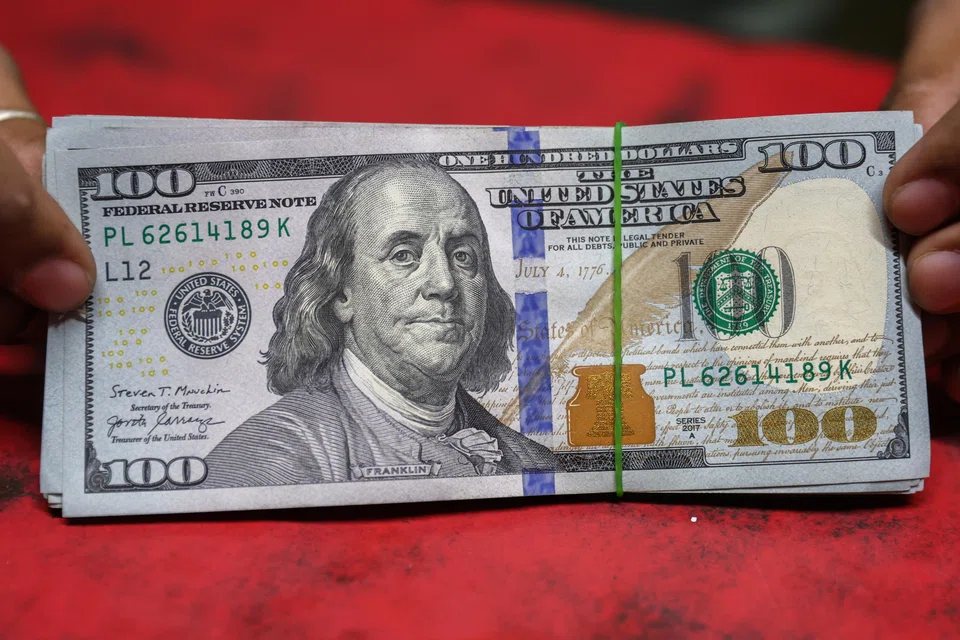
[MELBOURNE] Political and fiscal uncertainty in the US is prompting investors to again turn nervous towards the greenback. As some have offloaded the currency, alternative assets such as Bitcoin and gold have seen their value soar.
Wall Street has dubbed this “the debasement trade” – a nod to the historical practice of rulers such as King Henry VIII of England and the Roman emperor Nero, who diluted, or debased, gold and silver coins with cheaper metals such as copper.
The term captures the idea that investors are seeking refuge from the US dollar because of fear it is being devalued.
Not everyone is convinced such a trend is real, and some argue not every dip in the US dollar is a reason to sound the alarm.
But debasement trade adherents say it is gaining momentum, and reflects a growing problem for investors in US assets as the nation’s debt burden keeps rising.
Behind the latest worry: US Treasury Secretary Scott Bessent’s interventions to first support the Japanese yen and then restrain long-term US borrowing costs by announcing plans to buy back certain government bonds.
Both forays into financial markets sent the US dollar skidding.
What is the debasement trade?
The term describes a strategy investors use to protect themselves from the erosion in the value of money or other assets.
It involves selling currencies or securities vulnerable to political or fiscal shocks and shifting into “haven” assets such as gold.

It is not simply a flight to safety. Investors are also loading up on cryptocurrencies, which can be highly volatile but are seen as relatively insulated from monetary and fiscal policy.
According to its proponents, the debasement trade gathered momentum in 2025 as US President Donald Trump’s trade tariffs started to cloud the economic outlook and the prospect of a US government shutdown heightened worries over the fiscal deficit.
The US dollar had its worst annual performance since 2017 over the course of 2025, dropping almost 10 per cent. By contrast, gold enjoyed a 65 per cent rally.
The US dollar then staged a recovery at the start of 2026 as investors greeted the selection of Kevin Warsh to run the US Federal Reserve, cheering his statement that delivering price stability would be his overriding priority. The likelihood of higher rates tends to support a currency.
Why has talk of debasement returned?
Bessent took two steps that revived fears of debasement, even though he also maintained the US still has a “strong dollar” policy.
Firstly, for the first time in almost three decades, the US helped Japan to prop up the yen by intervening in currency markets, albeit by selling euros rather than US dollars.
The move was seen by some as reducing the risk that Japan would have to sell US Treasuries to raise US dollars to defend its currency.
Secondly, as 30-year US government bond yields continued to climb because of war-related inflation concerns and ongoing fiscal fears, the Treasury announced it would at least double the size of some buybacks of 10- to 30-year debt.
As George Saravelos of Deutsche Bank told clients in a report, if the market price of Treasuries is “not ‘allowed’ to adjust down” then the foreign exchange price of those owned by foreign investors has to adjust via a weakening of the US dollar.
Robin Brooks, a senior fellow at the Brookings Institution, went as far as to say the Treasury is “playing with fire” and warned that efforts to cap long-term yields without addressing the country’s underlying fiscal imbalance risks shifting the pressure from bonds to the currency.
Instead of a debt crisis, it could morph into a currency crisis, Brooks said, pointing to Japan’s recent history and the yen’s prolonged decline as a cautionary example.
Mounting speculation that Warsh’s Fed may no longer raise rates as once assumed has also led investors to turn against the US dollar in the second part of 2026.
Why are investors generally concerned about the US dollar?
The US borrowed heavily at the height of the Covid-19 pandemic to stave off recession.
As the money flowed, it increased demand for goods and services, in many cases fuelling inflation. The Fed responded by raising interest rates sharply to temper demand and contain price growth.
It has largely worked. But the higher-rate environment has made it more expensive to service those huge and growing piles of borrowed money.
With Washington having to spend larger sums on interest, that leaves politicians with less money to stimulate the economy. The government may also need to cut spending to divert money towards debt repayments, further impacting growth and putting downward pressure on the US dollar.
The US national debt is now in excess of US$40 trillion.
The perception that government borrowing is becoming harder to sustain can also weigh on growth and weaken the currency.
Billionaire investor Ray Dalio in August urged investors to cut bond exposure and hold gold and some Bitcoin as protection against a potential US debt crisis.
Moreover, there is speculation that – despite claims to the contrary – Trump and Bessent are comfortable with a weaker exchange rate.
What is the appeal of gold?
Gold is sometimes viewed as a classic “safe haven” asset – one that can hold its value during times of instability.
Investors are often drawn to it because its supply and price are not directly controlled by governments or central banks, making it less vulnerable to policy or fiscal decisions.
In the short run, gold is an imperfect hedge against inflation.
But many investors still see it as one of the few liquid assets poised to preserve value over the longer term, given that the constraints on its supply are geological rather than political.
And as bullion is usually priced in US dollars, it almost always rises as the US currency weakens, in part because a weaker greenback makes the metal cheaper for buyers using other currencies. So for investors looking to position for a decline in the US dollar, gold is an obvious place to look.
Gold demand is also being driven by central banks, which have been building up their reserves.
Part of the motivation is to guard against the weaponisation of currencies, especially after Washington used the US dollar’s central role in the global banking system to cripple Russia’s access to international funds following its invasion of Ukraine.
What do sceptics of the ‘debasement trade’ say?
Some investors argue the logic behind the so-called debasement trade is flawed, or that there is little evidence it is actually happening.
They note that global investors continue to hold large amounts of US government bonds, which suggests there is no widespread abandonment of US dollar-denominated assets.
Critics also point to the strength of the US stock market to downplay talk of a debasement trend, given foreign investors are required to buy the greenback to purchase US stocks.
Brent Donnelly, president of Spectra Markets, initially took Bessent’s announcement as a signal to buy Bitcoin and sell the US dollar against the Swiss franc. But the small scale of the buybacks relative to the overall Treasury market gave him second thoughts. BLOOMBERG
Decoding Asia newsletter: your guide to navigating Asia in a new global order. Sign up here to get Decoding Asia newsletter. Delivered to your inbox. Free.
Share with us your feedback on BT's products and services