

Xi’s India visit to help diplomatic thaw, but business ties are still bound by suspicion
Firms on both sides still face hurdles, underscoring the gap between diplomatic progress and economic links
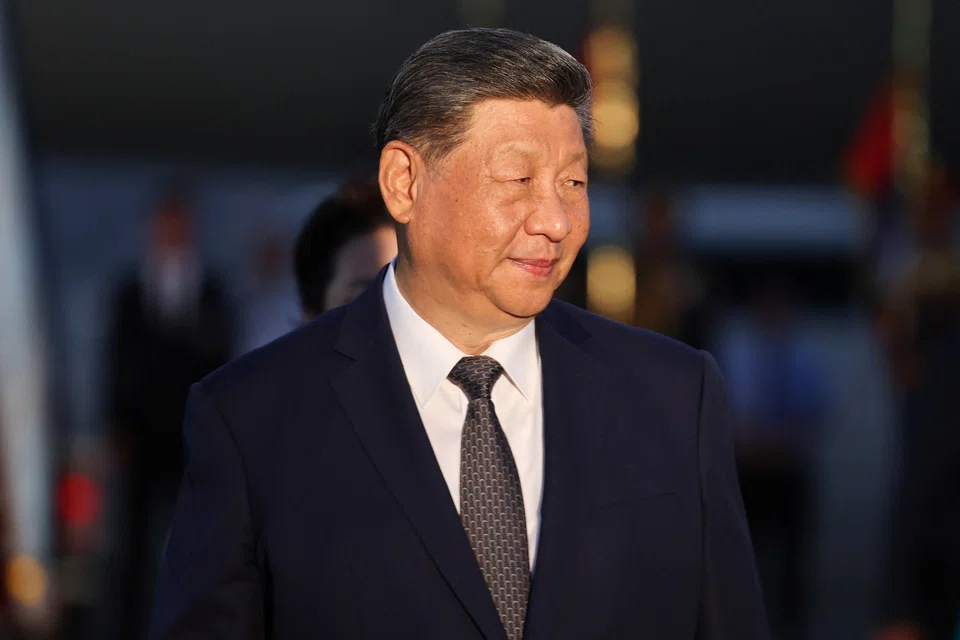
[NEW DELHI/BEIJING] Chinese President Xi Jinping’s visit to New Delhi on Saturday (Sep 12) and Sunday, his first to India in seven years, should further the diplomatic thaw between the giant neighbours, but there are few signs as yet that their business ties will improve.
Businesses in both countries continue to face hurdles, including investments stalled by regulations, visa delays and restrictions on industrial equipment, which all underscore the gap between diplomatic progress and economic ties, analysts say.
China’s foreign ministry has confirmed that Xi will be in the Indian capital for the annual Brics summit, but there is no word yet if he will have a bilateral meeting with Indian Prime Minister Narendra Modi, which will be crucial for the setting of the future direction of bilateral ties.
China and India fought a brief war in 1962, setting the backdrop for a wary relationship since then; ties soured after a 2020 border skirmish killed 20 Indian and four Chinese soldiers.
Still, ties have improved in recent years, especially since Modi visited China last year, and when both nations grappled with their volatile relationships with the US.
“China certainly wants to improve ties, but we are waiting to see the extent India is actually willing to improve them,” said Lin Minwang, a South Asia expert with Shanghai’s Fudan University and a former diplomat at the Chinese embassy in New Delhi. His comment suggests that any dramatic progress is unlikely.
Harsh Pant, vice-president at New Delhi’s Observer Research Foundation think tank, said the “trust deficit” between the countries is high.
“China has economic heft and there is a good opportunity to use that and emerge as a reliable partner, especially when both nations are affected by America’s trade policies,” he said.
In March, India eased some of the restrictions on Chinese investments that it imposed following the 2020 border clashes, with the easing focused on electronics, capital goods and solar cell sectors.
SEE ALSO

New Delhi is also considering faster approvals for joint ventures between Indian and Chinese firms in some industries.
The Indian government has since approved a few significant projects, including a manufacturing venture between India’s Dixon Technologies and Chinese smartphone maker Vivo Mobile.
But that has not been enough to woo back leading Chinese companies such as vehicle makers BYD and Great Wall Motor, which shelved planned investments in India after coming under heightened scrutiny by New Delhi, said an Indian government source.
Great Wall Motor and BYD declined to comment.
‘Partners, not competitors’
Chinese companies’ proposed investments in India are facing more scrutiny from Beijing itself, including in sectors where sophisticated manufacturing and high-end technology may be involved, said two sources who requested anonymity because they were not authorised to speak to the press.
China’s foreign ministry told Reuters that Xi and Modi, who briefly met at a regional forum in Kyrgyzstan in September, think the two countries are “partners, not competitors, and they represent opportunities, not threats, for each other’s development”.
India’s trade and foreign ministries did not respond to requests for comment.
New Delhi has declined to approve a proposal by Alipay, a platform related to China’s Ant Group, to be linked to India’s instant payments system, citing national security concerns, Reuters reported recently.
The Indian government is also considering a recommendation by its Serious Fraud Investigation Office (SFIO) that Chinese cellphone maker Xiaomi be investigated for alleged irregularities in its business in India and for breaching foreign investment laws, Reuters reported previously.
Xiaomi said it complies with all local laws and has not heard from the SFIO.
An Indian source said that the Chinese authorities have asked companies not to sell critical technology and infrastructure to India, including port equipment, solar panels and mobile manufacturing equipment.
China’s commerce ministry did not respond to a request for comment.
In 2025, India and China resumed direct flights and New Delhi eased visa procedures for Chinese business professionals.
However, some Indian business people with interests in China have recently had trouble securing visas, said one of the sources and an industry executive.
China’s foreign ministry said it issues visas for “Indian nationals who have a genuine need to visit China” in accordance with the law and regulations.
This year, equipment and components made in China that India needs in key sectors such as solar energy, electronics and infrastructure development have been held up at Chinese customs, said the industry executive and the two Indian sources.
Some massive boring machines from China for key infrastructure projects in India have been held up for more than a year, said a third Indian source, a government official.
The hold-up of visas and equipment “reflects more than administrative friction” and shows China’s willingness to use India’s trade and technology dependence as leverage, said Ajay Srivastava, founder of New Delhi-based think tank Global Trade Research Initiative and a former Indian trade negotiator.
But a meeting between Modi and Xi could help dismantle some barriers, if it goes well.
Anup Wadhawan, a former top Indian trade official, said a meeting between the top leaders of the two countries will “always afford opportunities to better align political and economic interests”.
“Of course, commercial ties are ultimately driven by the mutual economic interests of the citizens of both countries. Bilateral discussions can, however, work towards enabling these pathways to fructify.” REUTERS
Decoding Asia newsletter: your guide to navigating Asia in a new global order. Sign up here to get Decoding Asia newsletter. Delivered to your inbox. Free.
Share with us your feedback on BT's products and services
TRENDING NOW

Stocks to watch: CapitaLand Ascott Trust, Keppel Infrastructure Trust, iFast, ESR Reit, First Sponsor
Indonesia says gas export cuts to Singapore remain within contract terms

If Europe goes to war, the fallout will be felt in East Asia

Government to bring forward raising of retirement age, give employers more financial support to create flexi-load jobs

