

This forgotten artist’s ‘extraordinary’ work was saved from a dumpster
The journey of Alejandro Mario Yllanes’ searingly political works to major museums is a saga full of mysteries
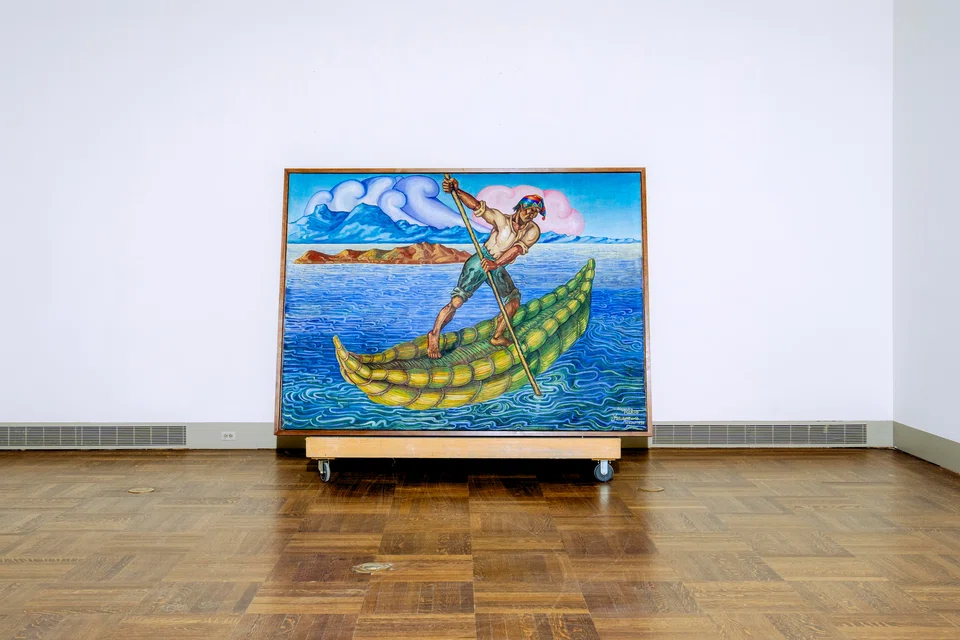
THE painting was “mind-bendingly great”. The artist, a near-unknown.
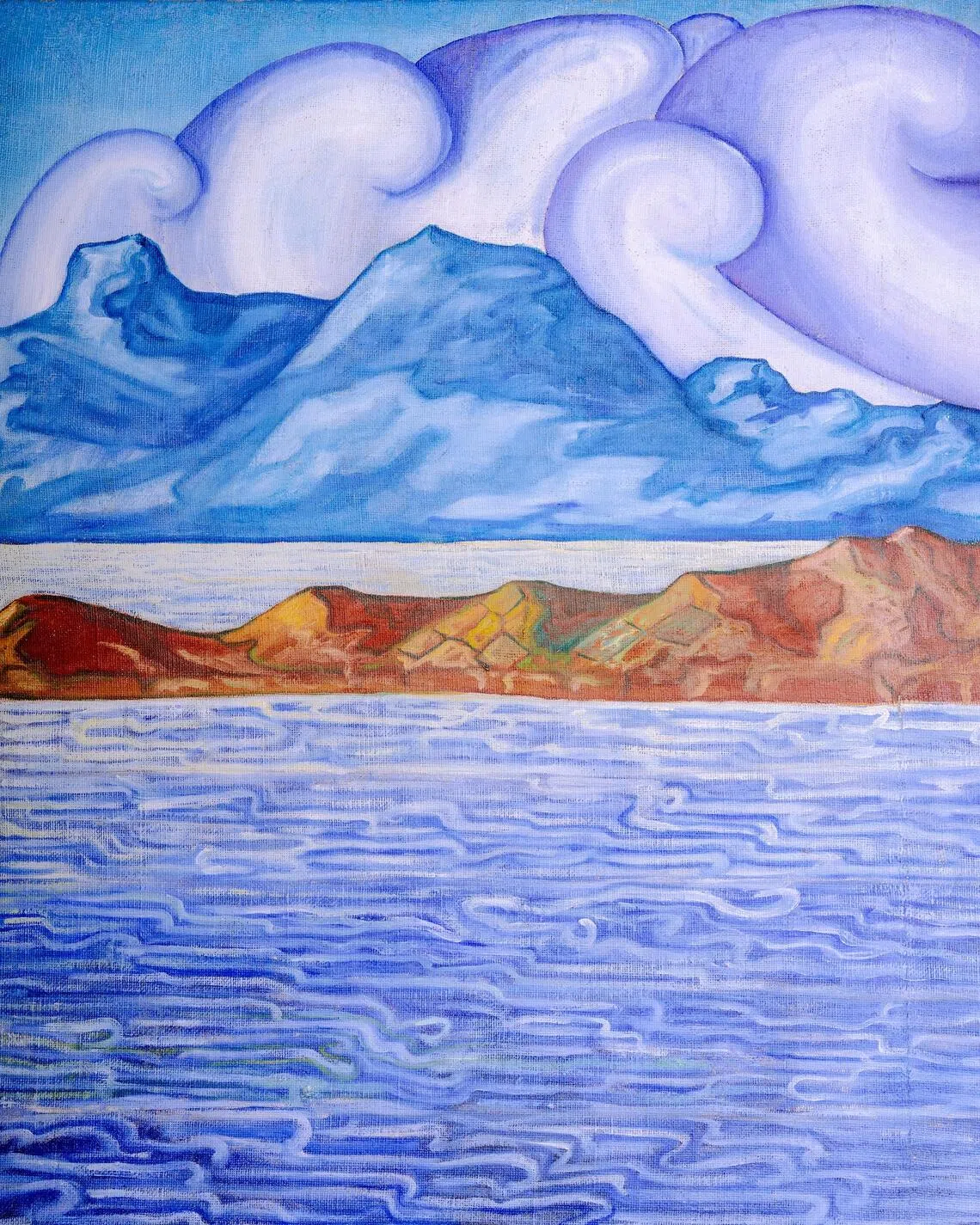
Adam M Levine, director of the Toledo Museum of Art in Ohio, had not heard of Bolivian painter and engraver Alejandro Mario Yllanes until mid-2025. Then he saw Lake Titicaca, a large 1935 oil-on-burlap of an Andean boatman, at a London art gallery.
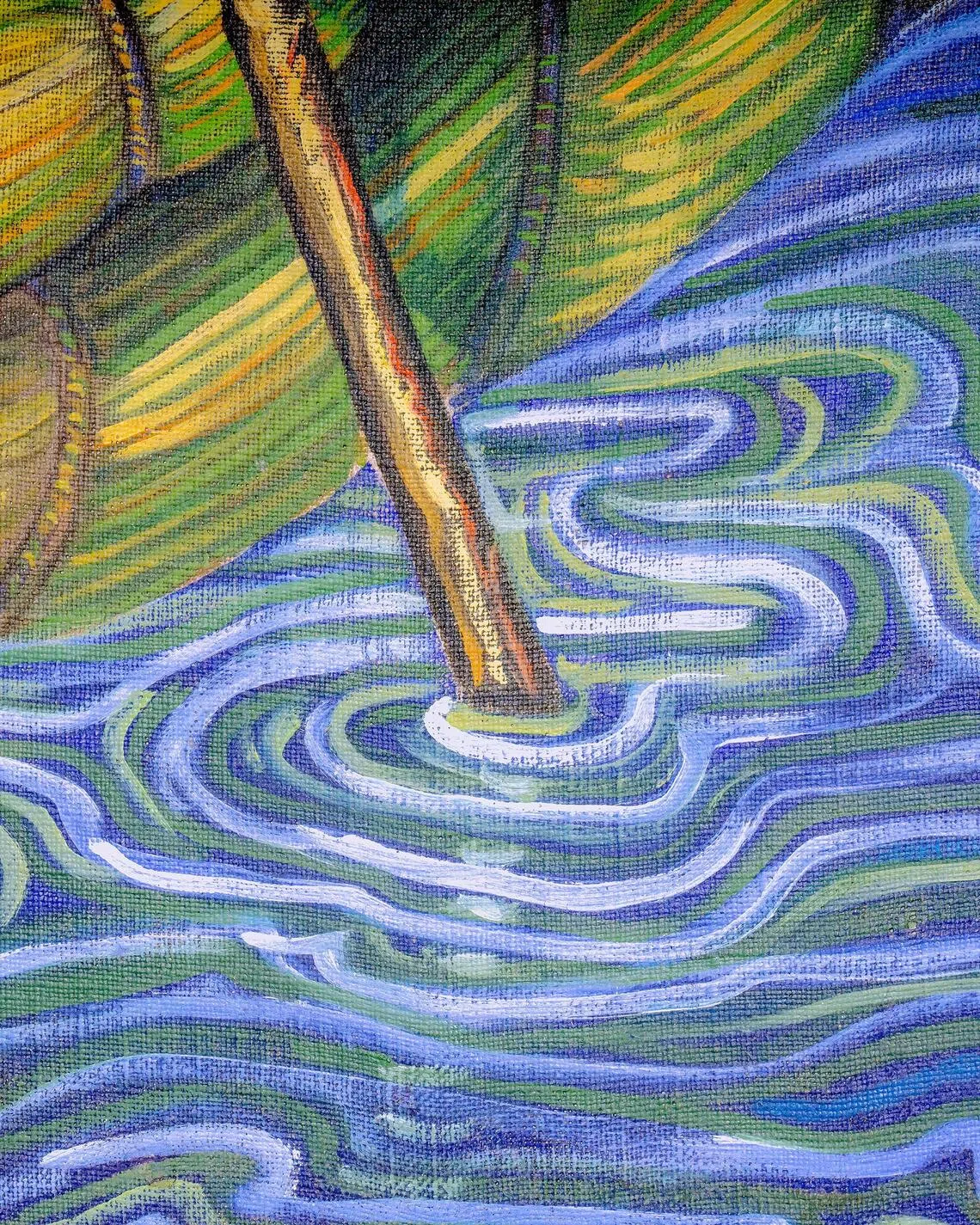
Levine was stunned by the painting of a reed boat on rippling water edged by blue mountains. In May, the Toledo Museum bought the piece to hang at the heart of its collection, which will reopen next year after a major renovation.
Speaking by Zoom from Toledo, Levine said: “It is powerful. It is beautifully painted.”
That’s a remarkable change of fortune for a painting that, by several accounts, was rescued in the 1970s from a New York City dumpster.
A legacy overlooked
Yllanes, who lived from 1913 to around 1960, was a protege of Diego Rivera, the great Mexican artist of populist murals, who championed the bravery with which Yllanes made searingly political works.
Yllanes was admired – and punished – for depicting the brutal hardship and colourful rituals of indigenous Bolivians.
But he left little trace of his life after 1950, leaving a cache of paintings, engravings and documents in an apartment on the Upper West Side of Manhattan.
Abandoned by their forgotten maker, those artworks made a decades-long journey from a Manhattan apartment to the home of a sharp-eyed police officer, and, eventually, a French collector’s storage.
Now, Yllanes is having a renaissance. Since 2023, the Metropolitan Museum of Art and the Frances Lehman Loeb Art Center at Vassar College have acquired several works on paper by the self-taught artist; the Museum of Latin American Art of Buenos Aires (Malba) and Bowdoin College Museum of Art in Maine have bought large-scale oil paintings.
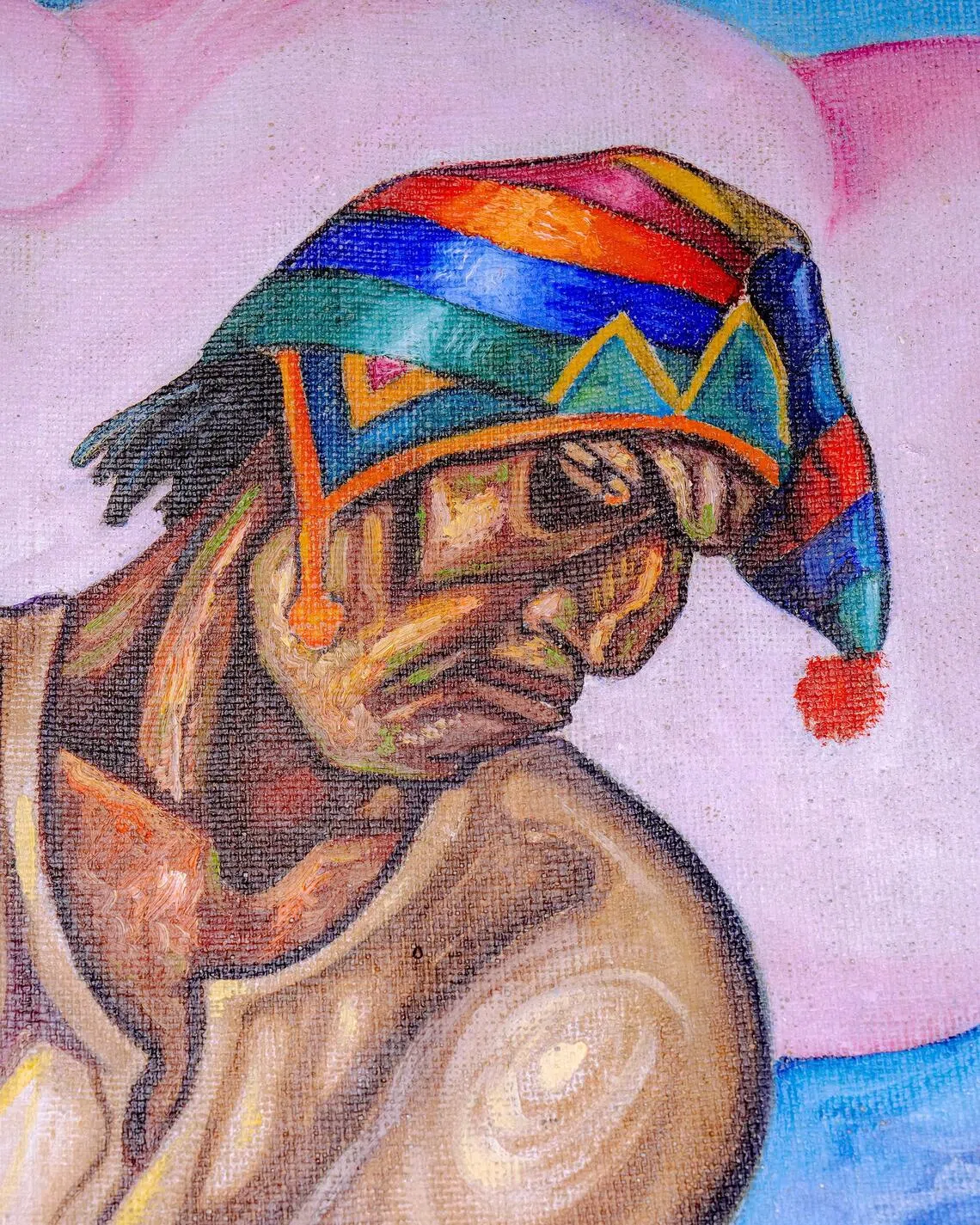
In Toledo, Lake Titicaca will hang in a gallery alongside works by Peter Paul Rubens, Mark Rothko and Hale Woodruff, Levine said.
The revival has been led by Rachel and Ben Elwes, owners of Ben Elwes Fine Art in London, who learned of Yllanes a few years ago from David Le Louarn, a French client who bought the Manhattan cache in the early 2000s. Le Louarn consigned the work to the Elweses for sale.
“This was clearly a legacy that had been overlooked,” said Rachel Elwes, who spoke by Zoom from London. The Elweses exhibited Yllanes’ artwork in the fall of 2023, kicking off a wave of interest.
Museums, mostly in the US and Canada, have since bought nearly two dozen pieces, for prices ranging from US$400,000 to US$1.9 million, according to the dealers.
Michele Greet, a professor of art history at George Mason University who has written a book on Indigenous Latin American art, said that Yllanes’ oeuvre is a “significant discovery”.
She herself was unaware of Yllanes until the Elweses hired her to research him. The artist added a voice to Latin American “indigenism”, a movement that focused on pre-Columbian people.
“It basically puts Bolivia on the map as being part of this broader idea,” Prof Greet said.
Eduardo Costantini, an Argentine collector who founded Malba, said Yllanes’ paintings “could be hung next to any great master of Latin American art”.
In 2024, he bought a mural-like painting by Yllanes, Tragedy of the Indigenous Worker (1932), that depicts their struggle; and a 1941 composition of musicians and dancers surrounding a deity of the Aymara, a Bolivian Indigenous group. (He declined to say how much he paid.)
Yllanes’ life, he noted, was “very mysterious”.
A life laced with drama
Yllanes was born into an Aymara family in the mining town of Oruro. By 18, he had been orphaned, worked in a tin mine, dropped out of law school and held his first solo art show.
In Bolivia, Yllanes’ political critique earned him fans and enemies. He told a Mexican newspaper in 1946 that he was banished to the Amazon for a year in the 1930s and that in 1941 he was briefly thrown in jail after an incendiary exhibition.
Elsewhere, he was celebrated, holding a solo show in Mexico City in 1946 for which Rivera wrote a glowing introduction, urging Mexican artists to take note of “Comrade Yllanes”, who had suffered for “the revolutionary assertions expressed in his art”.
Hot off his Mexican success, Yllanes moved to New York City in 1947 with his wife, Maria Frontaura Argandona, an educator from a prominent leftist family, according to documents shared by Ben Elwes Fine Art.
He won a US$2,500 grant from the John Simon Guggenheim Memorial Foundation in 1948 to research Native American culture and study painting.
After that, the trail grows faint. Researchers have found few clues as to how Yllanes spent his last decade, and experts postulated that he was killed by right-wing militias in Bolivia or returned to Mexico and died there.
But documents and letters reviewed by The New York Times suggest he spent part of the 1950s in New York and may have died there. He is listed in the 1950 census as a resident at 419 West 115th Street – the building, owned by Columbia University, where he eventually abandoned his artworks.
And in 1955, over dinner in Manhattan, a radiant Yllanes told Eduardo Arze Loureiro, a Bolivian politician, that he had travelled widely in the US; visited Japan, Europe and Africa for a textile company; and taught in Chicago – claims that the artist may have exaggerated, Prof Greet said.
In November 1962, a Bolivian art historian, Carlos Salazar Mostajo, wrote to Arze that Yllanes had died in New York days earlier but gave no other information. (Historian Jacqueline Barnitz wrote in her book Twentieth-Century Art of Latin America that Yllanes died in 1960, but did not explain where or how.)
All that remained of Yllanes was a handful of murals and paintings in Bolivia and the cache of art in the Manhattan apartment. That collection included Lake Titicaca and the other large-scale pieces that have since been sold to museums.
It also contained dozens of works on paper, among them 7 de Junio (1939), a lithograph in which hooded figures surround a military man, one pointing a gun to his head; and Self-Portrait, a 1941 wood engraving in which Yllanes glowers at the viewer.
Both were acquired in 2024 by the Met, which has six Yllanes works on paper, purchased from the Elweses and their French client.
How did they come to be in French hands?
A chance encounter
The cache of artworks left behind in Manhattan was acquired by Edward Ford, a police officer, and his wife, Teresa, in 1978, according to the Elweses. The artworks spent much of the next 45 years in storage, except three or four exhibitions in the Hudson Valley.
The specifics of how the Fords acquired the works vary.
Documents prepared for an exhibition of Yllanes’ art at Bard College in 1992 say that Ford was “named in the will of a lonely old woman he had often seen on his regular beat” on the Upper East Side.
But no will has ever surfaced, according to Angelina Giovani, a provenance expert who researched the Yllanes atelier, and Ford’s police beat was, in fact, the Upper West Side. Three men who lived near Ford in the Hudson Valley and helped him research, exhibit or sell the Yllanes art in the 1990s and early 2000s gave a different account.
“He found them,” said William Jenack, former owner of William J. Jenack Estate Auctioneers in Chester, New York, adding, “They were in a dumpster.” Jenack says he sold several Yllanes pieces at his auction house, including wood engravings and a self-portrait in oil.
Another man, Nicholas Clemente, an artist and graphic designer, said in an interview at his home in Loch Sheldrake, New York, that he met Ford in the late 1980s and in 1992 curated a Yllanes exhibit at William Paterson College in New Jersey.
Clemente said Ford told him he spotted a metal tube filled with rolled artworks in a dumpster outside the Columbia residence.
The building’s superintendent had stored the artwork for years but had given up on anyone returning to claim it, Clemente said. The superintendent gave Ford the tube, plus several boxes of works on paper and documents.
Ford died in 2021, according to an online obituary. Teresa Ford and the Fords’ two children could not be reached.
The superintendent appears to have been Louis Nieves, who died in 2019, according to his stepdaughter, Yvette Mazzamuto. She said Nieves never mentioned the art to her. But, following a telephone interview, she found among Nieves’ documents brochures from the William Paterson and Bard exhibitions.
Giovani, the provenance analyst, believes Yllanes left his artwork with his wife, Frontaura. She lived on and off at the Columbia residence until the early 1970s and then returned to Bolivia, according to her great-nephew, Victor Rico Frontaura, who spoke by phone from Bolivia.
It is possible that Frontaura left the art with Nieves, who became superintendent at the end of the 1960s. Why Ford told curators at Bard that he had inherited the art is unclear.
But Jenack, the auctioneer, said that Ford always had “a fear that there was some claim lingering in the background”. No claim has come to the surface.
Clemente agreed to research and promote Yllanes’ work in exchange for a percentage of sales, but he said the two parted company around 2003 because Ford sold some paintings and cut Clemente out of the deal. Clemente was given some pieces by Yllanes in lieu of payment, including four studies for murals and more than a dozen woodcuts.
It was a third man, Anthony Gross, an art and antiques dealer from Woodbury Falls, New York, who connected Ford to a dealer who knew David Le Louarn and sold him the paintings for around US$10,000 to US$15,000 apiece. (Gross said he could not remember the dealer’s name.)
Lake Titicaca went a different route: Gross said he sold it to a collector in Rhinebeck, New York, in the early 2000s; Le Louarn bought it from that person in 2021.
In an e-mail, Le Louarn said he was “intrigued and beguiled” when he encountered the art some 20 years ago. More recently, he decided to sell it because Yllanes’ “time had come”.
Levine, the Toledo Museum director, declined to say what the institution paid for Lake Titicaca. He wrote in an e-mail that the museum was “intrigued to learn of this alternative account, which differs in details but helpfully reinforces the chain of ownership”.
He added that while Yllanes vanished, his “extraordinary” art did not – it was merely overlooked by institutions and by the art market. “We have to be honest about what is actually disappearance,” he added, “and what is, in fact, just: The West is finally paying attention.” NYTIMES
Decoding Asia newsletter: your guide to navigating Asia in a new global order. Sign up here to get Decoding Asia newsletter. Delivered to your inbox. Free.
Share with us your feedback on BT's products and services
TRENDING NOW

DBS, OCBC, UOB rout lops billions off STI as inflation, rate concerns spook investors

Grab CEO’s wife Chloe Tong on life with Anthony Tan and finding her purpose

OCBC sheds S$8 billion in value as shares close nearly 6% down; analysts cautious on banks

Deal between tycoon friends sparks scrutiny of Philippine power sector

