

Musim Mas scion Chayadi Karim bets on economy hotel brand Kinn
The family-business successor brings disciplined pragmatism to affordable hospitality

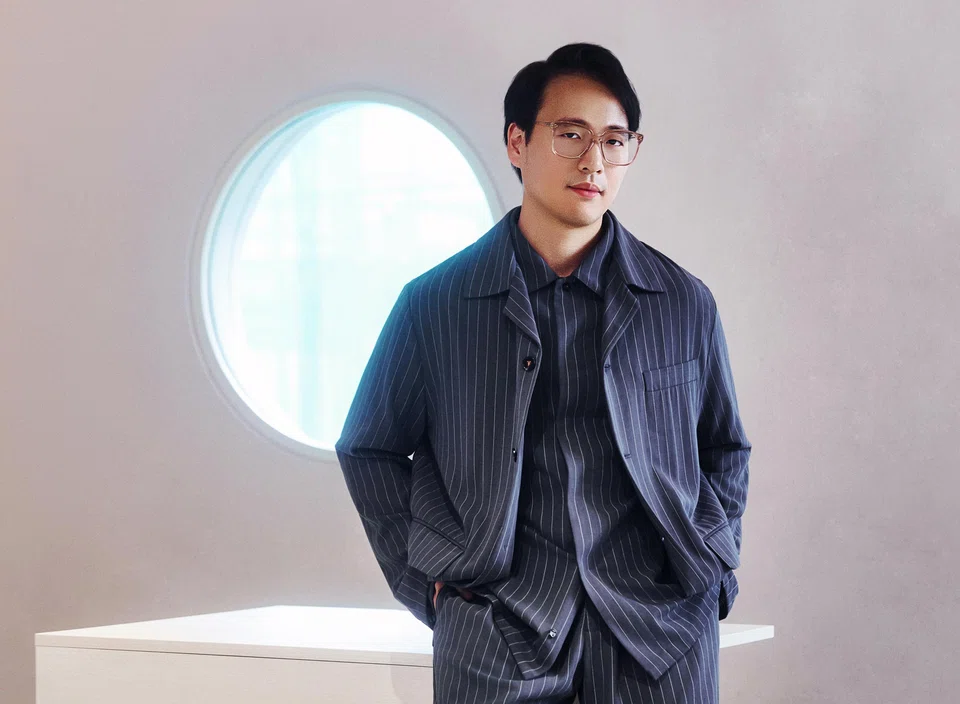
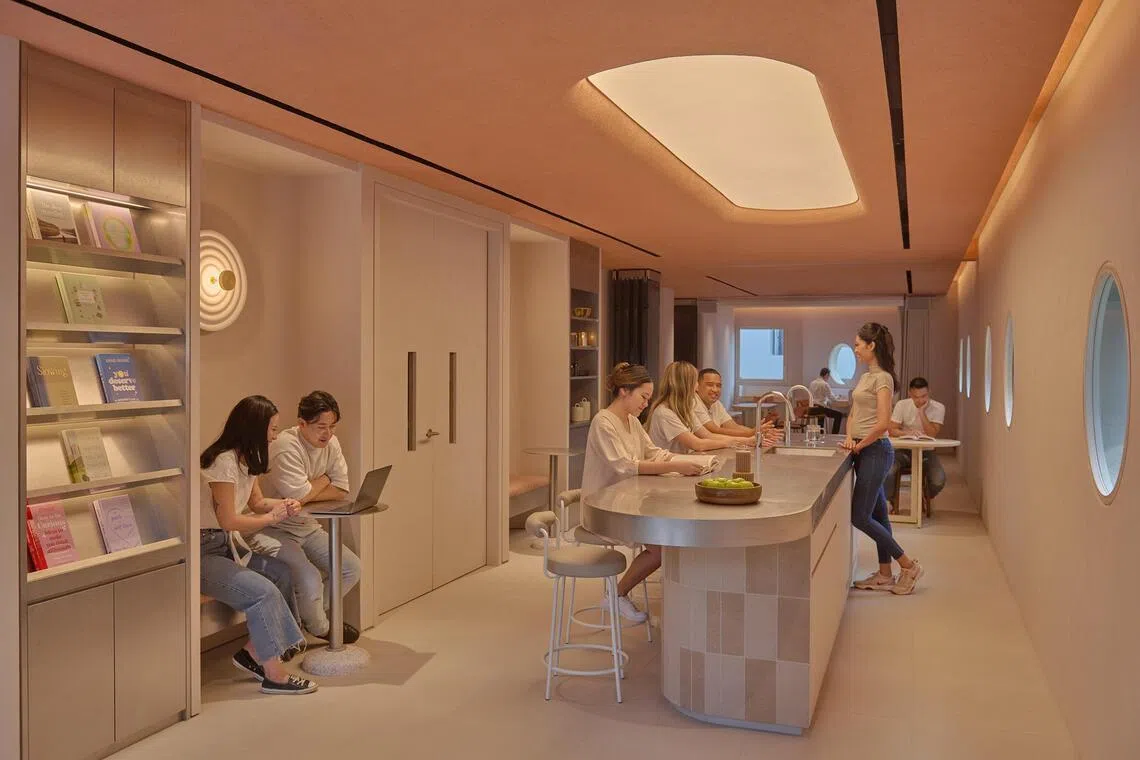
THE CAPSULES ARE PALE BLOND, rounded and softly lit. The walls are muted pastels. The furniture sits low and easy. The effect is unmistakably Gen Z: photogenic, compact and, well, cute.
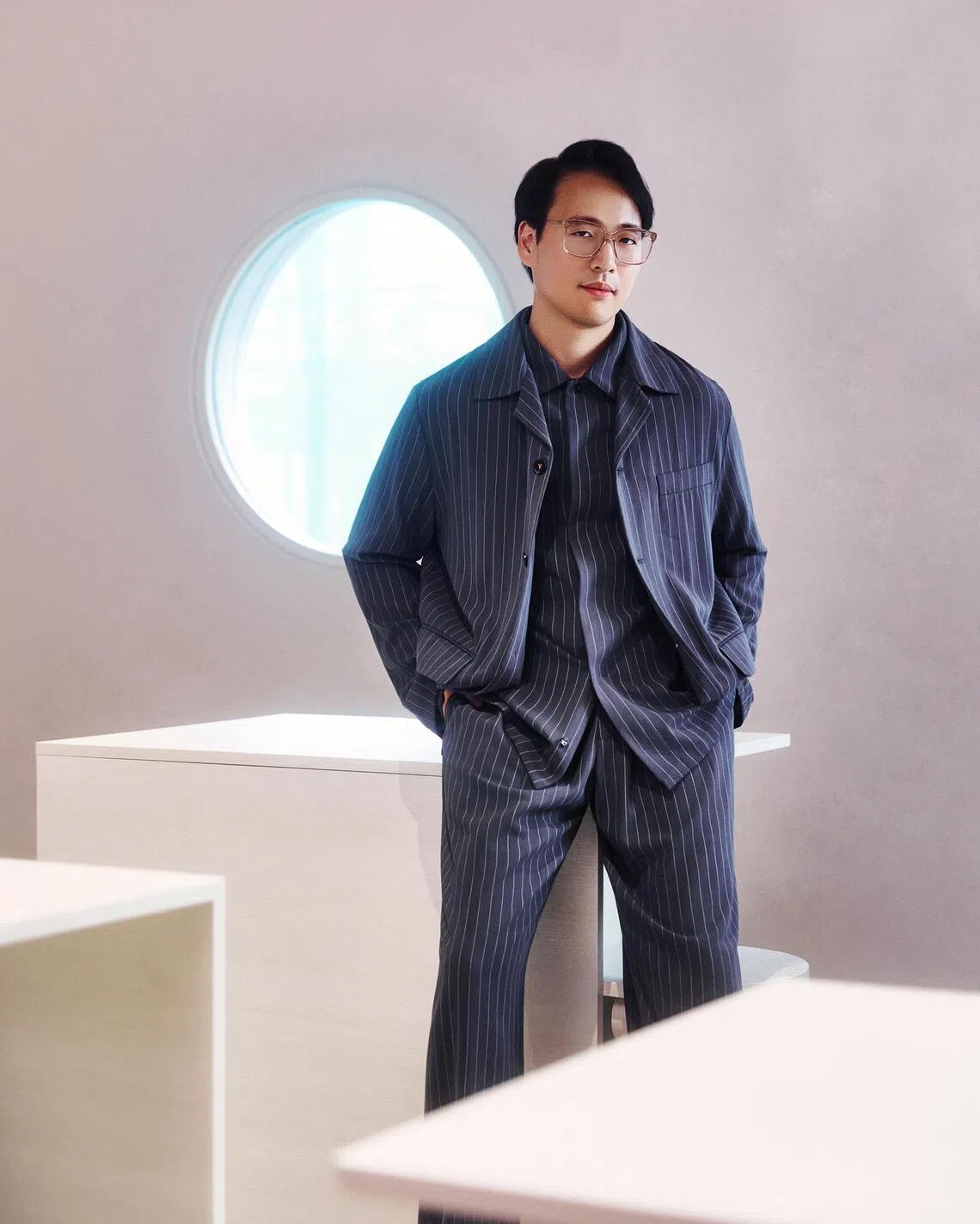
Chayadi Karim sits inside this carefully calibrated environment with a manner that is almost comically un-Gen Z.
At 34, he is soft-spoken, cautious with claims, and more comfortable with phrases such as “value proposition”, “operational cost” and “disciplined pragmatism”, than with Gen Z terms like “low-key”, “vibey” or “IG-ready”.
But here in Kinn Habitat – the six-storey hotel that combines capsule beds, private rooms and communal spaces with a playful flourish – he is both the creator of the vibe and the least likely person in the room to be seduced by it.
“I see myself as a disciplined pragmatist when it comes to business,” he says.
“I believe this could be a new generation and new concept of hospitality that is not yet mass-marketed, not yet acceptable, or even considered at the moment. And we are at the forefront of it.”

“We” refers to Invictus Developments, the real estate investment arm of the Karim family, one of Indonesia’s wealthiest business families. Chayadi serves as a principal of the company.
His father, Bachtiar Karim, is chief executive of Musim Mas, the integrated palm-oil conglomerate that reported US$8.2 billion in revenue for FY2024.
In 2025, Forbes estimated Bachtiar Karim and his family’s net worth at US$4.2 billion in its annual list of Indonesia’s richest.



For Chayadi, such an inheritance presents an obvious but complicated question: How does someone born into a major family enterprise build something that feels personal and distinct – and, perhaps more importantly, earned?
His answer is Kinn, the home-grown collection of three economy hotels he has built within Invictus.
It is a relatively modest venture beside the family’s larger holdings, but one founded on a proposition distinctly his own: that affordable hospitality need not feel joyless or compromised.
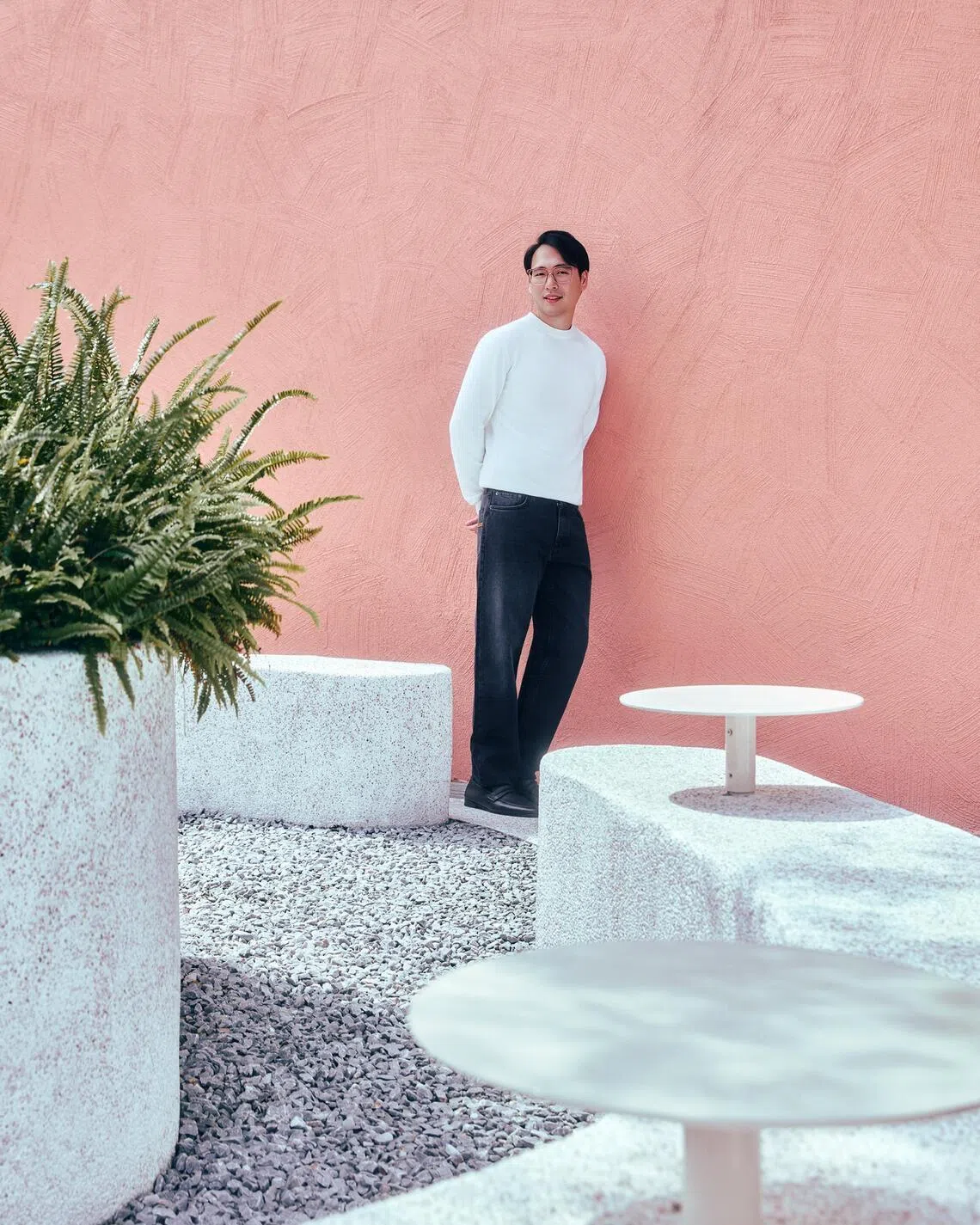
“When people think of economy hotels, they probably think of them as dingy, dirty or just a place to stay,” he says. “We felt we could provide a holistic, comfortable and clean experience that doesn’t need to break the bank.”
Affordable, not apologetic
The brand began with Kinn Capsule on South Bridge Road, followed by Kinn Studios, a compact shophouse hotel in Keong Saik.
Its most ambitious property yet is Kinn Habitat, a hybrid hotel on Hongkong Street combining 120 capsules, eight private rooms and generous communal spaces. Farm, the studio behind the look of New Bahru, Temasek Shophouse and other hip lifestyle enclaves, designed the interiors.
Across all three properties, the proposition remains consistent: Kinn offers small, efficiently planned rooms at accessible prices, then surrounds them with the visual polish, thoughtful detailing and sense of care more commonly associated with boutique hospitality.
For a wealthy family such as the Karims, the obvious move might have been to climb upwards: buy luxury assets, court affluent travellers and let capital sit where wealth recognises itself.
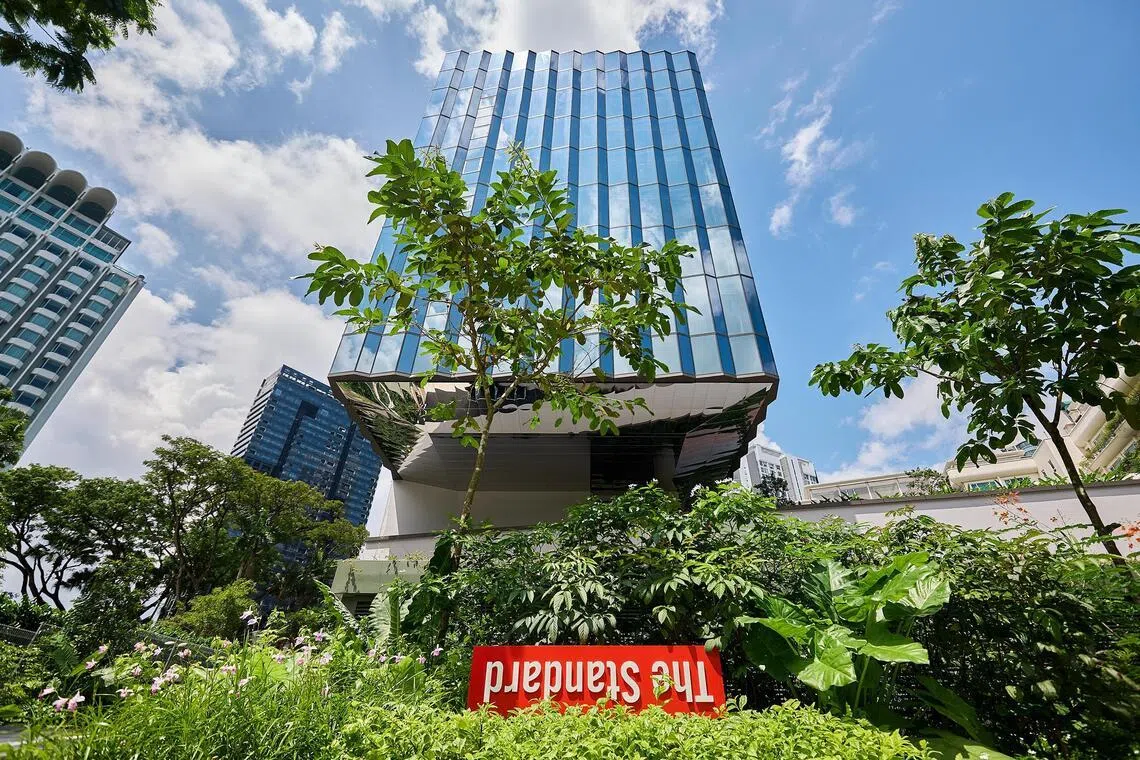
To some extent, the family has already done so. Invictus owns The Standard, Singapore, a luxury lifestyle hotel, and has hospitality investments in Japan and Australia, including the historic Harbour Rocks Hotel and The Old Clare Hotel.
Separately, the Karim Family Foundation owns the House of Tan Yeok Nee, the 141-year-old gazetted landmark that Chayadi helped acquire.
Yet, Chayadi rejects the assumption that prestige rises with room rates. Invictus, he says, is agnostic about market segment: “We can invest in five-star hotels. We can invest in three-star hotels.
“It just very much depends on the opportunity: Is this the best product for this particular locality, in this particular market?”
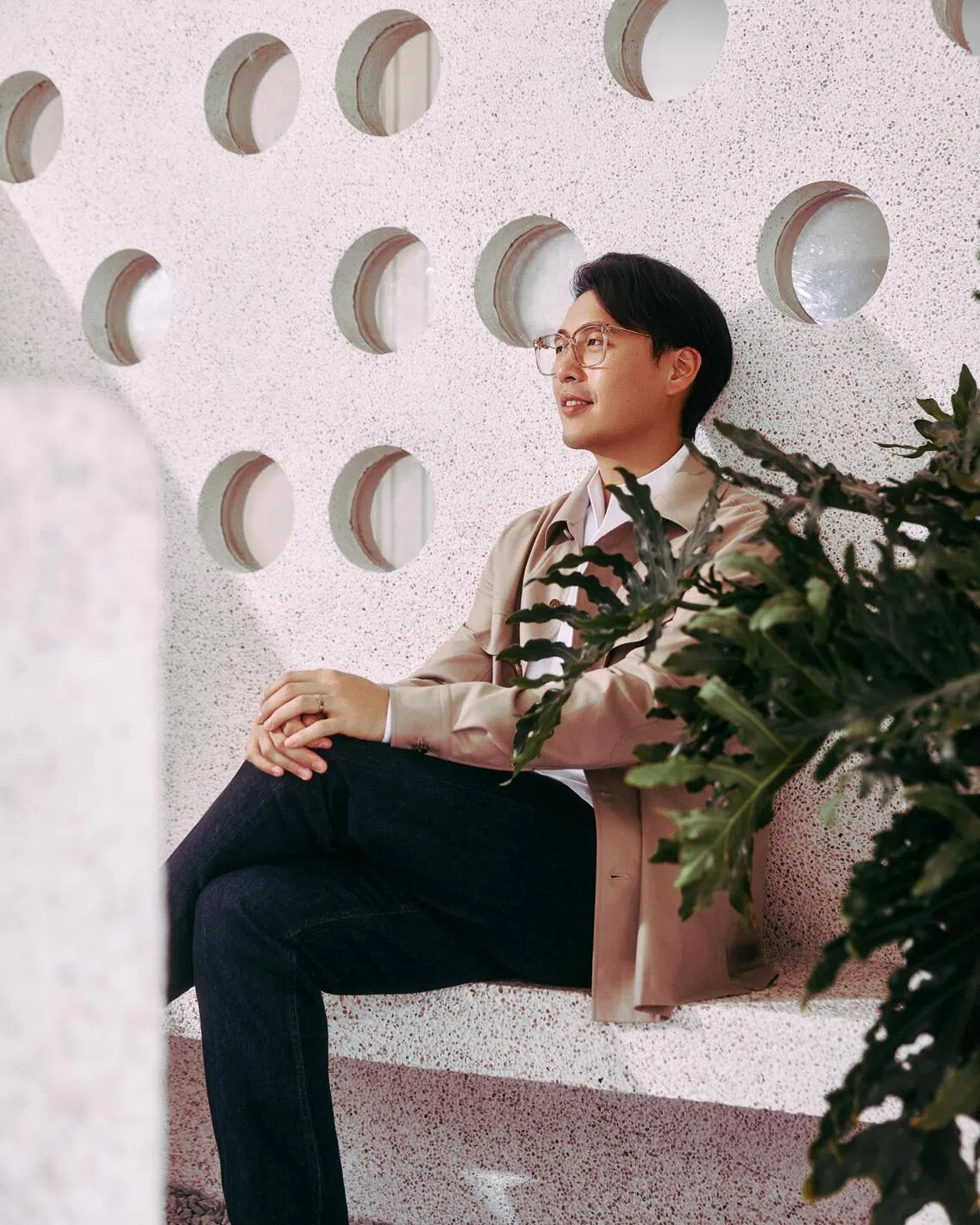
Kinn – an amalgamation of “kin” and “inn” – has steadily attracted Gen Z and millennial travellers, with 75 per cent of its guests below 40. The brand is also “very female-orientated”, Chayadi says, with a strong following among women and solo travellers.
When his team investigated why, the answer had less to do with aesthetics than operations: “Firstly, women appreciated the cleanliness. Secondly, they were attracted to the programming – like music sessions, ‘Wellness Wednesdays’ and flower-arrangement activities. And third is the safety that they feel when they stay with us. We take our safety procedures at night extremely seriously.”
Proving his mettle
The idea for Kinn did not begin as a grand family mandate. Chayadi studied finance at Singapore Management University and, like many young business graduates, initially gravitated towards numbers.
But entrepreneurship, he says, was always somewhere in the background, shaped by watching his parents build and run businesses.
“My parents never forced us to do anything,” he says. “But the principle in our family is that you have to prove your mettle before you get to touch the big guns.”
When the family decided to expand into real estate and hospitality, the direction was broad rather than prescriptive: “They gave us a direction – that we would like to invest in hospitality, we would like to invest in real estate – but my parents left it very much to me and my siblings to determine how to build it.”
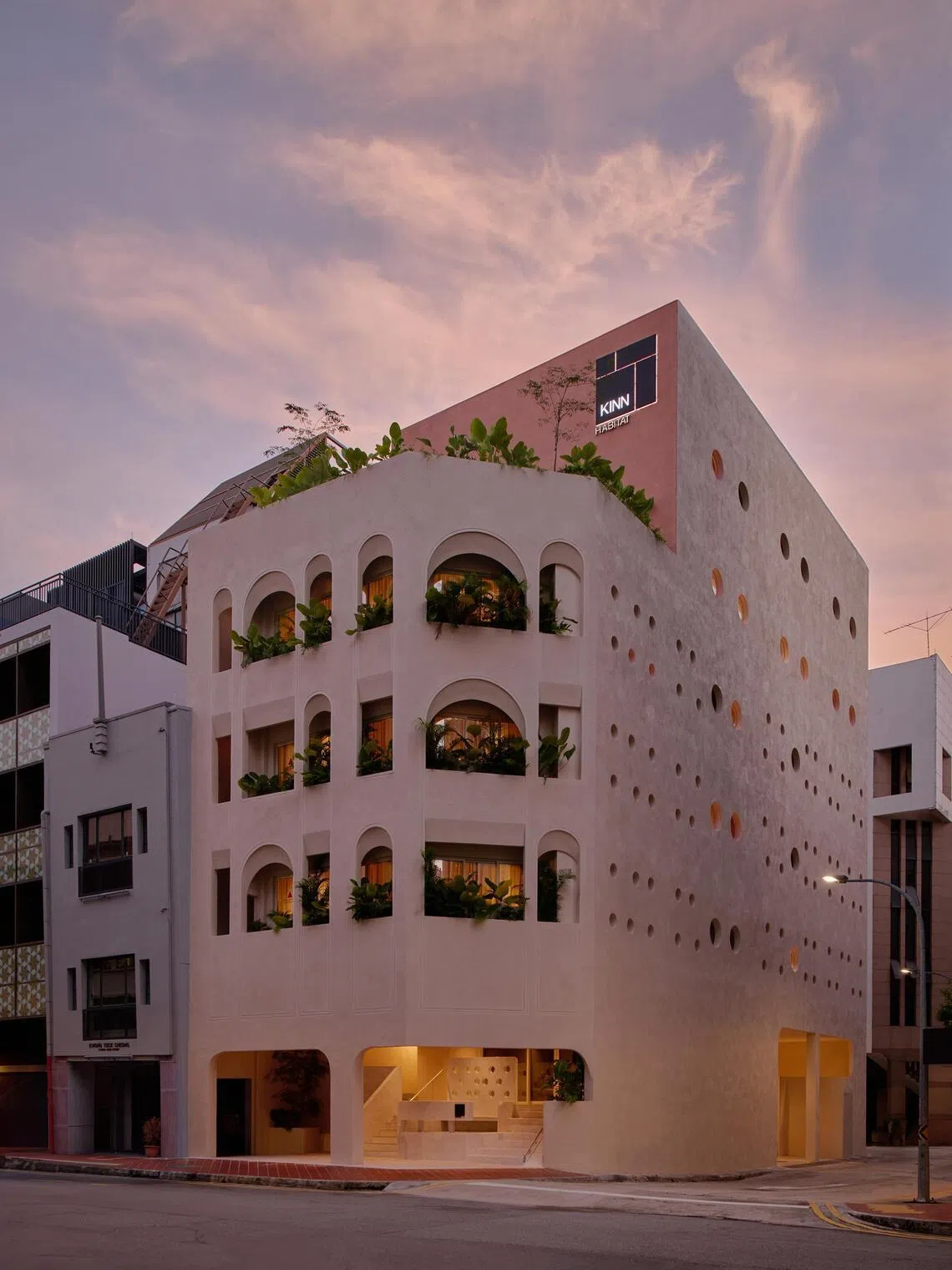
For Chayadi, his most personal venture is Kinn, with a premise that emerged from a practical question: In Singapore, where land and labour are expensive and tourism strategies often favour luxury travellers and Mice delegates, can an economy hotel remain affordable without feeling compromised?
His answer rests on a word he returns to repeatedly: value.
“When it comes to hospitality, what is important is that when you as a customer pay a dollar for something, you feel that this is the best dollar that you’ve spent,” he says. “It doesn’t need to be the most expensive thing. It doesn’t need to be the cheapest. But you just have to make sure that it’s worth it.”
That distinction matters. Luxury often promises excess: more space, more service, more rarity, more distance from the ordinary.
But Chayadi thinks that for a younger traveller moving through an expensive global city, luxury may simply mean access to design, safety, privacy, community and calm – without having to pay for marble, chandeliers or a bathtub facing the skyline.
In Singapore, many of the best experiences remain free or relatively affordable, from the outdoor gardens at Gardens by the Bay and walks along Marina Bay to hawker meals, public architecture and neighbourhoods made for exploring on foot.
The hotel, therefore, need not compete with the city for attention. It only needs to offer a thoughtful, restorative place from which to experience it.
Wellness without the spa
“We look at wellness as part of experiential travel,” Chayadi says. “But we’re not necessarily talking about your spas, saunas, gyms or scientific therapies. Rather, it’s about decompression, rejuvenation and social connections, helping you find like-minded people that provide you with a form of escape from your day-to-day life.”
In practice, this means offering something few economy hotels do: a programme of free or discounted activities, from live music to wellness sessions.
Partnerships with nearby operators give guests access to complimentary spin classes and climbing sessions, as well as discounts at gyms, Pilates studios and other wellness businesses across central Singapore.
Chayadi recalls a music session where three female guests, who did not know one another, discovered a shared interest in veganism and animal rights. They ended up spending the next few days together. The goal, he adds, is for guests to “find a community that speaks to them”.
What changes when a hotelier moves from a five-star international brand to an affordable home-grown one? For Chayadi, less than one might expect.
On paper, The Standard and Kinn seem like opposite businesses: one an international lifestyle hotel, the other an affordable local brand. Chayadi sees them as different expressions of the same principle. “The target markets are very different,” he says. “But in the end, it all boils down to what makes a good hotel, which is the value proposition.”
A global brand such as The Standard brings distribution, marketing power and brand awareness. A small brand such as Kinn brings nimbleness.
“When you’re small, you’re nimble,” he says. “You are closer to the ground, so you understand what your guests’ needs are, and you are more nimble in adjusting to them. That has been how the Kinn brand has grown to what it is today.”
Can smallness scale?
Kinn, however, is just one part of the story of Invictus, which Chayadi describes as a real estate investment company focused primarily on hospitality and living assets.
“Anything that involves accommodation, we have,” he says. “Right now, we are very much focused on the hospitality sector. Hopefully in the future, there will be opportunities for us to explore the co-living sector and maybe even other offshoots of the accommodation business, such as purpose-built student accommodation or senior living facilities.”
Australia is of particular interest for further expansion: The country’s travellers are among the brand’s top 10 guest nationalities; Invictus already has investments there; and Australians, Chayadi says, are open to experiential hospitality.
Japan, meanwhile, is attractive because of the strength of its tourism story. “What makes it a great destination is its culture, which probably can’t be replicated anywhere else in the world,” he says.
Still, he is not rushing to plant the Kinn flag everywhere. “I do hope to scale quickly as a businessman,” he says. “But as a hospitality businessman, it is important that you do not lose the brand value proposition as you continue to scale.”
That is the paradox of Kinn: a brand built on smallness and community now has to prove that those qualities can survive replication.
Asked what he wants Invictus to be known for in a decade, Chayadi does not say glamour. He does not say luxury. He hopes it will become “a hospitality and living sector specialist, renowned for our disciplined and pragmatic approach towards investing”.
That is not the vocabulary of lofty dreams. It is the vocabulary of someone intent on giving those dreams a viable business model.
Photography: Darren Gabriel Leow Fashion direction: CK Assistant stylist: Haz Grooming: Sophia Soh, The Suburbs Studio, using Chanel Beauty.
Decoding Asia newsletter: your guide to navigating Asia in a new global order. Sign up here to get Decoding Asia newsletter. Delivered to your inbox. Free.
Copyright SPH Media. All rights reserved.
TRENDING NOW

LTA proposes combining car COE categories, adding rebate-surcharge system

StarHub to acquire MyRepublic’s mobile business amid ongoing telco consolidation

DBS, OCBC, UOB rout lops billions off STI as inflation, rate concerns spook investors

Grab CEO’s wife Chloe Tong on life with Anthony Tan and finding her purpose

