Tea-sipping Britain warms up to growing it, too
As farmers confront climate change-linked heat, some are cultivating crops rarely grown in the country
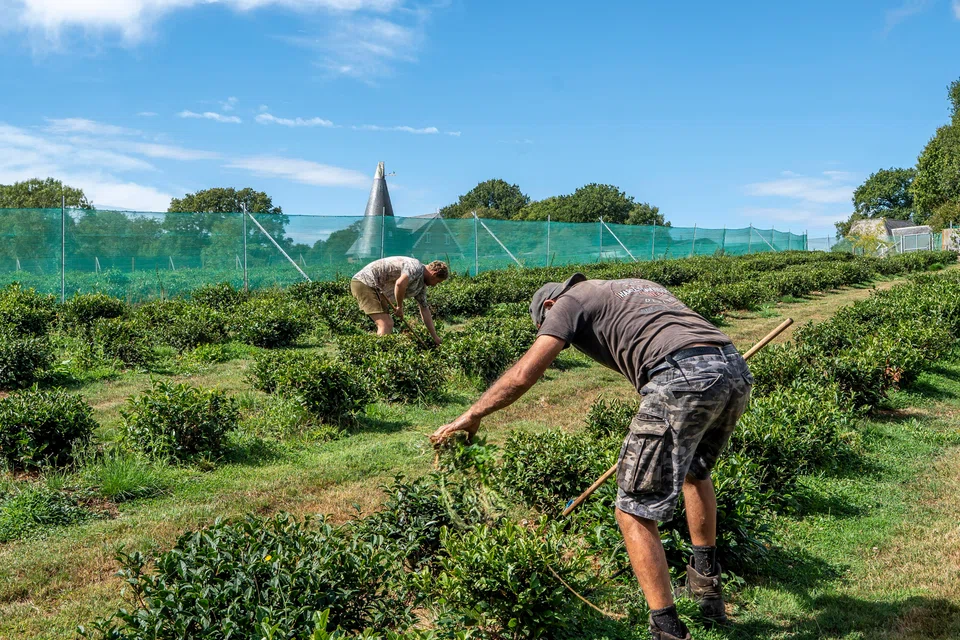
[MOUNTFIELD, England] It was an overcast morning in August, and the humid air hanging over a gentle east-facing slope in England felt unnervingly tropical.
“You could be in Sri Lanka,” said Mark Wyatt as he surveyed the dozens of rows of plants that stretched in front of us.
Wyatt, the owner of 100 acres of land in the south-east area of Sussex, explained that this particular hillside, positioned between a nearby reservoir and a wood, inhabited a strange atmospheric pocket that trapped moisture.
That happens to be ideal for the cultivation of his new crop: camellia sinensis, more commonly known as tea.
Britons have drunk tea for hundreds of years, importing it from China in the 17th century and then, around 200 years later, from India. Billions of cups are consumed in Britain each year, usually black tea rather than green, and often topped up with milk.
Few have attempted to grow it, let alone in the open air. A rapidly warming climate, however, may be changing that.
“I thought we could create something interesting, something special and, with climate change coming through, all the headwinds seemed to become tailwinds,” Wyatt said. “It should get easier over time, as the temperature changes and so does the nature of what is possible with passion, and a bit of science.”
Burning up
The past summer has been the hottest in recorded British history, with temperatures hitting 38.1 degrees Celsius and exceptionally dry conditions inflicting drought on much of the country.
Many farmers have faced crisis as potatoes emerge from the soil stunted or spoiled, wheat and oat yields fall, and cows produce less milk.
SEE ALSO





“The climate is a huge part of it,” said Carol Wagstaff, an expert in agriculture and crop science at the University of Reading.
“If you add the uncertainties about the availability of labour, the geopolitical crises making energy very expensive, the challenges of sourcing fertiliser, you have this maelstrom affecting farming.”
One of those crises – steadily warming temperatures – also presents opportunities, and some British farmers have begun to experiment with produce not typically grown in their country, including melons, kiwis, grapes, nuts, olives and even citrus fruit.
Wyatt, 58, bought his Sussex farm around 20 years ago, after a career in legal publishing. He initially raised livestock, but in 2022 he planted tea bushes for the first time after researching the process for years.
This is the first year of commercial picking and processing for Wyatt.
He hopes to expand his 8,500 bushes to 30,000 within three years, and to produce a tonne of tea annually.
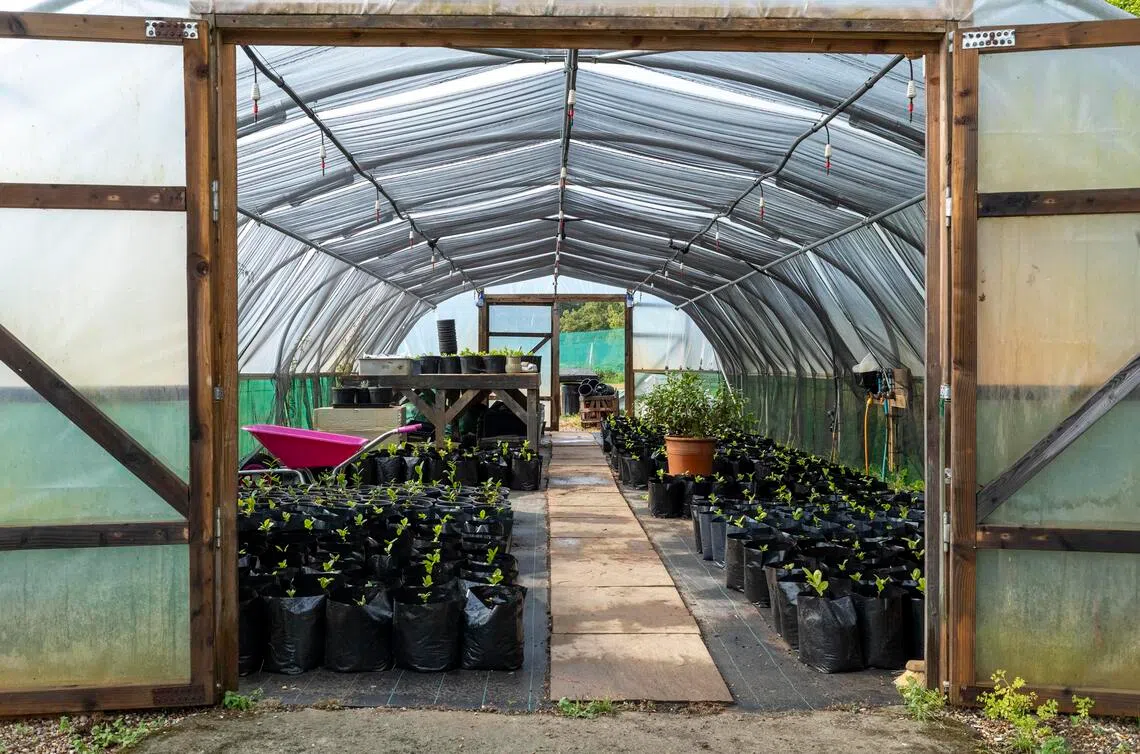
The process is not without challenges. Water must be collected to irrigate the plants. At one point during what has been a very hot year, the temperature in a greenhouse used for growing seedlings hit 56 degrees Celsius, Wyatt said.
More than 150 km north, in Elsworth, Cambridgeshire, Anthony Davison is also experimenting on land once farmed more conventionally by his great-grandfather.
“You wake up to it when you see the French are buying loads of land in this country to grow grapes for wine,” he said.
In his hands, he cradled a cantaloupe picked minutes before. Carved open, the dark orange flesh tasted remarkably sweet and full of flavour, a contrast to many melons on offer in British supermarkets, which are typically picked long before they ripen and transported hundreds, if not thousands, of miles.
“To me, it’s all about picking stuff when it’s really fresh,” said Davison, 64, who sells his produce at Frank’s Farm, a shop and cafe named after his great-grandfather Frank Davison.
He first grew cantaloupe in 2025, expects to produce just around 100 this year, and thinks he could increase output fivefold. He intends to take “more and more land” from the part of his farm where grain is grown intensively, and plans to experiment with peaches and nectarines.
Iris Buddle, 20, who studies plant science at the University of Nottingham and works at Frank’s Farm on her vacations, said that her lecturers often discussed the looming impact of climate change, but that she was seeing it unfold in real life.
“It’s interesting that we have grown melons so well, but cabbage – supposed to be so easy to grow in the UK – I have struggled with,” she said. Those plants suffered damage from insects, she said, while “with pumpkins, we think it’s been too hot for them this year”.
The destructive aspects of climate change were visible on the other side of the farm, in a field where Davison’s herd of cattle normally graze. The pasture had been scorched by the heat, forcing him to offer the cows hay, which is usually for winter feed.
Davison believes that more British farms could follow his model, encouraging people to buy fresh produce adapted to the climate, bypassing big retailers and allowing growers to keep all the proceeds from sales.
Not far from him, one farm is growing watermelons on a commercial scale.
Oakley Farms, near Wisbech, distributed around 8,000 this year to Tesco, a leading supermarket, which said in a statement that it had sold the British-grown fruit for the past decade on a seasonal basis, between July and August.
Risky business
Wagstaff warned that Britain’s rising temperatures are also accompanied by more frequent and severe extreme weather events.
Her conversations with farmers, she said, were once focused on maximising yield. Now, they are mainly about finding resilient crops that can withstand an unpredictable climate.
“If it was just getting warmer, we’d shift to melons, peaches, and grapes or whatever and that would be a very easy decision to make,” she said. But the “wrong weather at the wrong time can destroy your crop – so it’s not without risk”.
One option could be to grow crops that can be planted relatively late in the season, when information on the coming weather is clearer.
Other changes are riskier. “If you are talking about peach trees, you are going to have to be braver,” Wagstaff said. “Because you are talking about four years before you can get your first fruit.”

Wyatt admitted that his venture was a gamble. And it is a niche, luxury product. Five grams of Banks single-estate English tea (which comes in both green and black varieties) sells for £11 (US$12.50). A readily available commercial tea, such as Twinings English breakfast tea, sells for about £3 for 125 g.
Even at that price, profits are another matter. Wyatt thinks he is a dozen years away from making money from tea, although he expects the business – which includes accommodation for tourists – to break even in three years.
“You could use the word ‘stupid’ quite a few times, if I’m honest – the amount of effort to get to this point, dealing with mother nature,” he said, sipping a cup of his black tea.
“You’re in the lap of the gods planting tea outdoors – what’s going to survive?” he asked. “Is it going to survive? And once you’ve planted it and waited a number of years until you can get some leaf, what’s it going to taste like?”
The answer – right in front of him in a glass teacup – is smooth, subtle and infused with flavours from the English countryside. NYTIMES
Decoding Asia newsletter: your guide to navigating Asia in a new global order. Sign up here to get Decoding Asia newsletter. Delivered to your inbox. Free.
Share with us your feedback on BT's products and services