From Thai jasmine rice to salmon: Singapore could see tighter supply of some foods amid Iran war
Diversified sources, stockpiling will mitigate disruptions, SFA says

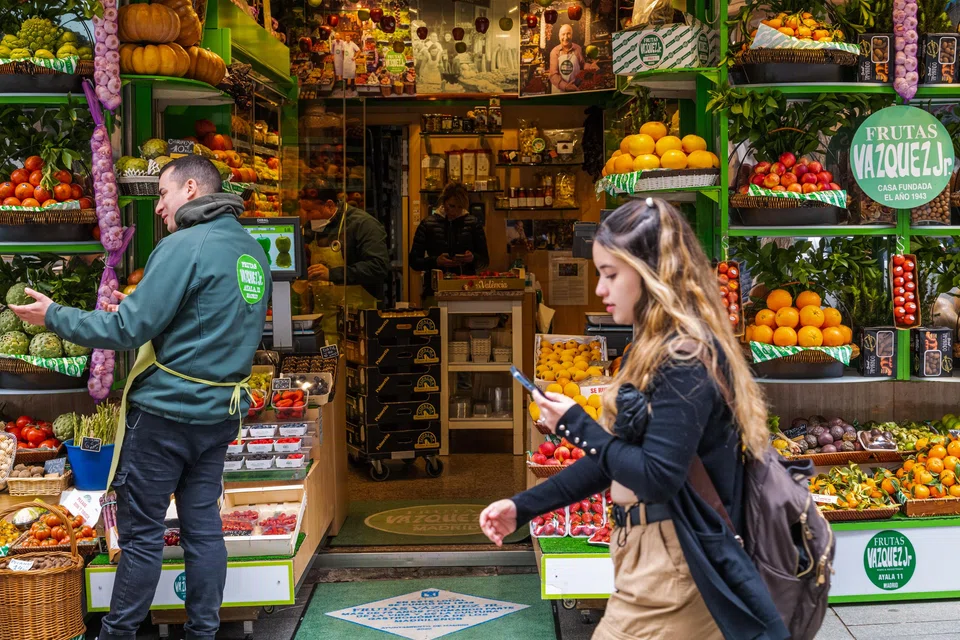
[SINGAPORE] Afghan raisins, Thai jasmine rice and Scandinavian salmon are some food items that could get scarcer in the shadow of the Iran war.
Amid global supply chain disruptions, certain items from specific countries could face temporary shortages or become less available, even as Singapore’s food supply remains stable, the Singapore Food Agency (SFA) said.
While the Republic diversifies its food sources – less than 1 per cent of it comes from the Middle East – it nonetheless “cannot rule out some eventual disruption” to food supply if the war persists, SFA said.
“There may be some inevitable impact to food imports into Singapore. Singaporeans should therefore be prepared for some food items from certain countries to become temporarily unavailable,” it added.
These risks were highlighted in Parliament on Apr 7 when Minister for Home Affairs K Shanmugam, who is also coordinating minister for national security, warned that Singaporeans may reckon with a narrowed range of dietary options, should foods from some countries become unavailable due to the war.
The warning by the minister, who leads the Homefront Crisis Ministerial Committee that oversees Singapore’s Iran war crisis response, comes as food supplies are under threat.
The closure of the Strait of Hormuz has caused a fertiliser shortage, raising costs of animal feed and crop growth, which affects food prices and supply.
Elevated fuel prices resulting from the strait’s closure also lift transportation and farming costs. This could lower supply should importers reduce shipments or if growers scale down farming as higher costs become prohibitive.
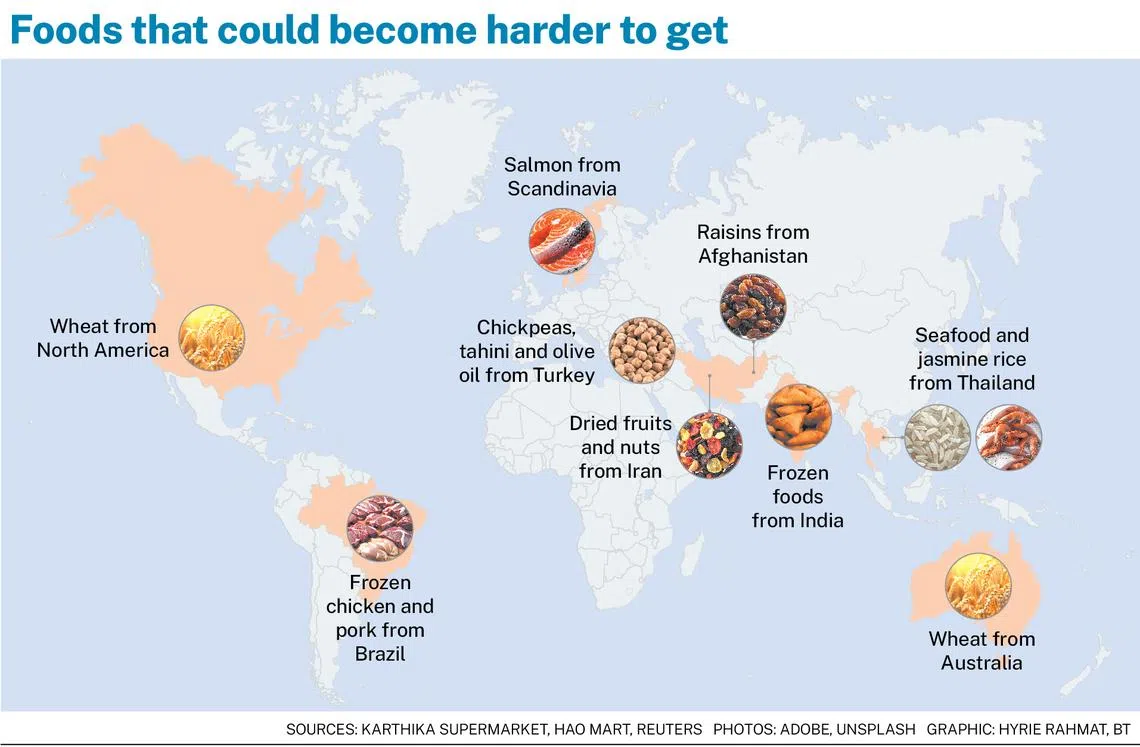
Foods that may get scarcer and where they are from
While the Iran war has placed inflationary pressures on food, Singapore does not face “imminent risk of disruptions” to food supply as it imports its food from more than 180 countries and regions and can pivot to alternative sources, SFA said.
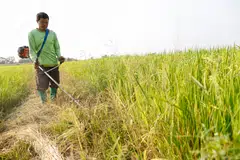
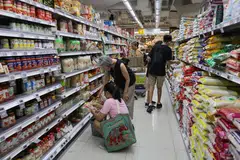
Besides diversification, other measures under the Republic’s revised food-resilience framework Singapore Food Story 2 – stockpiling, producing locally and establishing global partnerships – can mitigate disruptions, it added.
Professor Paul Teng, a visiting senior fellow at Iseas-Yusof Ishak Institute, noted that rice supplies should be stable for now due to a surplus of the staple grain following last year’s bumper harvest. Potential price hikes may be more pronounced after current stockpiles are depleted, he said.
Most grocers The Business Times spoke to said that supplies of essential foods are currently stable, but some flagged specific items that could become less available.
Observers also said that entire categories of foods are unlikely to vanish off supermarket shelves, though increased scarcity and intermittent shortages may occur.
Supplies of fertiliser-hungry crops could fall if growers pivot to crops less reliant on fertiliser, said Luke Tay, food systems futurist and founder of foresight consultancy Cornucopia.
For instance, Australian farmers are favouring less fertiliser-intensive crops such as barley over wheat – an ingredient in noodles – and canola, Reuters reported.
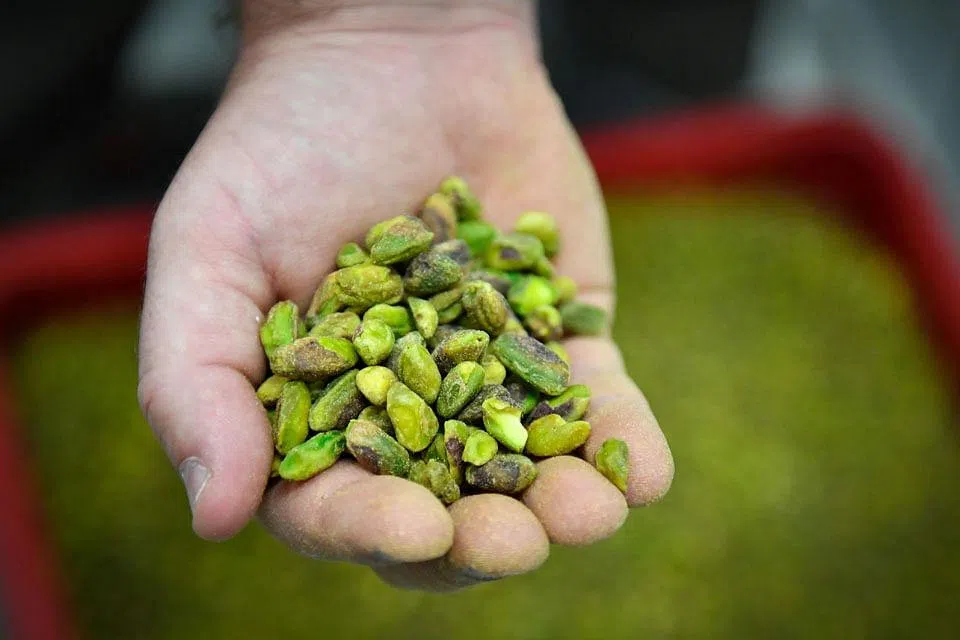
Selected food items from the Middle East may become less available, said Hao Mart and Indian specialty supermarket Karthika Supermarket. These include nuts and dried fruits, such as pistachios and apricots.
Foods transported through longer supply chains have higher risk of becoming less available or pricier, as they absorb steeper import cost hikes, said Prof Teng.
Examples are fruits from temperate climates, Scandinavian salmon, frozen pork and chicken from Brazil and wheat from North America, he said.
For Anna’s Gourmet, air-flown products are especially at risk of shortages. Costs of such foods, which make up around half of what the European specialty grocer sells, have risen more steeply than those of other items – by up to an estimated 150 per cent.
Foods from energy-reliant nations are also vulnerable, as higher fuel costs could make growing or transporting them so prohibitively expensive that growers stop farming altogether, lower production, or opt not to bring produce to markets, said Tay.
In energy-dependent Thailand, the fishing industry has come to a halt; fishermen have stopped going out to sea, with the diesel powering their boats now too costly.
Thai jasmine rice, a highly prized premium variety, may also be at risk if high energy prices make farmers unable to afford the irrigation the crop needs, Prof Teng said.
Karthika Supermarket has experienced shipment delays of frozen foods from India, such as prata and samosa. The South Asian country relies heavily on Middle Eastern oil and gas and now faces a supply crunch for these resources, which are required for frozen food production.
Grocers New Econ Minimart and uMart said that suppliers have imposed minimum-order quantities to manage costlier freight. This could affect grocers’ ability to offer the same variety of products as before, or lengthen inventory holding periods, which negatively affects cash flow.
What grocers are doing
Amid potential shortages, Singapore grocers are seeking alternative sources or substitute products, absorbing cost hikes and adjusting retail prices.
Some, such as Cold Storage and FairPrice, are relying on their diversified supply chains.
While tapping alternative sources may alleviate disruptions, grocers noted that certain varieties of foods from specific places may not have exact substitutes from elsewhere.
These include Afghan raisins, which are grown only in Afghanistan, and Middle Eastern dates, for which American dates are an alternative – but imperfect – substitute, said Karthika Supermarket.
Anna’s Gourmet, which specialises in importing food from Central and Eastern Europe, said that there are “no real alternatives” for some of its products.
Amid pricier imports, grocers such as The Meat Club and Anna’s Gourmet have been absorbing cost hikes, but said they may need to start adjusting retail prices for business sustainability.
Others such as Ridgewood Gourmet and Ryan’s Grocery have no current plans to raise prices, but cannot say how long this will be the case.
Should consumers worry?
Despite supply disruptions, Prof Teng said Singapore will generally be able to obtain various food supplies, but at steeper prices.
After all, the city-state accounts for a rather small segment of the global food market and can absorb price hikes due to its relative wealth, he said.
Moreover, the impact of pricier groceries on Singapore consumers would likely be indirect rather than direct, said Prof Teng.
He noted that Singaporeans spend a relatively lower portion of their income on groceries than consumers from other countries, because they dine out more and do not cook much.
Hence, they will likely be more affected by elevated prices of cooked meals at eateries than by pricier groceries.
Lower-income households, which spend a greater portion of their income on groceries, will likely be more affected by higher food prices than middle to high-income households, said Prof Teng.
Decoding Asia newsletter: your guide to navigating Asia in a new global order. Sign up here to get Decoding Asia newsletter. Delivered to your inbox. Free.
Copyright SPH Media. All rights reserved.