

Kwek Leng Beng donates S$1 million to SJI’s philanthropic fund to help youth advance AI skills
It will go towards an innovation programme and Cambridge scholarship
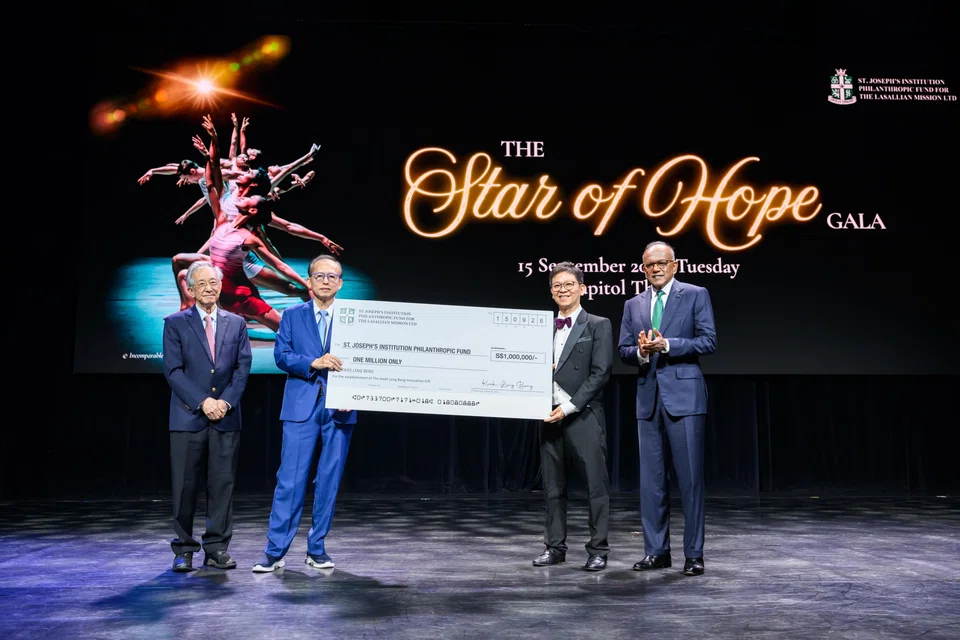
[SINGAPORE] Kwek Leng Beng, executive chairman of Hong Leong Group and City Developments Limited, has committed S$1 million to the St Joseph’s Institution Philanthropic Fund for the Lasallian Mission (SJIPF), a registered charity.
The funds will go towards helping young Singaporeans develop skills and projects in artificial intelligence, advanced computing and emerging technologies.
On Tuesday (Sep 15), Kwek said in an interview with The Business Times that the donation is timely, as Singapore accelerates its national AI agenda.
“Because we live in this day and age, the younger generation must know something about AI. Or else how are they going to deal with the future?”
The donation will be held by SJIPF in two parts: the Kwek Leng Beng Innovation Programme and the Kwek Leng Beng SJIPF-Cambridge Scholarship.
Over the next 10 years, the Innovation Programme will support student-led AI and tech projects within SJI, with funding covering costs including mentorship by industry and research practitioners as well as masterclasses in AI, machine learning, robotics and programming.
“(This) aims to equip our youth with deep technical know-how,” Kwek said. “I am a firm believer that understanding technology and AI is vital to keeping Singapore an advanced, safe and prosperous global leader. Our young people must have the skills not just to use AI, but to apply it in ways that meaningfully contribute to our country.”
SJIPF noted that the grant will directly fund the students and their proposals and projects – not the school.
Meanwhile, the scholarship will support SJI and SJI International students who have been admitted to the University of Cambridge to study mathematics, computer science or engineering. Each scholar will receive up to S$50,000, and the donation is expected to support 10 to 20 scholars.
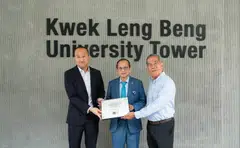
While selecting scholars, the SJIPF panel will consider experience in software and systems development, research undertaken, past ventures and achievements – particularly focusing on the student’s work outside prescribed schoolwork.
Leon Yee, president of SJIPF, said: “Mr Kwek’s vision is to make sure that students who are admitted to Cambridge already can apply for the scholarship. But in order to get the scholarship, they need to have a strong portfolio as well.”
Additionally, in each year of the award, chosen scholars will report to SJIPF on their work and contribute to the Innovation Programme, by mentoring a student team, giving talks or hosting projects.
Kwek said: “An investment in (young people’s) education can compound over a lifetime. A young mind’s curiosity and problem-solving skills are critical as we enter the next stage of Singapore’s development of AI.”
Since Singapore has “no oil, no land and no hinterland”, the country’s strength lies in its people, he added.
“Productivity can be bought, through machines, software and other technologies available in the market. What is more important, and harder to develop, is the curiosity to build new-age technology and the encouragement young students need to apply it to our evolving problems.”
Decoding Asia newsletter: your guide to navigating Asia in a new global order. Sign up here to get Decoding Asia newsletter. Delivered to your inbox. Free.
Copyright SPH Media. All rights reserved.
TRENDING NOW

US Fed hikes rates amid stubborn inflation; signals further tightening in coming months

Quarter of Singtel special discounted shares sold ahead of CPF Board transfer

AirAsia’s funding woes test how far Malaysia will go to protect its budget champion

Singapore’s wealth boom is raising the bar for aspiring private bankers

