TikTok diamond auctions are instant. Are they any good?
Timed sales of lab-grown gems have been a hit on the app, but some experts criticise the trend
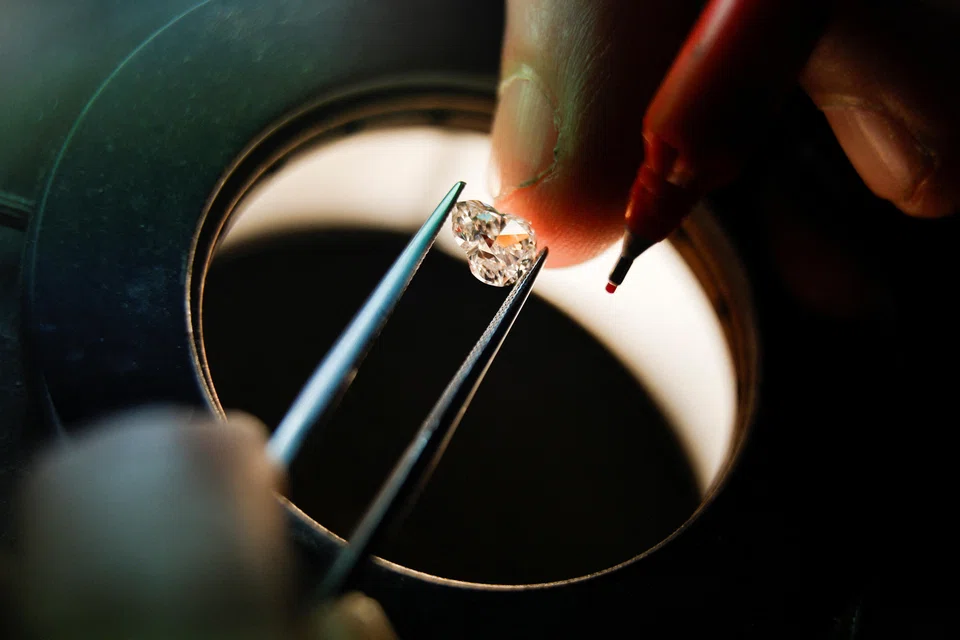
LAST month, Tatianna Diaz was unwinding at home in Fort Collins, Colorado, idly scrolling through TikTok, when something shimmering caught her eye: a diamond, which was on display in a live auction.
An animated host flaunted lab-grown diamonds in a range of cuts and carats, while users wrote into the comment section to ask for specific stones: Did they have a 1.5-carat princess cut? Or perhaps pear-shaped varieties?
“Oh, this is kind of fun,” Diaz remembered thinking.
The seller then brought out a 2.58-carat cushion-cut diamond. Diaz, 29, found herself bidding US$100, then US$200, US$300... sold! The diamond was hers.
Diaz, who considers herself a fine-jewellery aficionado and normally buys natural diamonds, said she initially “didn’t even have any interest in buying anything”. Yet, she bid on a TikTok diamond anyway; her husband is planning to have it set as a birthday gift.
Ryan Roth, 28, also stumbled upon an auction recently and threw out a number. “I accidentally won it,” he said of the 4-carat marquise he had bid on. “I was like: ‘Did I just really spend US$700 on TikTok Shop?’”

“It’s so easy, it’s like a slot machine,” said Roth, who estimated that he had amassed about 25 stones from TikTok auctions.
A rash of accounts that livestream gemstone auctions has sprouted up on TikTok over the last six months. These online-only outfits feature auctioneers selling off lab-grown diamonds frequently starting at US$1 apiece.
Sellers will often set a timer for 20 seconds, as they flash a stone and its paperwork, with the highest bid winning. “I think it’s also the instant gratification that people get addicted to,” Diaz noted.
The trend has drawn criticism from experts who question the quality of the gemstones and the frantic pace of the shopping experience.
“From what I have seen, the TikTok auctions are selling the product without proper time to evaluate the stones,” said Amy Weyer, a gemologist in Vermont. “Two stones may look almost identical on paper, but they can look vastly different when viewed in person.”
Chuck Marks, the owner of a jewellery store in Wentzville, Missouri, that sells only lab-grown diamonds, doesn’t think particularly highly of the auctions.
“You could do better,” he said. “Why would you go to the grocery store and buy a bruised apple,” he added, when there are “these beautiful, shiny, pretty apples in the rest of the crate?”
Synthetic diamonds can vary significantly in quality. Reports tend to consider factors such as polish, symmetry, cut, clarity, colour and carat within their grading standards.
Marks said that a vast majority of lab diamonds on TikTok are assessed by the International Gemological Institute (IGI), which he said he did not consider to be the most thorough report for a prospective buyer. (TikTok, which did not respond to a request for comment, requires either IGI or Gemological Institute of America certification.)
Marks pointed out that he had had customers ask him to set their TikTok gemstones, and “they’re not happy with it”. “You’re buying the grade on the paper, which isn’t always accurate.”
Worldwide sales of lab-grown diamonds surpassed US$8 billion in 2024, according to diamond industry analyst Edahn Golan. The lab-diamond boom has transformed the jewellery industry, and that shift has coincided with the expansion of the TikTok Shop platform, which debuted in 2023 and makes it easy to start selling.
Yoni Rabinovich, 25, used to trade sports cards on the livestreaming platform Whatnot before founding the online auctioneer House of Diamonds with a friend three months ago.
The page for the company, which is based in Fort Lauderdale, Florida, streams roughly 14 to 15 hours per day, with four hosts showing off diamonds in various cuts.
Rabinovich suspects that his viewers watch both to buy diamonds and for a sense of escapism. In the comments, “people tell us what they’re doing in their day”, he said. Many don’t buy at all, choosing to watch the sales as entertainment.
The hosts’ interactions with customers are part of the appeal, Roth said. “There is that piece of human connection – where it’s like (TV shopping network) QVC, except you’re talking to them,” he said.
But Marks noted that in a world in which lab diamonds are plentiful, the auctions sometimes create “artificial scarcity in that moment”.
Over Zoom, he pulled up a vendor’s portal to reveal a 360-degree view of three stones bearing identical grades. All were radiant-cut diamonds (square or rectangular with trimmed edges), just over 3 carats and graded as “very slightly included”, meaning they bear few visible imperfections, with excellent polish and excellent finish.
Despite their indistinguishable gradings on paper, the stones are substantially different when viewed from various angles. The first appeared brilliant and clear; the second had a greyish appearance; the third had a greenish tint and “looks like my son washed socks in it”, Marks said.
Many are turning to the stones for their pricing and ease of purchase. “I think it’s a good option for people who don’t want to spend so much money on a diamond,” Diaz explained, “or younger couples who are getting married and can’t afford it.”
Roth paid to have his marquise stone set into a necklace, but has plenty of loose stones he is saving for a “rainy day” or a stroke of inspiration, he revealed. “It’s kind of like collecting Barbies.” NYTIMES
Decoding Asia newsletter: your guide to navigating Asia in a new global order. Sign up here to get Decoding Asia newsletter. Delivered to your inbox. Free.
Share with us your feedback on BT's products and services