



Déjà vu as Indonesia flirts with election age limits

This week in Asean:
- Vietnam: Signs deals with China
- Malaysia: Amazon pumps in US$6.2b
- Myanmar: Kyat plunges to record low
- Singapore: Key exports up in surprise jump
Dear BT reader,
Are we back in October 2023?
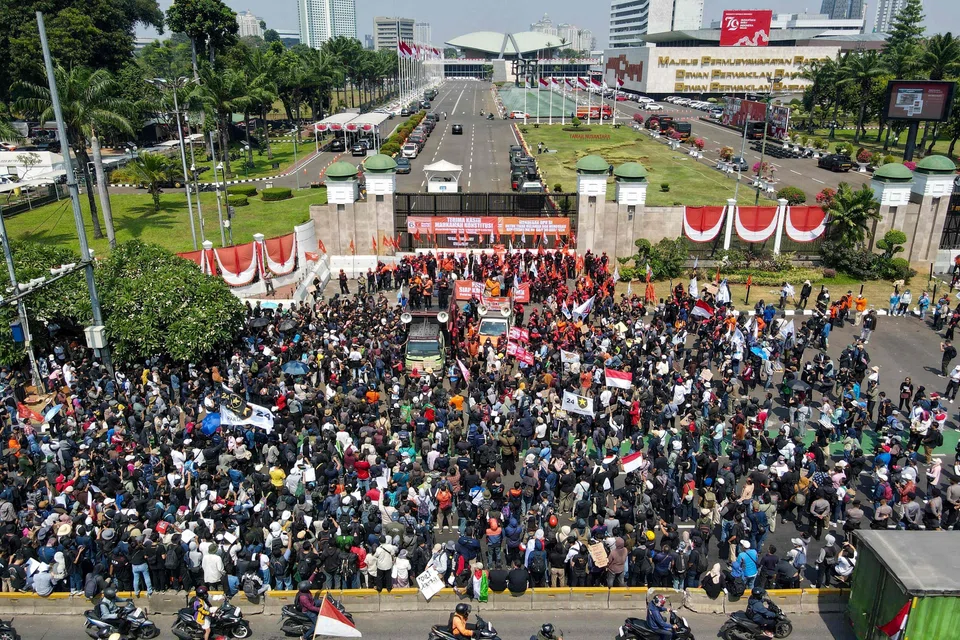
Let me explain. On Thursday (Aug 22), protesters in the thousands flooded the gates of Jakarta’s parliamentary building and gathered in large cities such as Yogyakarta and Bandung, armed with angry placards, flags, loudspeakers and even a cardboard guillotine. Violent behaviour from demonstrators were met with tear gas and water cannons fired by the police.
The reason for the outcry dates four months back. In Indonesia, the Pilkada Law or the Regional Head Elections Law outlines that candidates running for governor, mayor or regent must be at least 30 years old when eligible candidates are officially announced.
But in April, the Garuda Party (made up of young people who want to contribute to national development, it claims – though the grapevine ties it to the family of former president Suharto) petitioned the Supreme Court to allow for candidates to be aged 30 by the time of inauguration.
Word on the street is that this clears the path for President Joko Widodo’s youngest son – who hits the big three in December – to run for deputy governor in November’s regional elections.
The change was approved by the Supreme Court in May. But on Tuesday (Aug 20), the Constitutional Court rejected it. The next day, a legislative panel speedran through a draft legislation that undercut the Constitutional Court’s ruling. Behold, the uproar on Thursday.
Why I say it feels like history is repeating itself is because this is a tale as old as the autumn of 2023.
Last year, the Constitutional Court received requests calling for the minimum age of presidential and vice-presidential candidates in elections to be lowered from 40 to 35. While the court stood pat on the minimum age, it introduced some wiggle room: the limit would not apply to anyone who has been elected a regional leader. An example would be the mayor of, say, Surakarta city. Conveniently, Jokowi’s eldest son, 36, became eligible to run and now stands as the vice president-elect of Indonesia.
At the time of writing, the Parliament has decided not to revise the law and abide by the Constitutional Court’s decision (for now). But the market has certainly taken a hit. The rupiah – which had just erased its losses for the year against the greenback – weakened further to about 15,613 per USD as at Thursday evening, falling about 0.7 per cent from the day prior. Indonesian assets took a hit as well, with the Jakarta Stock Exchange Composite Index sinking by about 1 per cent.
Indonesia on Wednesday (Aug 21) just maintained its key interest rate at 6.25 per cent. Earlier on Aug 16, Jokowi also proposed a budget of more than S$300 billion for next year in his final state address. Our Indonesia correspondent Elisa Valenta brings you more in her pieces.
Let me know what you think of this week’s deep dive into Indonesia. We’ve got a firm lineup of stories this week from our correspondents, so do keep scrolling for more. Have a good weekend.
Trending
What I’m watching: Bangko Sentral ng Pilipinas on Aug 15 cut its key interest rate to 6.25 per cent from 6.5 per cent for the first time since Nov 2020, citing robust domestic demand prospects and projections that headline inflation will trend downwards. Both Indonesia and Thailand kept their rates unchanged this week, as per expectations.
What you should know: The Philippine central bank’s move comes ahead of the US Federal Reserve’s potential cut next month; economists across the board expect the central bank to trim rates in September, following which central banks in the region will do the same from Q1 next year.
Asean in brief
- Amazon to invest US$6.2 billion in Malaysia through 2038 The new infrastructure is expected to contribute about US$12.1 billion to Malaysia’s gross domestic product and create more than 3,500 jobs. Read more
- Whoosh-ing through Indonesia Read about Indonesia’s first high-speed railway and how it compares to other fast trains in South-east Asia in this visual piece. Read more
- Singapore to remain open amid concerns over US protectionism: DPM Heng Since the introduction of the US-Singapore Free Trade Agreement in 2004, trade between the two countries has almost tripled to US$207 billion in 2021. Read more
- Two-thirds of Singapore consumers optimistic about local economy, but over half lack financial preparedness: survey Persistent inflation remained the top concern of Asean consumers, with 63 per cent of respondents citing it as their primary worry. Read more
- UOB Malaysia on track to better 2023’s record profit this year, says CEO CEO Ng Wei Wei said she was confident that the bank’s 2024 financial performance will better last year’s record profit through top-line growth, cost management and strategic investment in key sectors. Read more
- Thai economy is nearly in crisis: caretaker finance minister Thailand’s economy is nearly in crisis due to declining exports and uncompetitive manufacturing, the country’s caretaker finance minister said on Wednesday. Read more
- Top Thai opposition party seeks to rein in Constitutional Court’s power after political upheaval Thailand’s biggest opposition party will push to curb the sweeping power of the Constitutional Court, which this month caused fresh upheaval by dissolving the most-popular party and then ousting the prime minister. Read more
- FPT consortium commences work on US$173 million AI centre in southern Vietnam The project comprises an AI centre, an education zone and a supporting urban zone. Read more
- Philippine ex-mayor linked to Chinese crime rings fled to Singapore in July: Filipino authorities A former Philippine mayor under investigation for her ties to Chinese crime syndicates, including two foreigners convicted in Singapore over money laundering offences, may have been in the Republic for about a month. Read more
- Singapore, Japan to deepen cooperation on carbon capture and storage technologies Under the agreement, both countries will exchange best practices for cross-border CCS, as well as insights on related technologies. Read more
TRENDING NOW

Malaysian king buys stake in Singapore-listed mining firm expanding into rare earths

Family offices ‘kept captive’ by relationship managers turn to independent advisers, direct deals

Once staunchly pro-China, Malaysian Chinese businesses are now distancing themselves from Beijing

Could stablecoins be the future of money?

