
Asia’s moment of reckoning: Adapting to Trump’s transactional world view
The US leader’s approach, however disruptive, reflects underlying American attitudes that transcend any single presidency
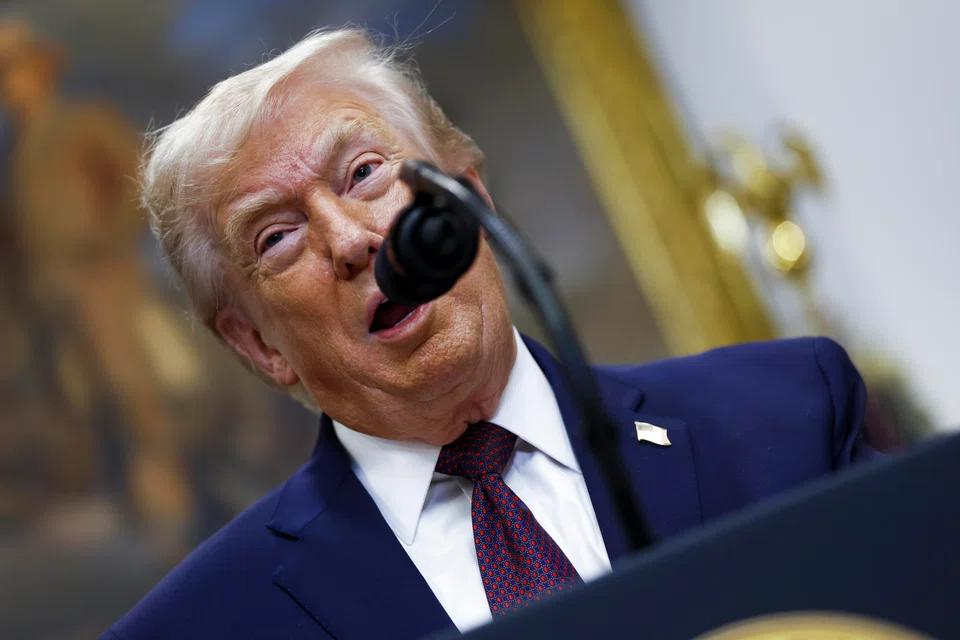
THE return of Donald Trump to the White House marks not merely a change in US presidential administrations, but also a fundamental acceleration of trends that have been reshaping the international order for years.
For America’s Asian allies – from Tokyo to Seoul and Manila – the question is no longer whether Washington will maintain its traditional security commitments, but rather on what terms and at what price.
Trump’s transactional approach to alliances, far from being an aberration, reflects deeper currents in American domestic politics: war-weariness, fiscal constraints, and a growing consensus that the costs of maintaining global hegemony outweigh the benefits.
Asian capitals that treat Trump 2.0 as a temporary deviation from “normal” American foreign policy are setting themselves up for disappointment.
The era of unconditional security guarantees underwritten by American taxpayers is ending, regardless of who occupies the Oval Office.
The burden-sharing imperative
Trump’s demand that allies pay more for their own defence should not be dismissed as mere bluster.
It taps into legitimate American frustrations about asymmetric alliance relationships where Washington bears disproportionate costs while allies free-ride on American military power.
Japan and South Korea, despite being wealthy nations, have historically spent far less on defence as a percentage of GDP than the US. Trump’s insistence on renegotiating these arrangements forces a long-overdue conversation about equitable burden-sharing.
For Asian allies, this presents both challenge and opportunity. Rather than resisting these demands, forward-thinking leaders should embrace enhanced defence autonomy.

Japan’s gradual remilitarisation, including its recent defence budget increases and acquisition of counterstrike capabilities, points the way forward.
South Korea’s development of indigenous defence industries similarly demonstrates how allies can reduce dependence on American security guarantees while maintaining a partnership with Washington.
The China question
Trump’s approach to China defies conventional categorisation. His administration combines aggressive trade protectionism with pragmatic deal-making, creating uncertainty for Asian nations caught between their largest trading partner and their security guarantor.
The bipartisan consensus in Washington on China competition means that no Asian ally can simply wait out Trump and hope for a return to pre-2016 engagement policies.
Asian nations must therefore develop more sophisticated strategies that avoid forcing themselves into rigid either-or choices between Washington and Beijing.
Singapore’s model of maintaining robust economic ties with China and the US while preserving security cooperation with the US offers one template.
Asean’s emphasis on institutional neutrality and economic integration provides another framework for managing great power competition without becoming subordinated to either side.
The worst approach would be to amplify tensions through provocative rhetoric, or actions that assume automatic American military backing.
Trump has repeatedly questioned whether the US should go to war over distant territorial disputes. Asian allies banking on reflexive American intervention in conflicts with China may find themselves dangerously exposed.
Economic recalibration
Trump’s scepticism towards multilateral trade agreements and his preference for bilateral deals requires Asian economies to rethink their engagement strategies.
The Trans-Pacific Partnership, rebranded as the Comprehensive and Progressive Agreement for Trans-Pacific Partnership without American participation, already demonstrated that Asian economic integration can proceed without Washington’s leadership.
Trump’s return should accelerate this trend towards regional frameworks that do not depend on American participation.
At the same time, Asian nations must prepare for more contentious economic negotiations with Washington.
Trump views trade deficits as indicators of American weakness and will likely demand greater market access, reduced non-tariff barriers, and more balanced bilateral trade relationships.
Countries such as Vietnam and South Korea that run substantial trade surpluses with the US should expect pressure to adjust their economic policies.
Strategic autonomy as partnership
The ultimate irony of Trump’s transactional approach is that it may produce healthier, more sustainable alliances.
By forcing Asian partners to take greater responsibility for their own security and prosperity, Trump’s policies could generate more capable allies that are less prone to dependency and more willing to share burdens.
A Japan that spends adequately on defence and takes primary responsibility for deterring regional threats is a more valuable partner than one that expects American forces to automatically defend it at no cost.
This transition will be uncomfortable and risky.
The deterrent value of American security commitments has helped maintain Asian stability for decades, and any weakening of these guarantees creates dangerous uncertainties that adversaries might exploit.
Yet the alternative – clinging to unsustainable arrangements built for a different era – promises only continued deterioration and eventual crisis.
Trump’s approach, however disruptive, reflects underlying American attitudes that transcend any single presidency.
The path forward requires embracing greater strategic autonomy while maintaining constructive partnerships with Washington based on mutual interest rather than one-sided dependency.
Those who adapt to this new reality will thrive; those who resist it will find themselves increasingly marginalised in a multipolar Asian order where American primacy can no longer be taken for granted.
Decoding Asia newsletter: your guide to navigating Asia in a new global order. Sign up here to get Decoding Asia newsletter. Delivered to your inbox. Free.
Share with us your feedback on BT's products and services