

Budget 2026: Accelerating Singapore’s growth in a fragmented world
As global trade fractures, Budget 2026 doubles down on AI integration while reinforcing the social compact
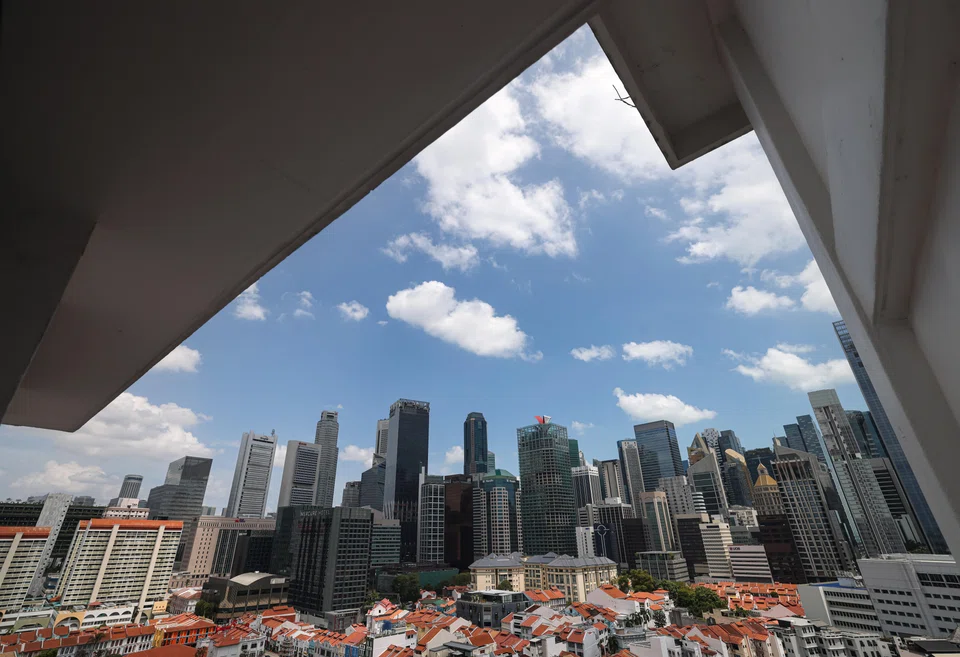
FRAGMENTATION is the new defining feature of the global trade environment. Amid this, Budget 2026 responds to a crucial question for Singapore: Can a small and open economy continue to succeed in the new world order?
While the current landscape presents difficult trade-offs – between artificial intelligence (AI) adoption and workforce stability, and between attracting global investments and developing local capability – Singapore’s Budget posits these are not contradictions but, rather, reinforcing strategies.
The Budget represents a concerted national push for industry-wide transformation and comprehensive AI integration in the intelligent economy. At the same time, its targeted measures reflect the need for fiscal prudence amid heightened macroeconomic uncertainty.
Singapore is expected to end the 2025 fiscal year with a surplus of S$15.1 billion, with a smaller surplus of S$8.5 billion projected for FY2026.
On the whole, Budget 2026 plays to the Republic’s clear strengths in areas such as advanced manufacturing, connectivity and services, while exemplifying the country’s focused strategy for a new era of growth.
Its measures will enhance Singapore’s appeal as a connector of international flows of people, markets and capital, enabling the country to move decisively in the face of global change.

But more crucially, the Budget seeks to advance Singapore’s “We First” agenda, ensuring that businesses and individuals are not left behind as the country forges ahead.
The reinforcing cycle of trade complexity and capability
For Singapore to remain a crucial node, it will need to reinforce its status as a sophisticated hub for emerging technologies that can accelerate innovation across industries.
This means continually setting a global benchmark for the effective integration and scaling of AI across industries, maintaining Singapore’s competitive edge in the intelligent economy.


It is also imperative that Singapore beefs up its guard rails to ensure that this integration is responsible.
Budget 2026 shows how Singapore is reinforcing its AI strategy to accelerate sound, technology-fuelled growth – across the economy and with a focus on specific areas that leverage the country’s strengths.
A new National AI Council chaired by Prime Minister and Minister for Finance Lawrence Wong will help to strategically accelerate Singapore’s growth, while clear rules will enable Singapore to apply AI responsibly and safely across society.
PM Wong also emphasised that Singapore must go beyond individual pilots to achieve speed and scale at a national level. Budget 2026 can then be viewed as a catalyst for deeper AI integration that spurs sustained economic transformation.
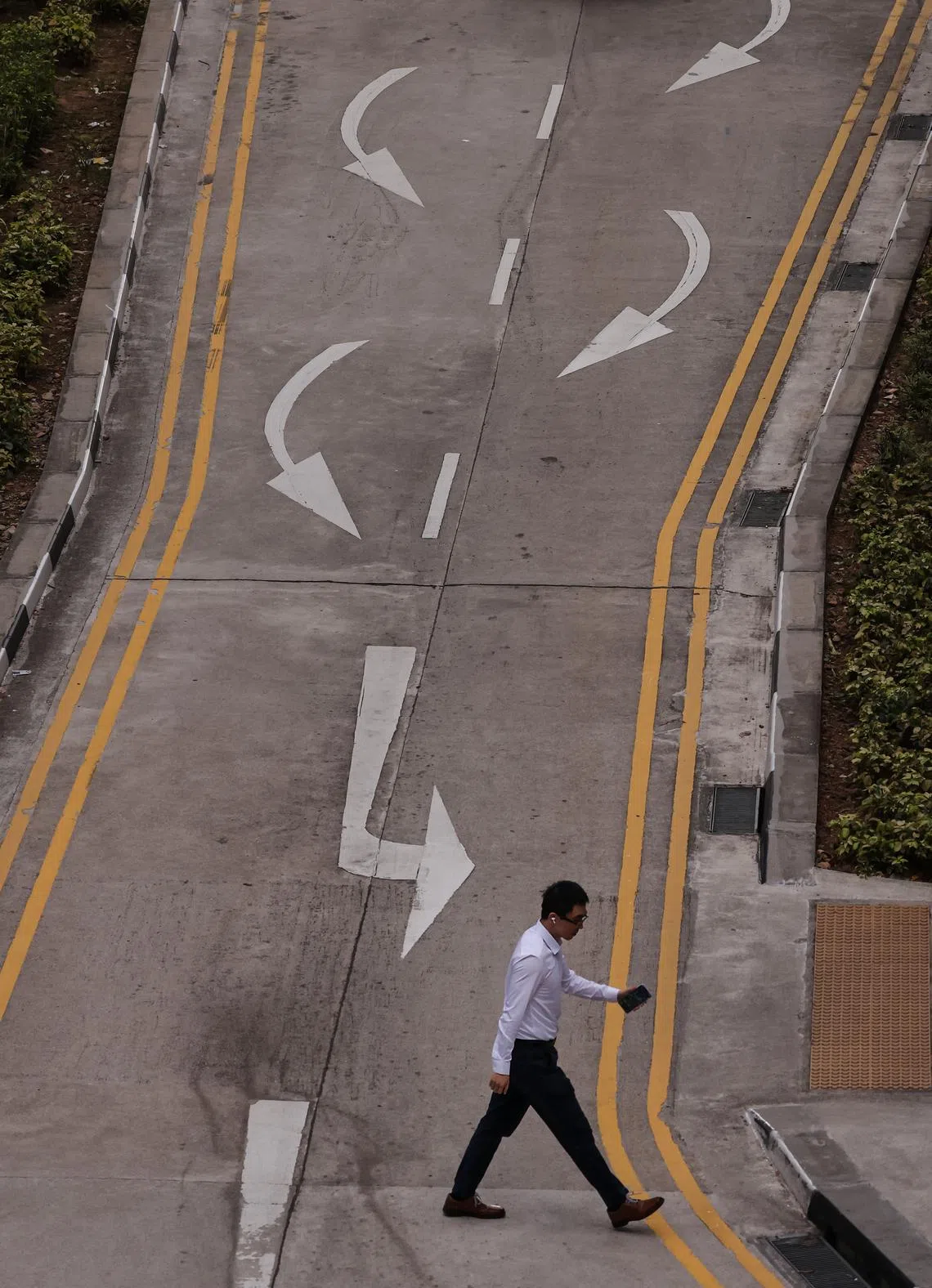
The launch of new national AI missions – in advanced manufacturing, connectivity, finance and healthcare – draws on Singapore’s existing strengths and will help to advance innovation in these well-established fields.
The Productivity Solutions Grant will be expanded to support a wider range of digital and AI-enabled solutions, while a larger AI park at one-north – which builds on the Lorong AI community – will empower Singapore to turn pilots into real-world applications.
These initiatives could help identify new areas for AI-driven growth while potentially strengthening crucial discourse and action on technology governance.
Such efforts complement broader initiatives to reinforce Singapore’s competitiveness, including enhanced grant schemes to help companies internationalise, measures to increase funding for early-stage companies, and moves to shore up the attractiveness of Singapore’s capital markets.
In addition to increasing the limits and caps under schemes such as the Market Readiness Assistance and Double Tax Deduction for Internationalisation, the programmes have also been extended to non-local small and medium-sized enterprises.
This empowers the entire business ecosystem to effectively navigate a challenging and volatile global environment.
Meanwhile, measures to build capabilities in alternative energy solutions and to green the aviation and maritime sectors reflect a continued focus on growth that is not only technology-powered, but also sustainable.
When executed effectively, the Budget’s initiatives will enable businesses to strategically and continuously integrate AI in response to evolving business needs.
Their success also hinges on companies’ willingness to readily adapt to AI-driven disruptions, cultivate fluency in the technology across the workforce, and fill talent gaps by redesigning roles. This agile mindset is what Singapore needs to keep cultivating.
The social licence for speed
Budget 2026 will help drive workforce transformation by enabling individuals to acquire essential competencies such as AI literacy and skills.
Easier access to premium AI tools will help to democratise upskilling, while clearer AI learning pathways aim to make career transitions and advancements seamless.
This helps to address concerns about technological change coming at the expense of workers. Such efforts will also enable Singapore talent to focus on higher-value activities, strengthening their attractiveness in the intelligent economy.
Singapore businesses and workers stand at the core of this transformation. As PM Wong highlighted, the goal is ensuring “every Singaporean who is willing to adapt and learn will continue to secure a good job and make a good living here in Singapore”.
Critically, initiatives to cultivate essential AI competencies also complement broader efforts to strengthen Singapore’s social compact. These include enhanced co-funding support for the Progressive Wage Credit Scheme, as well as Central Provident Fund top-ups for older Singaporeans and those with lower retirement savings.
Even as the global environment poses seemingly impossible trade-offs, Singapore is actively refining its strategy to stay relevant.
Now, businesses and individuals must also take charge of Singapore’s new journey of growth – by being ready to embrace change with agility, take calibrated risks, and confidently respond to what lies ahead.
The writers are from KPMG in Singapore. Lee Sze Yeng is managing partner and Ajay Kumar Sanganeria is partner, head of tax.
For more of BT’s Budget 2026 coverage, go to bt.sg/budget26.
Decoding Asia newsletter: your guide to navigating Asia in a new global order. Sign up here to get Decoding Asia newsletter. Delivered to your inbox. Free.
Share with us your feedback on BT's products and services
TRENDING NOW

Once staunchly pro-China, Malaysian Chinese businesses are now distancing themselves from Beijing

Britain’s mansion tax shows the difficulty of targeting wealth

Three hats, one goal: How Ng Kian Swan runs sustainability at NUHS

COE review: The gap between luxury and mass-market cars isn’t the only one worth bridging

