

China’s cities want young people. What do the young want?
Beijing wants cities to compete for talent, consumers and future parents. But incentives will count for little without affordable housing and good jobs
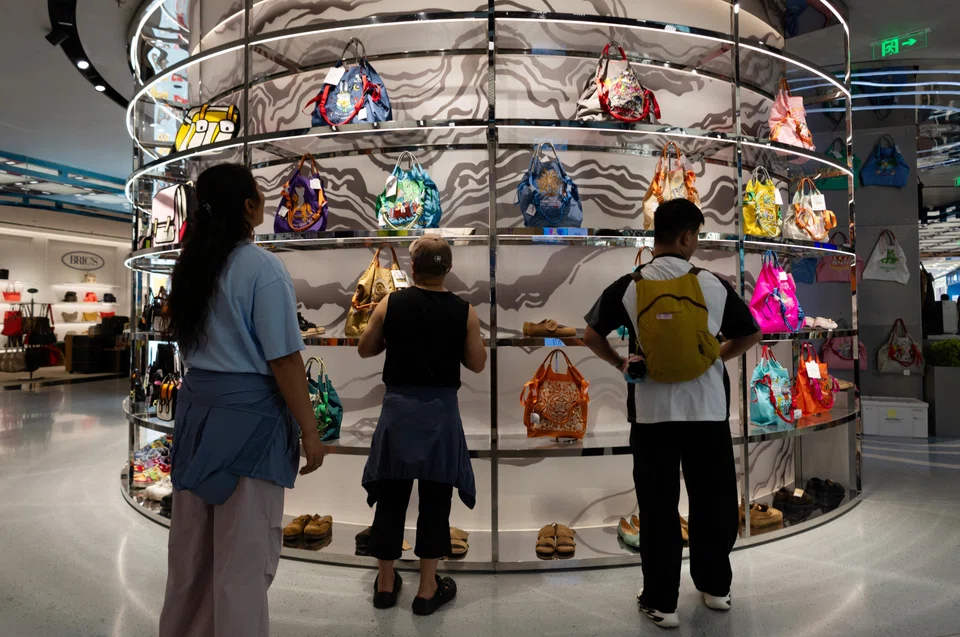
CHINA’S cities are fighting over a resource the country once had in abundance: young people.
For a long time, the wooing went mostly the other way. Young Chinese competed to get into the most desirable cities – for universities, jobs, housing, hukou and, with it, access to public services.
Now cities increasingly have to compete for them.
There is a new national push to build what Beijing calls “youth-development-oriented cities” – places where young people can find work, afford somewhere to live, start businesses and, increasingly, meet partners, marry and raise children, and help salvage the dwindling population.
The idea is not entirely new. In 2022, China selected 45 cities and 99 county-level areas for a two-year experiment in making cities more conducive to young people studying, living and working there.
But in April, 15 central government agencies issued a much broader directive to deepen the programme, calling on cities to create conditions in which young people can “come in, stay, live securely and build careers”. By 2030, Beijing wants the concept widely established across the country.
The timing isn’t accidental. China is trying to move local economies away from their old dependence on property development and infrastructure towards industries such as artificial intelligence, robotics, semiconductors and biotechnology. These industries need skilled young workers.
At the same time, China is facing a demographic crisis, with its population falling by 3.39 million in 2025, when just 7.92 million babies were born. The country’s latest Five-Year Plan devotes an entire chapter to building a “childbirth-friendly society”, with policies intended to reduce the cost of having and raising children.
And then there is the immediate problem of jobs. A record 12.7 million are graduating from university in 2026, while unemployment among urban 16-to-24-year-olds, excluding students, reached 18.9 per cent in August.



China has no shortage of graduates in aggregate, but what cities increasingly need are young people who have the skills required by the industries the cities are trying to build and who are willing to put down roots there.
Hence, a new round of competition among cities has begun – only this time, the sweeteners go well beyond jobs.
Shenzhen, for instance, offers recent graduates coming for interviews or internships up to 15 days of free accommodation. Qualifying young talent can rent transitional housing at around 60% of the market rate for up to three years, or receive a housing subsidy of 1,250 yuan (US$186) a month for up to two years.
Chengdu offers eligible job seekers temporary accommodation, while Wuhan has made retaining graduates central to its strategy. Its 2025 to 2027 youth-city plan aims to add about one million university graduates working or starting businesses in the city, alongside 1,000 new youth-founded high-tech enterprises and 270,000 units or rooms of subsidised rental housing.
The hukou reversal
The changing role of the hukou system – China’s mandatory household registration system – shows just how far this has gone.
For generations of migrants, an urban hukou was a privilege they struggled to obtain. Now, outside the most restrictive megacities, it has increasingly become something local governments use to entice educated young people.
Wuhan allows graduates with a junior-college qualification or above who are under 45 to settle in the city on the strength of their qualifications; master’s and doctoral graduates face no age limit.
Hangzhou allows junior-college graduates under 35 who have secured employment to settle, while master’s graduates under 45 can obtain hukou before finding a job.
In other words, the question has essentially changed from what young people have to offer a city, to what the city has to offer them.
Shanghai, meanwhile, is taking the idea much further.
Its new youth-development plan, made public in September, doesn’t merely promise jobs and housing, but attempts to intervene across almost the entire young-adult life cycle.
The city wants to expand its youth hostels to more than 5,000 rooms and provide more affordable rental housing near workplaces, public transport and industrial parks.
It also wants more 24-hour “young vitality” spaces, youth-friendly streets and communities, government-supported matchmaking platforms and events, and even collective weddings.
For those with children, it promises a combination of childcare support, “childbirth-friendly” jobs, and additional housing and schooling support for larger families.
Shanghai’s plan also devotes an entire section to what it calls the “youth economy”.
The city wants youth-oriented shopping districts, immersive experiences and interest-based socialising. It also wants to cultivate original intellectual property and youth brands while supporting young entrepreneurs. It even proposes developing a statistical monitoring system specifically for the youth economy.
In other words: expand youth consumption. The young resident, then, isn’t just valuable as an engineer or entrepreneur or a future parent, but as a consumer as well.
It is an extraordinary amount of policy ambition to load onto one generation. But does the policy response properly diagnose what young Chinese actually want?
A matchmaking event may help some people meet. But if young Chinese are delaying marriage because employment is insecure, working hours are punishing, housing is expensive and raising children feels financially daunting, creating more opportunities to meet prospective spouses can go only so far.
The same is true of “youth-friendly” public spaces, trendy shopping districts and 24-hour “young vitality” zones. They may make a city more pleasant, but they cannot compensate for poor career prospects or unaffordable housing.
What do young people want?
Surveys and online discussions suggest young Chinese make much more practical calculations about where to live. They centre on questions about where the jobs are, how much the rents cost, how long the commute is, whether they can eventually afford a home and how much banwei – literally the smell or aura of work, but increasingly shorthand for the exhaustion that work leaves on a person – their lives will have.
Those calculations create very different competitive advantages for different cities.
Shenzhen and Hangzhou can sell career opportunities and thriving technology industries, but at a higher cost of living.
Chengdu and Wuhan can offer cheaper housing and a different quality-of-life proposition. Wuhan has another enormous advantage: a huge university population already living there. Its challenge is not getting young people to arrive at 18, but persuading them not to leave at 22.
This youth-city experiment represents a significant shift in the political economy of Chinese urbanisation.
For much of China’s boom, cities could count on an apparently inexhaustible flow of young, willing workers. Local governments concentrated on building the physical city – industrial parks, roads, subway systems, apartment blocks – and people came.
But that model is weakening. Property can no longer perform the economic role it once did, the population is shrinking, and virtually every ambitious city now wants its own AI, robotics, biotech and semiconductor industries.
Building another industrial park is relatively easy, but producing the engineers, entrepreneurs and consumers needed to fill it – and persuading them to stay – is possibly harder.
Here is where Beijing’s grand design could run into its biggest constraint. Many local governments are already heavily indebted and have lost a major source of revenue as the property downturn crushed land sales. But making a city genuinely attractive to young adults will be costly: affordable housing, childcare, education, healthcare, transport and decent public services.
The winners will not necessarily be those offering the biggest one-off talent bonus or the least banwei, but those providing an answer to the question: Why should I build my life here? THE STRAITS TIMES
Decoding Asia newsletter: your guide to navigating Asia in a new global order. Sign up here to get Decoding Asia newsletter. Delivered to your inbox. Free.
Share with us your feedback on BT's products and services






