An in-depth look at 5 of Singapore’s post-election Budgets
Budget 2026 follows the first general election helmed by Singapore’s fourth-generation leadership. How does it compare with other Budgets at the start of a government term?

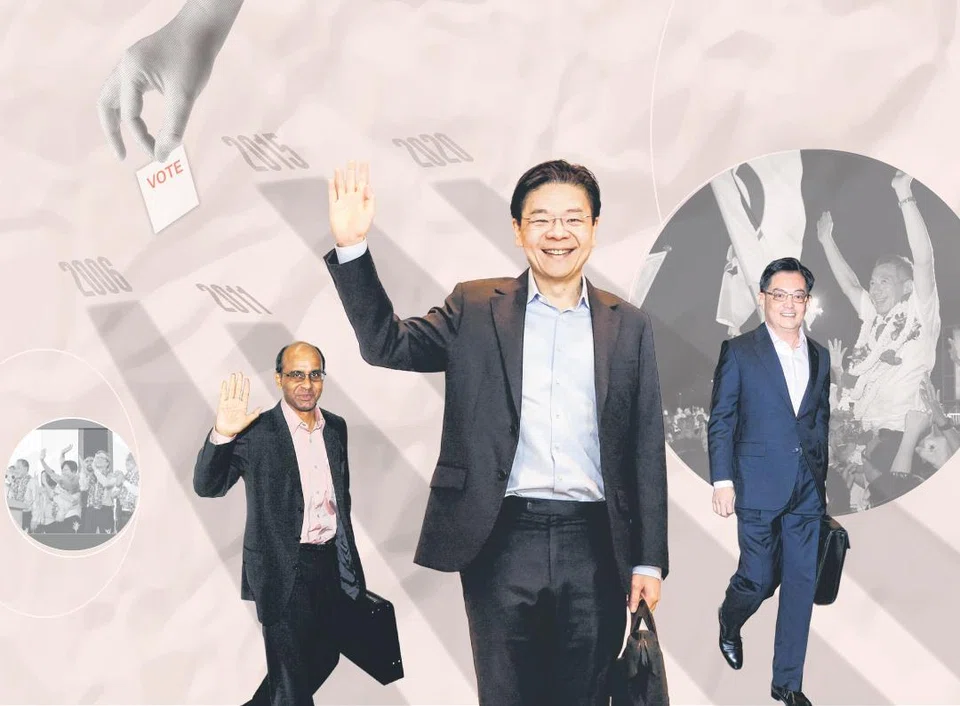
[SINGAPORE] Nine months ago, Prime Minister Lawrence Wong led the People’s Action Party to a convincing mandate in the 2025 General Election, in the first campaign helmed by Singapore’s fourth-generation political leadership.
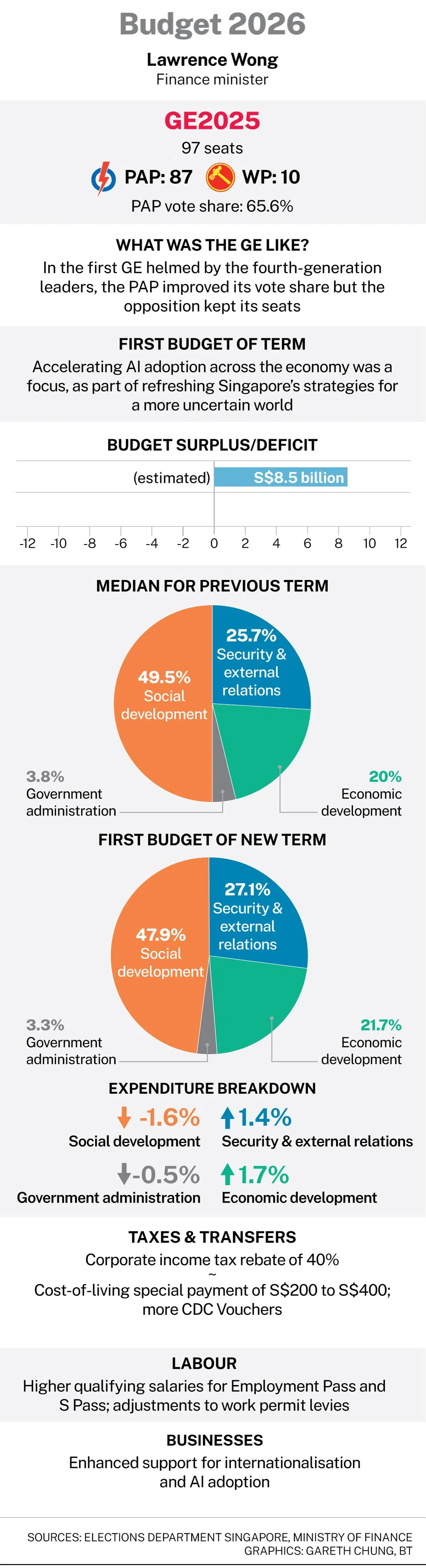
On Thursday (Feb 12), as finance minister, PM Wong unveiled his first post-election Budget: an estimated S$154.7 billion fiscal plan with an S$8.5 billion surplus, or about 1 per cent of gross domestic product.
Amid global uncertainty, the economy was a key focus, with measures arising from the Economic Strategy Review – from national-level artificial intelligence efforts to expanded support for companies to internationalise.
A common perception is that unpopular policies are best introduced immediately after an election. But a look at recent first Budgets of term suggests that it is difficult to generalise post-election priorities.
The first Budget after an election is “hugely significant” from a political perspective, as it “underscores the fiscal tone, strategy and ambition of the new administration”, says Eugene Tan, associate professor of law at Singapore Management University (SMU).
“This first Budget must turbocharge public confidence in the government’s plans… as well as (ensure) that fiscal spending is equal to the task of funding adequately those plans.”
Yet, while start-of-term Budgets can be used to set the administration’s tone, it is “just as important to look at the broader context”, says Chong Ja Ian, associate professor of political science at the National University of Singapore.
He points out that the Covid pandemic, for instance, necessitated substantially higher levels of social support in 2020 and 2021.
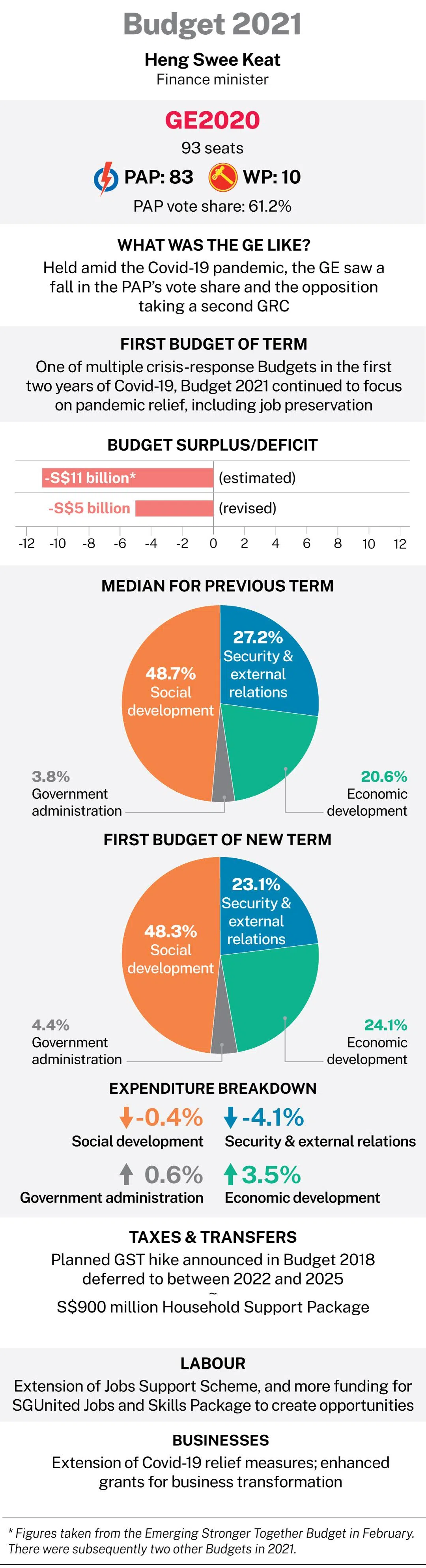
The Ministry of Finance groups ministries’ expenditure under four broad categories: social development; security and external relations; economic development; and government administration.
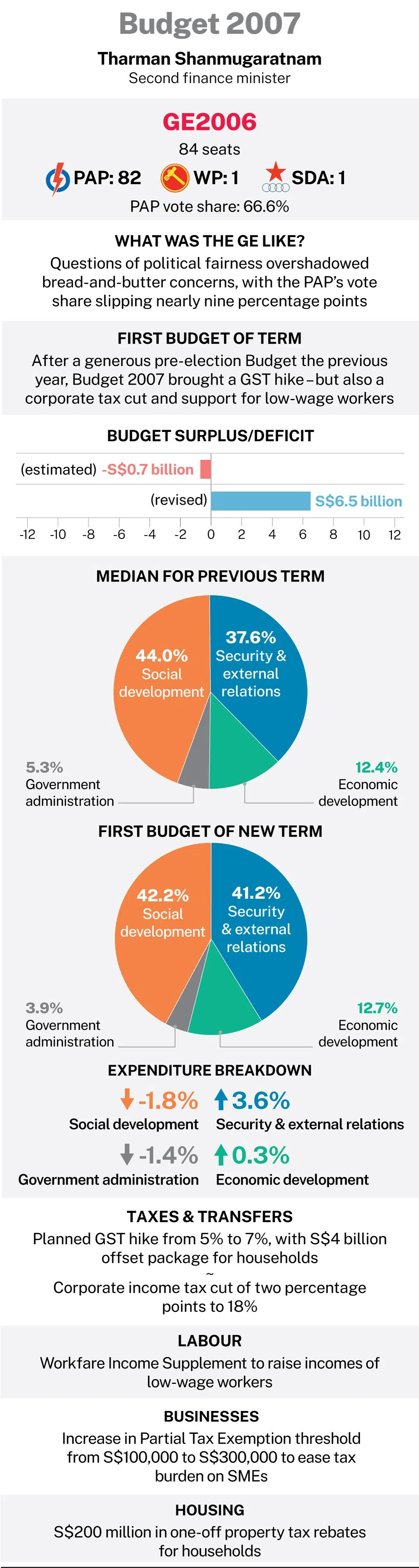
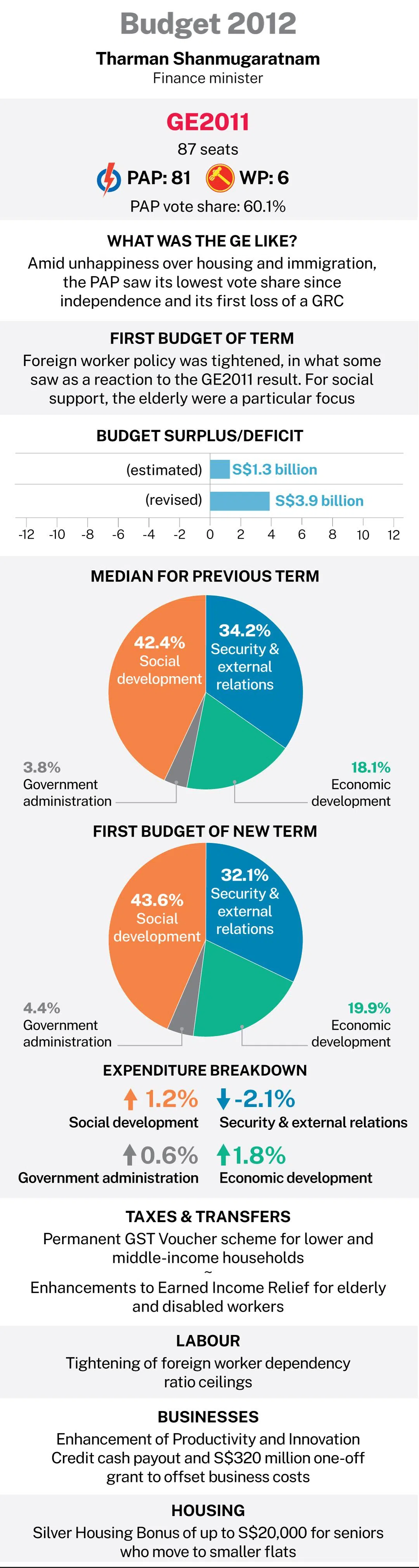
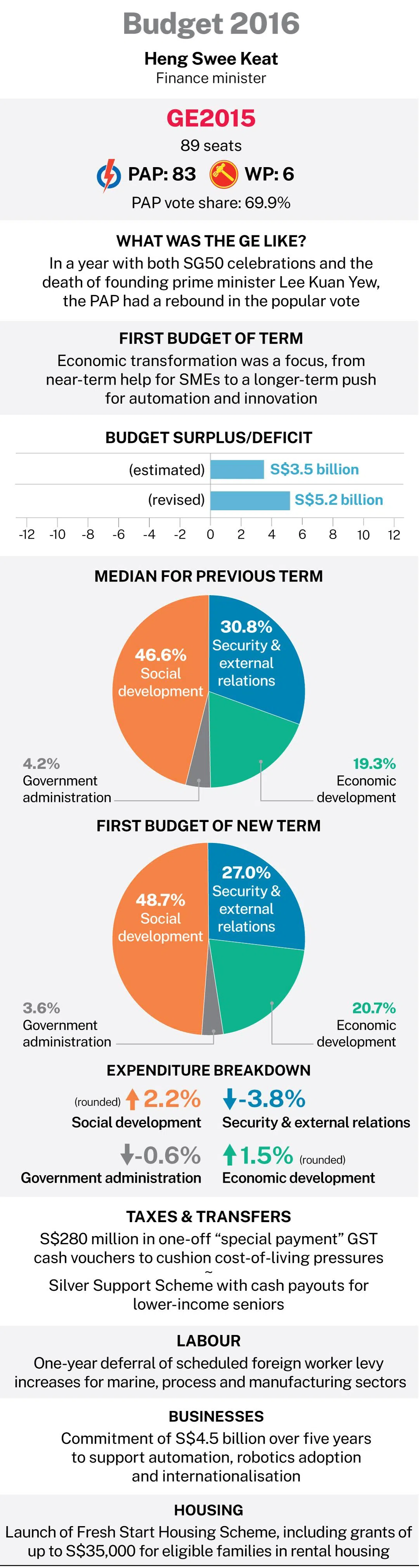
To identify possible shifts, one might compare each category’s share in a post-election Budget with the median of the preceding term. For example, the expenditure breakdown of Budget 2012 could be compared against the median from Budgets 2007 to 2011.
One apparent trend in the last two decades is that economic development forms a larger share of expenditure in every post-election Budget, relative to the preceding term’s median.
This pattern “signals the imperative of economic vitality for a new administration”, says Prof Tan.
“The priority is to ensure that the Budget gives the economy a signal boost at the start of a new term, as that is crucial to the performance legitimacy of the government.”
In Budget 2026, economic development accounts for 21.7 per cent of total ministry expenditure – up from just 12.7 per cent in Budget 2007.
“This is a reflection of Singapore’s need to update its economic structure in light of new technologies and the changing nature of global economic competition,” says Prof Chong.
Nanyang Technological University lecturer Felix Tan notes that economic development spending – which includes not just trade and industry, but also areas such as transport – may “increasingly take centre stage, as the future seems likely to be quite a roller-coaster ride”.
As for whether election results affect each ensuing Budget, SMU’s Prof Tan says: “Regardless of how well the ruling party did in the last election, delivering a Budget – especially the first Budget of a new term – that goes down well with the people and business takes on greater importance.”
Budget 2007
Budget 2012
Budget 2016
Budget 2021
Budget 2026
For more of BT’s Budget 2026 coverage, go to bt.sg/budget26