

EU and Asean at 50: time for bold action
The next decade of diplomatic ties must deliver concrete developments and tangible progress
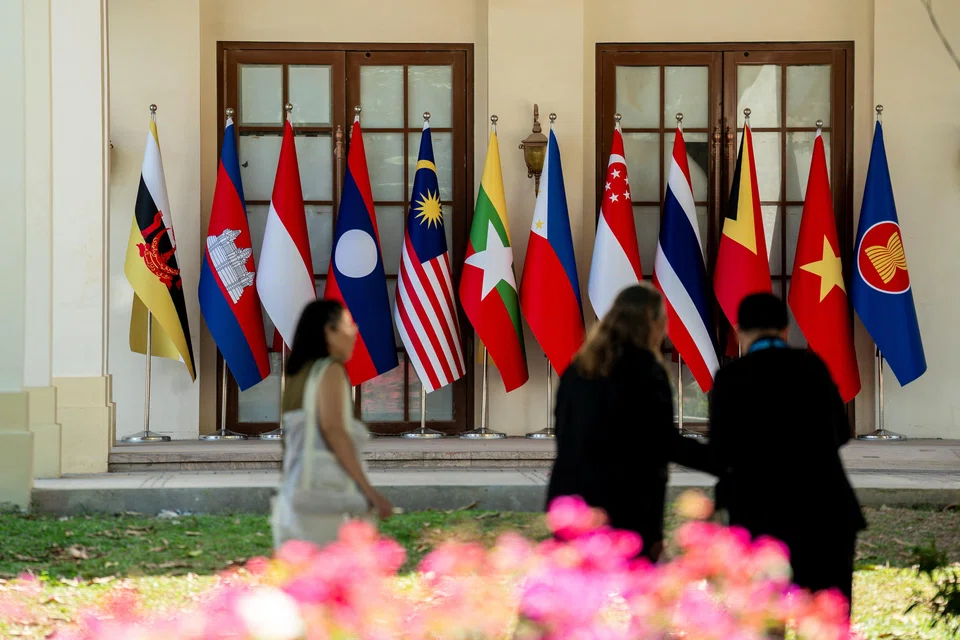
THE EU and Asean will celebrate 50 years of relations in 2027. For much of that time, the partnership has been defined by dialogue, declarations and displays of shared values.
But that is no longer enough for these troubled times.
The world is at an inflection point. Predictability and stability – once the foundations of the global rules-based order – have given way to uncertainty.
Long-held alliances are breaking apart, while protectionist ideologies threaten free trade.
The EU and Asean find themselves with fewer trusted friends. In this context, partnerships cannot be sustained by rhetoric alone – they must also deliver.
With a combined market of more than one billion people making up a fifth of global gross domestic product, the two blocs have immense economic influence.
The 50th anniversary, then, is an opportunity to commit to something far more substantive than another partnership upgrade.
An EU-Asean FTA
The most ambitious outcome – businesses having long called for it – is the launch of negotiations for a comprehensive region-to-region free trade agreement (FTA).
This would turbocharge trade and investment between the EU and Asean, unlocking new opportunities in frontier areas such as digital transformation and sustainable growth.
It would also bring untold benefits to both economies.
The business case for this has been argued ad nauseam, as reflected in the EU-Asean Business Council’s yearly Business Sentiment Survey.
In 2025, 84 per cent of respondents said a region-to-region FTA would deliver more advantages than the current series of bilateral agreements between the EU and individual Asean member states.
More strikingly, 78 per cent of respondents said European businesses were at a disadvantage against competitors from China, Japan, South Korea, Australia and New Zealand – all of which are linked to Asean through the Regional Comprehensive Economic Partnership.
An EU-Asean FTA has been on the radar for decades.
In fact, next year would mark exactly 20 years since the maiden launch of ultimately short-lived negotiations in 2007. At the time, talks failed as Asean could not present a coherent position among its member states, which held vastly different views.
Asean’s economic integration has progressed since then.
The Asean Economic Community (AEC) Blueprint was established in 2015 to advance the goal of a single market, and subsequently updated through the AEC Strategic Plan 2026 to 2030.
While that goal remains some distance away, Asean is certainly now in a position to revisit the idea of a bloc-to-bloc agreement.
And yet, it does not appear to be a political priority for either side, with both agreeing to keep it a long-term objective.
Instead, the focus has been on securing bilateral FTAs, with a target to sign agreements between the EU and the Philippines, Malaysia and Thailand by 2027.
These must not replace ambitions for a region-to-region FTA.
Rather, both blocs should chart a path towards a future agreement by advancing practical initiatives that deepen integration, beginning with three concrete items that can immediately be set in motion.
A regional digital trade agreement
The most realistic near-term deliverable would be to start talks for a region-to-region digital trade agreement (DTA). This would be welcome, only if it is a stepping stone to deeper integration.
The EU and Asean should build on the foundations laid by Asean’s Digital Economy Framework Agreement – set for signing in November – and existing initiatives such as the Asean-EU Joint Guide on Model Contractual Clauses and the EU-Singapore DTA.
The goal would be to reduce digital fragmentation and improve interoperability, facilitating inter-regional business operations rather than aiming for regulatory harmonisation.
Three areas ought to be prioritised.
First, enabling open and trusted data flows while maintaining strong safeguards and protections.
Second, advancing paperless trade by improving interoperability between customs and trade systems, expanding the use of electronic documents, and building on initiatives such as the Asean Single Window.
Third, future-proofing the agreement by establishing practical mechanisms for cooperation on emerging issues such as artificial intelligence, digital identities and cybersecurity.
Rather than negotiating rules upfront, the blocs should create structures that allow them to identify emerging issues early and exchange best practices.
This would minimise regulatory divergence before it becomes a barrier to trade and investment.
Asean Power Grid: a massive opportunity
Working towards the next trade agreement, in whatever form, is not enough. The next phase of EU-Asean relations must be defined by practical cooperation in areas of strategic importance.
Few initiatives illustrate this better than the Asean Power Grid. It is essential for the region to secure its energy supply, meet rising electricity demand and improve economic resilience.
The EU is uniquely placed to support this mammoth project.
Beyond financial resources, Europe has decades of experience in building interconnected electricity markets, developing the needed technology, managing cross-border power flows, and harmonising regulatory frameworks across jurisdictions.
To demonstrate that the EU-Asean partnership is capable of more than agreements – and can deliver tangible outcomes – the 50th anniversary should be used to launch a dedicated EU-Asean partnership on power connectivity and grid development.
This needs to be supported by a comprehensive package of technical assistance, capacity-building, financial resources and private-sector support.
Investment certainty a key enabler
None of these ambitions would be realised without investment.
From the Asean Power Grid to digital infrastructure and industrial decarbonisation, many of Asean’s most important priorities would require capital on a scale that public resources alone cannot provide.
The challenge is not a lack of private capital; it is a lack of certainty. Even as both blocs work towards an FTA, concrete steps can be taken to encourage investment.
For instance, the EU and Asean can begin developing a region-to-region framework agreement that gives investors confidence to commit long-term capital, while being balanced with the governments’ rights to regulate.
Building on the modern investment-protection agreements the EU has already concluded with Singapore and Vietnam, such an initiative would be a powerful enabler of the region’s growth agenda.
Tangible results to make the 50th anniversary count
The 50th anniversary of Asean-EU relations should not be remembered for another declaration or upgrade in terminology.
Success should instead be measured by whether it delivers tangible progress in three areas: reducing regulatory fragmentation, strengthening practical cooperation on shared strategic priorities, and mobilising the investment needed to turn ambition into reality.
In a world increasingly defined by fragmentation and uncertainty, the two regions have every reason to join forces.
The question is whether they are prepared to match the scale of today’s challenges with an equally ambitious plan of action.
The writer is executive director, EU-Asean Business Council.
This essay is part of New Global Order, a series which explores how the changing world landscape is reshaping business, politics and beyond.






