How much ground can China’s motorcycle brands gain in Singapore?
The likes of Zontes and CFMoto have zoomed into the top ranks for new registrations, with competitive prices and attractive designs

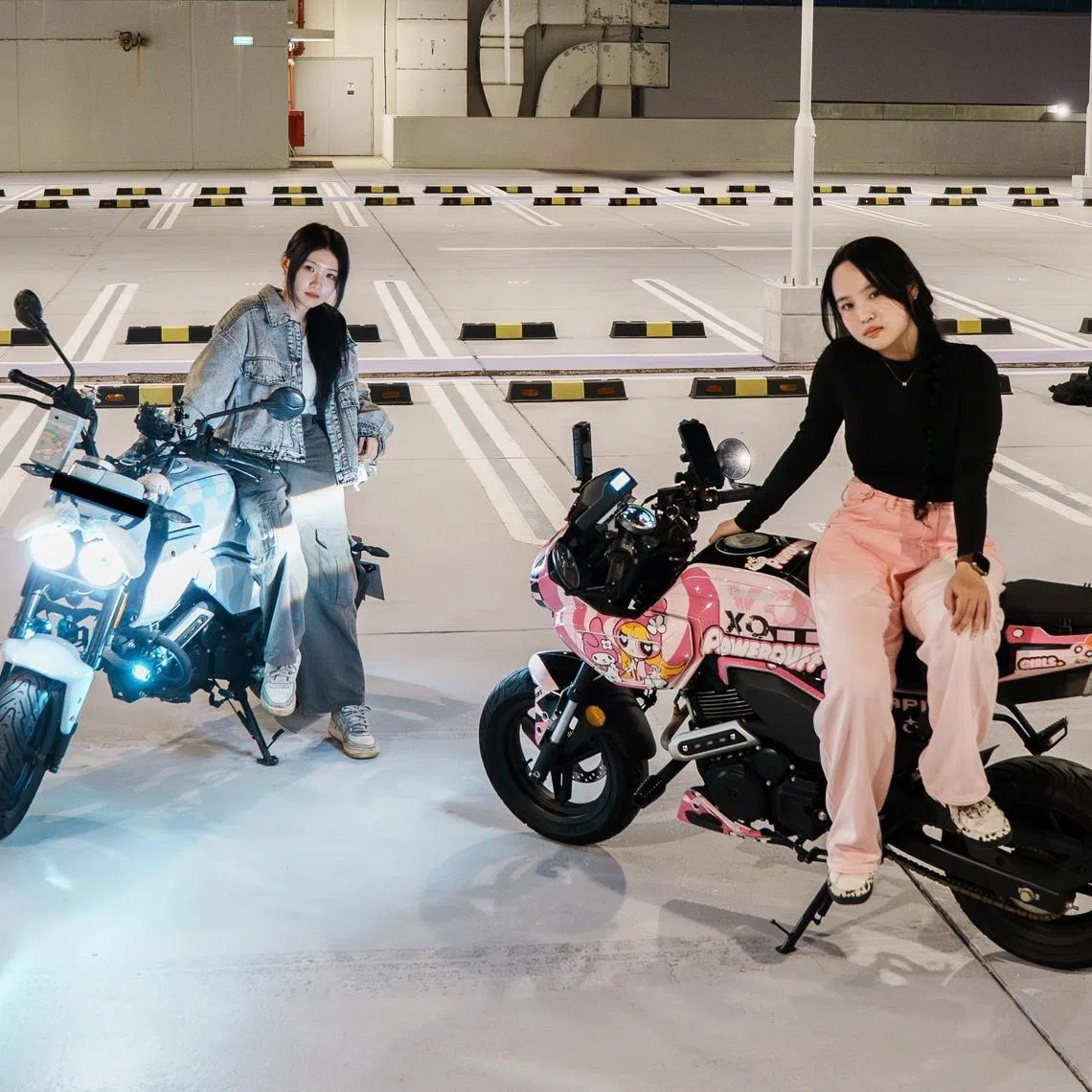
[SINGAPORE] When university student Angel Han got her Class 2B motorcycle licence in 2024, she opted not for a common Japanese model, but a Papio: a small motorcycle from China brand CFMoto.
“I fell in love with the Papio. It’s very cute, thanks to the retro styling and two round headlights,” says the 23-year-old, who chose it over a Honda model of a similar price.
Han is among a growing number of Singapore bikers who are opting for two-wheelers from China.
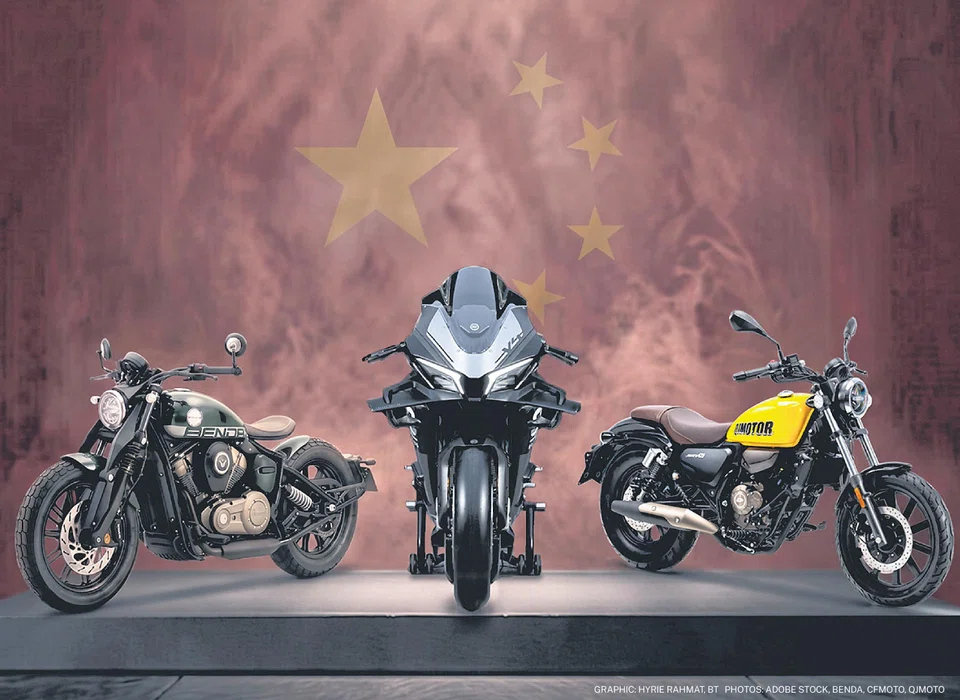
After some false starts, Chinese motorcycle brands are establishing themselves as real alternatives to Japanese and European ones, with three having entered the top 10 for new registrations in Singapore.
Industry players say that China models are cost-effective and have appealing designs, while being of similar quality to bikes from established makers – or even having superior features.
With sales rising, dealers are upping their efforts to meet demand and retain customers.
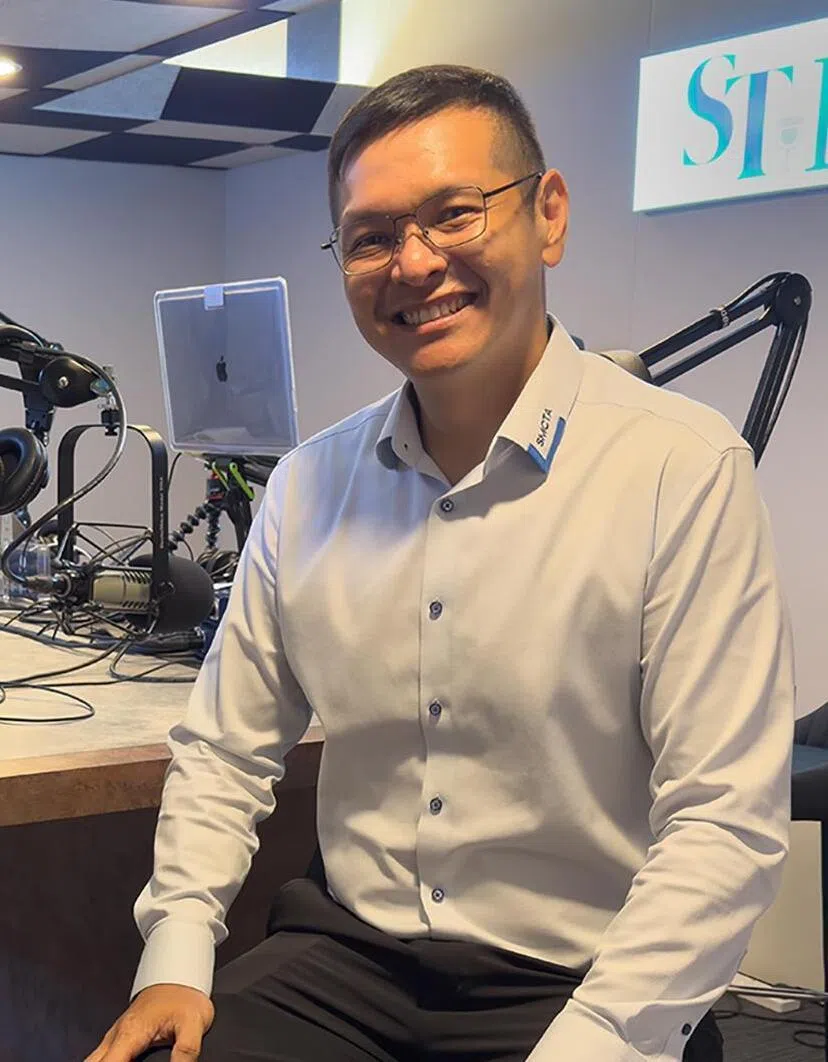
Rex Tan, president of the Singapore Motor Cycle Trade Association (SMCTA), says: “Like Chinese carmakers, or indeed most of the country’s manufacturing, the motorcycle manufacturers have improved massively in the past decade or so.”
Asked if China’s motorcycles can challenge market leaders such as Honda and Yamaha, he simply says: “Yes, it’s possible.”
Revving it up
In the first quarter of 2026, three China brands entered Singapore’s top 10 by number of registrations – with Zontes leaping to third place, behind stalwarts Honda and Yamaha.
This year, Zontes is on track for its highest annual registrations to date, and so are fellow China brands Benda, CFMoto, QJMotor and Voge.
Together, these five names are gaining ground. From January to April, they doubled their collective market share to 10.2 per cent, from 4.9 per cent in 2025.
Yamaha and Honda’s combined market share dipped to 73.5 per cent, from 76.6 per cent.
While Benda, Kove and Voge are relative newcomers, CFMoto, QJMotor and Zontes have had rising sales since 2021.
This is in contrast to just a few years ago. Between 2015 and 2024, several China brands registered motorcycles in small batches, but generally failed to endure.
These included Dongma, Jianshe, Keeway, Kiden, Lexmoto, Qingqi and Zongshen. During that period, these brands registered typically 20 or fewer motorcycles here each year – and none in 2025 or 2026 so far.
Most were inexpensive, small-capacity models targeting budget-conscious consumers or commercial fleets.
Fast fashion
China’s motorcycle industry has been shifting gears. While small-capacity bikes make up more than 60 per cent of exports, its fastest-growing segment is middle-to-high-end machines with appealing designs, features and technology.
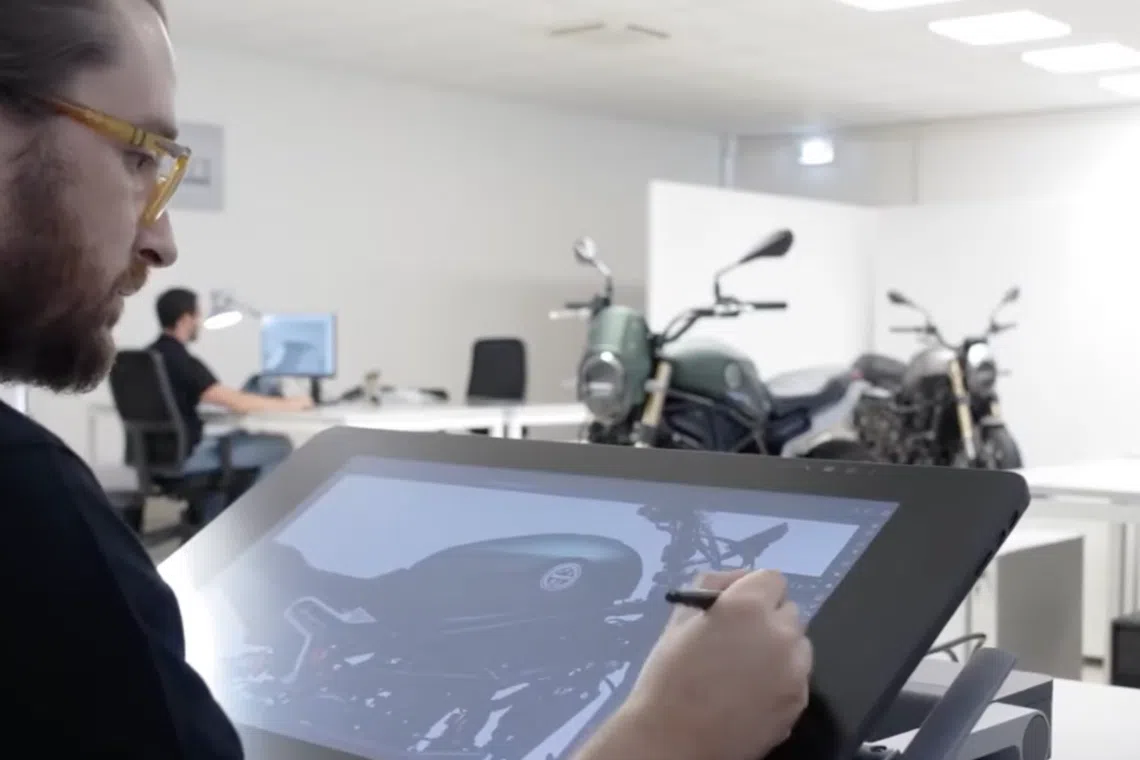
In the design department, the country’s brands have matured, learning from or utilising European talent.
Motorcycle journalist Timothy McIntyre says: “China’s bike manufacturers have learnt fast, or adopted the right talent where needed. They have the design chops now to make good-looking machines.”
CFMoto often employs Austrian firm Kiska, which designs machines for its parent company, the premium European manufacturer KTM.
In 2005, QJMotor acquired Italian brand Benelli; the latter’s Italian design centre now creates the looks for its parent company’s bikes.
Benda, which specialises in cruiser motorcycles, has made adventurous styling a hallmark. One of its best-selling bikes, the Napoleon 250, is styled like a “bobber”: a stripped-down, custom-built machine.
Bobbers are rarely offered as standard models – and certainly not at the Napoleon 250’s price point of S$10,500 without a Certificate of Entitlement (COE).
McIntyre, who also runs motorcycle review YouTube channel The McRider Diaries, says that Benda’s approach has drawn buyer interest, particularly as motorcyclists often choose their rides based on looks alone.
Quality and quantity?
China’s bike makers have largely solved the quality issues that used to plague the industry, and their vehicles offer many features for the price.
“The brands we see doing well now are establishing themselves with more reliability and the general build quality is much improved,” says SMCTA’s Tan.
They have achieved this by improving manufacturing techniques and working with international suppliers such as Brembo and Sachs for quality components.
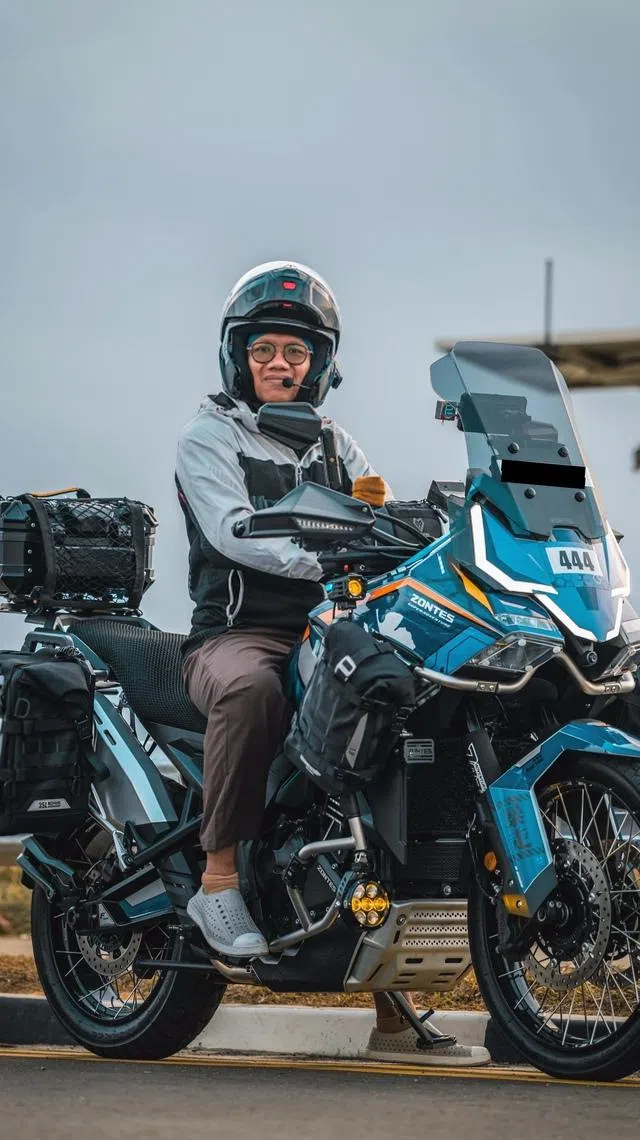
Some models are also feature-rich, like the Zontes 703F adventure bike that civil servant Muhammad Rasidi, 29, bought last year.
It comes with attributes typically found only on costlier competitors: keyless ignition, a full-colour computer display, and an electronically adjustable windshield.
Like some other China bikes, it also has features that are rare on – or absent from – Japanese or European motorcycles, such as an on-board camera for recording footage while riding.
Benda offers active air suspension on two of its models, the Dark Flag 500 and LFC 700, which cost S$16,000 and S$19,000 without COE, respectively. This system adjusts when the bike is moving, for improved comfort, and lowers the vehicle’s height before it comes to a stop, so it is easier to manage.
A similar feature is found only on the Harley-Davidson Pan America adventure motorcycle, which costs upwards of S$60,000 without COE.
“If anything, Chinese manufacturers have leaned into features – particularly in design sophistication and electronics – to the point where they’re often ahead of the curve, not behind it,” says McIntyre.
Vroom for more
China brands have also gained an edge by designing machines for underserved segments, including shorter riders and beginners.
At 154 cm tall, Han was looking for a more manageable motorcycle for someone of her build. As a mini-motorcycle, CFMoto’s Papio offered this.
“For riders on the short side, we don’t have much of a selection. Before the Papio, my only choice was the Honda Grom,” she says.
Meanwhile, typical cruisers – stylish, powerful rides by makers such as Harley-Davidson – have engines over 1,000 cubic centimetres (cc) in capacity and weigh as much as 300 kg, making them hard to handle for smaller riders or intimidating for beginners.
Benda and QJMotor, however, offer cruiser-style machines that weigh less than 180 kg and have small-capacity engines under 700 cc.
Some are accessible to novices in an additional way: being covered by beginners’ licences.
The Class 2B licence is the first that a motorcyclist can obtain, and is for motorcycles with a capacity of 200 cc or below. This is followed by the Class 2A licence, for bikes with up to 400 cc in capacity.
Cruisers often exceed 1,000 cc, meaning that only full Class 2 motorcycle licence holders can ride them. This left 2B and 2A licence holders with little choice of cruisers – until China alternatives arrived.
QJMotor’s best-selling model is the SRV 125 cc, a rare cruiser that Class 2B licence holders can access.
Jordan Lee, brand manager of QJMotor distributor Bikers’ World, says: “Customers choose the SRV for the style, as there aren’t many Class 2B cruisers.”
He adds: “There used to be a Japanese 2B cruiser many years ago, but it is a segment that was ignored until now.”
The ride price
While China’s bike brands have matured, attractive prices are still a key factor in drawing buyers.
Rasidi’s Zontes 703F cost around S$19,000 without COE. A competing Yamaha model, the T7 Tenere, goes for roughly S$25,000; a European model, the KTM 790 Adventure, costs about S$29,000.
“For me, a big part of the decision was the value-for-money factor,” says Rasidi. “If you compare similar bikes from Japanese or European brands, they are much more expensive.”
Jeremy Goh, brand manager at vehicle retailer Yew Heng Group, says: “China manufacturers have an efficient supply chain and lower overall manufacturing costs, so the open market value (OMV) of their motorcycles is usually lower than (that of) others.
“This gives their dealers and distributors a competitive edge.”
Yew Heng Group distributes motorcycle brands including CFMoto, Benda and Voge, as well as European brands KTM, Husqvarna and MV Agusta.
Like cars, motorcycles attract an additional registration fee (ARF) based on their OMV – the vehicle’s cost when it arrives in Singapore, before taxes.
For the first S$5,000 of OMV, the ARF is 15 per cent. It rises to 50 per cent for vehicles with an OMV of S$5,001 to S$10,000, and 100 per cent above S$10,000.
With comparable quality, features and designs – as well as attractive prices – Chinese models now compete in almost every corner of Singapore’s motorcycle market, say industry players.
“We’ve reached a point where the (China) bikes can really stand on their own – not just on the utility models, but... the premium and large-capacity models as well,” says SMCTA’s Tan.
Building brands
Agents for China brands are expanding their showrooms and after-sales facilities to support increased purchases, and expect more growth to come.
Bikers’ World is focused on building brand recognition for QJMotor in Singapore, says Lee.
“We want to build up the brand, long term. For example, we will open a new showroom just for QJMotor alone this year, and we are committed to after-sales support as we don’t want our customers to wait long for parts.”
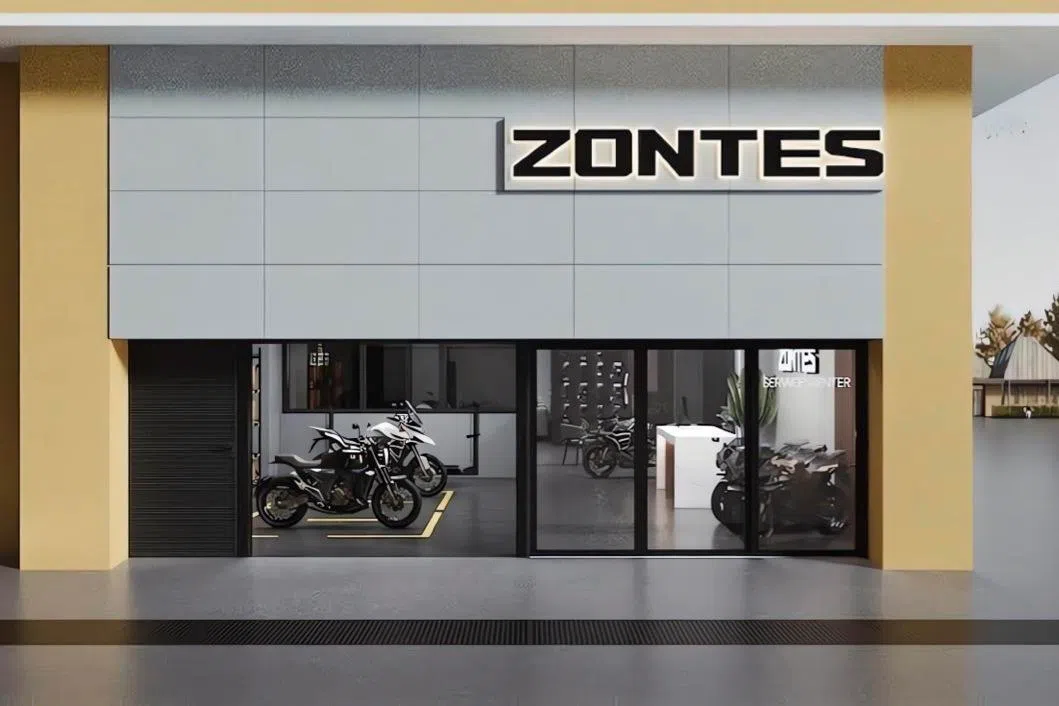
Distributor Choong Kok Agency will open a new showroom and service centre for Zontes in 2026, expanding the brand’s footprint to six outlets.
Says director Ronnie Chen: “We are investing in the branding and customer experience to support increasing sales of Zontes. It’s important that we show customers and potential buyers that the brand is here to stay and we are here to support them.”
“For non-Japanese models, there is a scepticism about availability of parts, and that is partly why we are expanding,” he adds.
“Zontes is also opening more service outlets in Malaysia, so they will support Singapore owners with warranties even over there.”
Yew Heng established a showroom for CFMoto in 2021 and one for Benda earlier this year, as well as opened a CFMoto service centre in Ubi to support increasing sales.
Many agents also hold regular club activities to promote the social side of bike ownership, including hangouts, meals and ride-away jaunts to Malaysia.
“Word of mouth is very important in the motorcycle community, so we have regular activities for owners to build the community,” says Chen.
Peak power
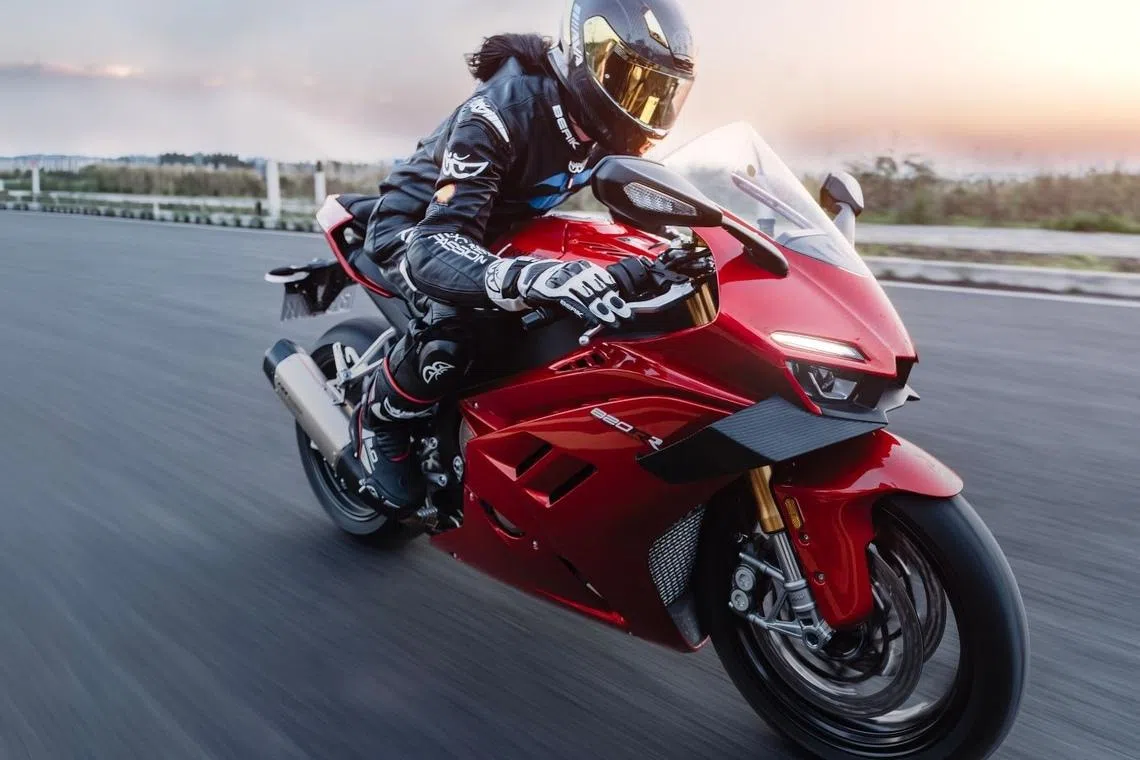
China motorcycles are still absent from the top end of Singapore’s market, which includes 1,000 cc and above sportsbikes, adventure tourers and cruisers.
But high-end models are on the way – some in partnership with established dealers.
ZXMoto, a Chinese manufacturer that has made global headlines with its success in World Superbike racing, has appointed long-time motorcycle dealer Mah as its distributor in Singapore.
It will sell the 500RR, a 470 cc sportsbike, this year, and then the high-performance sportsbike model 820RR in 2027.
CFMoto launched premium adventure bike 1000MT-X in late June, and will introduce its V4 SR-RR sports motorcycle in 2027. Featuring more than 200 horsepower and advanced aerodynamics, it is likely to be the very first production superbike from China.
Italian brand SWM will debut in Singapore this year with Hong Seh Group as distributor and a showroom at Alexandra Road. It was acquired by the Shineray Group in 2014 and produces its motorcycles in China.
Hong Seh aims to introduce a range of SWM models, including a 1,200 cc Harley-Davidson competitor, the Stormbreaker.
Says McIntyre: “(The Chinese bike makers) are where the Japanese were in the 1990s, taking risks and trying new things, winning races and gaining global attention. It’s only a matter of time before they go head-to-head with established players in every segment.”
Still, it remains to be seen just how far China’s newcomers can go.
Eugene Mah, executive director of distributor Didi Lifestyle, does expect China brands to “take a chunk” of market share from Japanese makers. His company distributes European bikes from Triumph and Piaggio Group brands Aprilia, Vespa and Moto Guzzi.
While China brands have focused on attention-grabbing motorcycles, they have more room to grow in the commuter segment, which is dominated by small-capacity scooters, he adds.
“If they venture further into such scooters, I really think it is going to make a dent in the sales of Japanese brands,” he adds.
As Singapore is a mature and open market, the entrance of new brands is natural, notes Nicholas Wong, CEO of Honda motorcycle distributor Boon Siew Singapore.
“As with any new entrants to a market, we expect to see an upsurge in new brands whenever they enter a market, partly on novelty factor and because riders do like to try new things,” he says.
“As to whether there will be continuous growth in market share, (that) will depend on their consumer experience as well as product reliability.”
Honda’s customers are drawn to the brand for its reliability, good resale value and brand image, he adds.