

How should we price political stewardship?
The more pay is justified by market comparison, the more voters grade ministers as they would CEOs
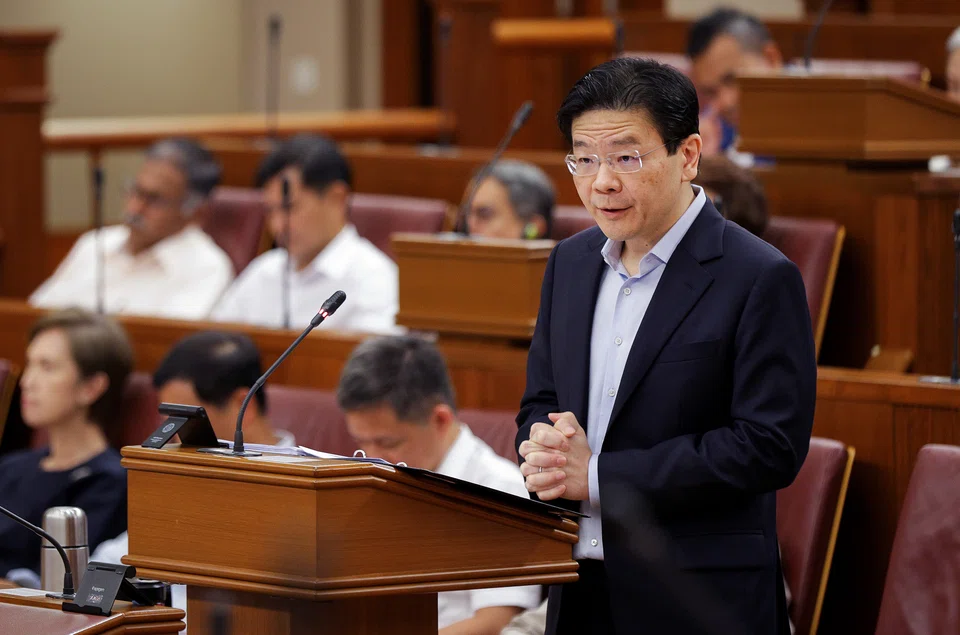
THE Business Times article, “Ministerial duties should not be compared with priorities: MPs” (Sep 10), summarised several concerns raised in Parliament. In my view, the recent debate over political salaries reflects an old argument getting narrower.
The committee said the benchmark for a starting-level (MR4) minister should rise from S$1.1 million a year to S$1.8 million. The benchmark takes the median income of Singapore’s top 1,000 earners and cuts it by 40 per cent, on the principle that public service should cost something.
The government agreed but chose a one-off pay rise of up to 9 per cent from Oct 15, alongside an MP allowance increase.
The real question, Prime Minister Lawrence Wong argued, is not what today’s Cabinet takes home, but whether capable people will still put their names on a ballot 20 or 30 years from now.
Coordinating Minister for Public Services Chan Chun Sing was blunter: Singapore cannot build a strong team by hoping that the people it needs can afford the job. The clean wage stays, with no pension and no hidden perks, and about a third of a minister’s pay still depends on performance.
Workers’ Party (WP) chief Pritam Singh did not argue that ministers are paid too much, but challenged the methodology. WP would set ministerial pay as a multiple of an MP’s allowance, itself tied to a public service grade, rather than as a discount off what the country’s top earners make.
This, Singh argued, rises more slowly and offers clearer transparency to ordinary citizens. He also asked for publication of what MR4 ministers are actually paid, not just the official norm.
Singapore looks like an outlier. A British MP, for example, earns £98,599 (US$132,977) a year, and a ministerial job adds only a modest top-up. American and European ministers sit in a similar range. Singapore pays several times that, openly.
But the comparison flatters everyone else, because elsewhere the published salary is only part of the package, which could also include residences, pensions, post-office consultancies and board seats, and, in weaker states, outright corruption. Singapore shuts those doors and puts the whole cost on the payslip.

Underneath all of this sits one belief: A city with no hinterland, no oil and no domestic market of any size has nothing to sell but the quality of its decisions. Good government is the scarce resource, and there is little sense in rationing it by who is wealthy enough to volunteer.
The sharpest speech, from Nominated MP Kenneth Goh, separated someone choosing to give up income because they want to serve, from a pay system built so that giving up income is the proof you are serious. The first is admirable; the second is a design choice with a cost.
Yet money is a blunt tool: A good salary makes it easier to say “yes”, but cannot buy judgment in a crisis. The more pay is justified by market comparison, the more voters grade ministers as they would CEOs, on shorter-term results rather than stewardship.
What stewardship really means
This stewardship has a balance sheet attached. The reserves are not a rainy-day account in a drawer; they are managed by three institutions with different jobs.
The Monetary Authority of Singapore holds the official foreign reserves and runs monetary policy through the exchange rate, not interest rates. GIC separates reserve management from central banking, and invests only abroad. Temasek owns companies at home and overseas, and is judged as a shareholder.
Net investment returns contributions – estimated at S$28.5 billion for FY2026 – fund roughly a fifth of government spending. Yet the decision-makers generating those returns – at GIC and Temasek – never stand for election. Ministers set the mandates and appoint the boards, but they do not pick the investments.
It is also the part that cannot be priced. Temasek’s portfolio reached a record S$518 billion in March 2026, up S$49 billion in a year, with a 20-year return of 6.8 per cent; GIC’s 20-year real return slipped to 3.4 per cent.
Both are defensible, and both draw the same question in Parliament: Could someone else have done better? Arriving at the honest answer could take decades.
The dilemma lies in the sting in the tail: The more pay is justified by private-market comparison, the more reasonable it looks to grade ministers on portfolio performance, when institutions such as GIC and Temasek are precisely what should not be run to flatter a political cycle.
The debate has settled the “how much” and reopened the “why”. On the numbers, the parties are close: Both want transparency, a clean wage, pay discounted for service, and a step rather than a leap.
What is unsettled is whether a benchmark borrowed from the private market can keep public support, and whether a system that publishes the rule but not the outcome is really transparent.
The money is small: about S$5 million a year more for officeholders and S$6.6 million for MPs. This is nothing when compared against the Budget, but is enormous as a symbol.
What the government can still do is argue in terms people actually use: not the median income of the top 1,000 earners, but whether the decisions paid for turned out to be good ones.
Tan Chong Huat Chairman of RHTLaw Asia
Decoding Asia newsletter: your guide to navigating Asia in a new global order. Sign up here to get Decoding Asia newsletter. Delivered to your inbox. Free.
Share with us your feedback on BT's products and services
TRENDING NOW
8 public officers referred to police over property buys near unannounced MRT stations: Chan Chun Sing

Grab CEO’s wife Chloe Tong on life with Anthony Tan and finding her purpose

Retrenched PMETs who return on lower pay see median 25% wage cut

Hao Mart owner resisting OG’s mortgage foreclosure on his Tanglin GCB

