

Malaysia’s stability dividend faces its next test as state elections loom
The polls will ask: Can PH and BN remain partners in Putrajaya while competing at state level?
 Add BT as a preferred source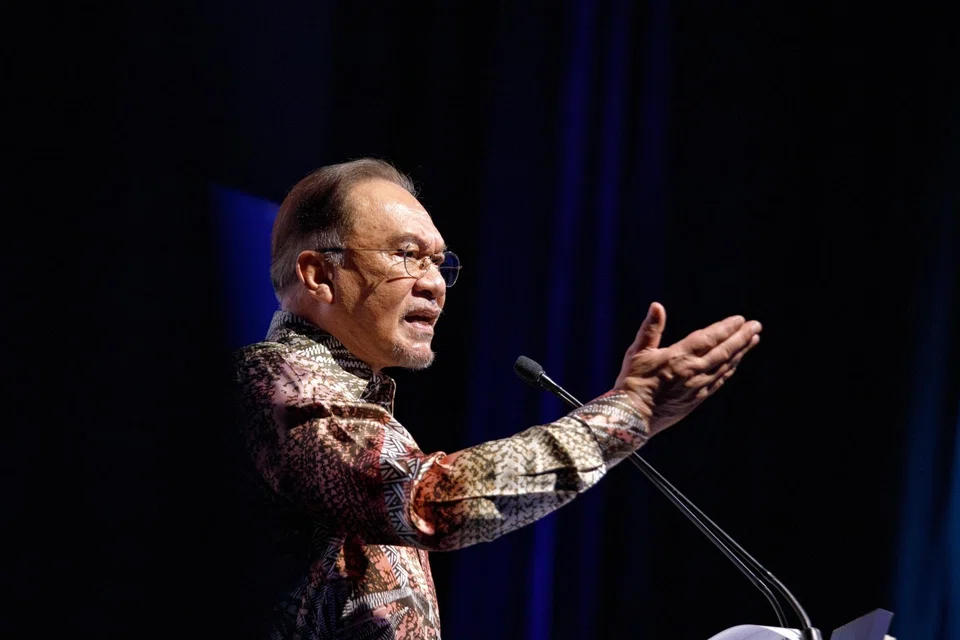
MALAYSIA looks calmer today than it has for some years.
After the upheaval that followed the 2018 general election and the instability of successive administrations, Prime Minister Anwar Ibrahim has done better than many expected in holding together a broad unity government.
Pakatan Harapan (PH), Barisan Nasional (BN) and the state-based parties from Sarawak and Sabah are not natural partners. Yet, for now, the arrangement has held.
The economy has helped. Growth has been stronger, the ringgit has strengthened and investors have begun to look again at Malaysia with more confidence.
In Q1 2026, the economy grew 5.4 per cent, with net foreign direct investment inflows reaching RM22.8 billion (S$7.2 billion).
These figures allow Anwar to say that Malaysia is moving beyond the political uncertainty of recent years.
But calm is not the same as consolidation. Malaysia remains in a deeper political transition after the breakdown of the old United Malays National Organisation (Umno)-centred order following the 2018 election.
The old certainties have gone. The new balance has not fully settled. The question is whether Anwar can turn this period of relative stability into something that lasts.
That question will soon be tested.
SEE ALSO




Testing the unity bargain
Johor and Negeri Sembilan are both heading to the polls after dissolving their assemblies on Jun 1 and 5, respectively, with voting to be held within 60 days.
These elections capture the awkwardness of Anwar’s unity politics: PH and BN need each other nationally, but they are rivals on the ground.
Johor will show whether BN can defend its 2022 dominance, when it won 40 of 56 seats, while PH, together with the Malaysian United Democratic Alliance, won 13 and Perikatan Nasional only three.
Negeri Sembilan offers a different test: whether a PH-led state, recently shaken by Umno-BN’s brief withdrawal of support, can recover from internal strain without weakening the federal partnership.
Put together, the two elections ask the same national question: Can PH and BN remain partners in Putrajaya while competing at state level?
These state-level contests will show how much strain Anwar’s unity government can absorb. Bitter clashes could strain the federal government. Yet, too much coordination would also be difficult, given PH and BN’s long rivalry and different voter bases.
If PH-BN tensions in the peninsula deepen, continued support of Sarawak and Sabah parties for Anwar will be a key stabilising factor.
JS-SEZ raises the stakes
Johor also matters to Singapore. It is the site of the Johor-Singapore Special Economic Zone (JS-SEZ), one of the most important bilateral economic initiatives in the region.
The JS-SEZ promises to combine Singapore’s capital, connectivity and business networks with Johor’s land, labour and industrial base.
But such a project needs more than investor enthusiasm. It needs policy continuity, federal-state coordination and confidence that political competition will not disrupt execution.
Thomson Medical Group’s planned Johor Bay development gives the JS-SEZ a more concrete form. With a projected gross development value of about RM18 billion, the project is expected to include Thomson Hospital Iskandariah, specialist medical suites, aged-care facilities, residences, a hotel and a life sciences tower.
This points to a broader possibility. The next phase of Johor-Singapore growth may not be limited to manufacturing, logistics or industrial parks, and could extend into healthcare, medical tourism, aged care and life sciences.
But these are long-term sectors. They require predictable rules, reliable infrastructure and smooth movement of people. If politics becomes unsettled, business confidence will feel it.
Politics beneath the surface
Beyond state elections, the wider question is whether Anwar’s coalition can manage the pressures building beneath the surface.
His own party, Parti Keadilan Rakyat (PKR), has begun to show strains. Former economy minister Rafizi Ramli and former natural resources and environmental sustainability minister Nik Nazmi Nik Ahmad have broken away and taken over Parti Bersama Malaysia as their new platform.
Since no by-elections are expected for the seats they vacated, the immediate issue is not constituency politics. It is what their departure says about PKR’s cohesion.
Rafizi had long represented a technocratic and reformist strand within PKR. His exit brings back a sensitive question: Who comes after Anwar?
Nurul Izzah Anwar has political standing and support, but any perception of dynastic succession would sit uneasily with PKR’s reformasi origins.
The opposition is also shifting. Parti Islam Se-Malaysia (PAS) has become more confident in asserting leadership within PN. The elevation of Terengganu Chief Minister Ahmad Samsuri Mokhtar as opposition leader and PN chair suggests that PAS is no longer content to remain behind Bersatu as the opposition’s public face.
This could sharpen the contest for Malay-Muslim votes, where Anwar’s coalition remains vulnerable.
Still, PAS’ rise does not mean PN is fully settled. The coalition has to manage Bersatu-PAS tensions, broaden beyond its Malay-Muslim base, and present a credible alternative national leadership. Anwar faces a serious opposition, but not always a coherent one.
Umno’s position is just as complicated. It is weakened, but still necessary to Anwar’s coalition. The return of Khairy Jamaluddin has drawn attention because he remains one of Umno’s few nationally recognisable younger leaders with policy credibility and some cross-ethnic appeal. But it is not clear how he fits within Umno’s current leadership structure.
This is Anwar’s paradox. A weakened Umno is useful because it cannot dominate the unity government. But if Umno cannot recover Malay support, the government’s path to a stronger national mandate narrows.
Stability still must be earned
These cross-pressures explain why talk of an earlier general election has grown. The next federal election is not formally due until 2028.
But if the economy remains relatively positive and the opposition is still reorganising, Anwar may decide that waiting brings as many risks as advantages.
More time could bring more growth. It could also bring more internal disputes, higher living-cost pressures and new political shocks.
An early election would not be without danger. Malaysians have gone through years of political manoeuvring. Many voters value stability precisely because they are tired of instability.
If an early poll is seen as a tactical move rather than a necessary renewal of mandate, it could weaken the very narrative that Anwar has worked to build.
For Singapore and investors, the stakes are practical.
If Johor politics remains stable and policy execution continues, the JS-SEZ can gain momentum. If competition between state and federal actors unsettles coordination, the zone’s promise will be harder to realise.
Malaysia is not yet unstable. But the coming months will show whether today’s calm is becoming entrenched or whether it is only a pause between phases of political transition.
The writer is chairman of the Singapore Institute of International Affairs. His 2025 book is Island in the World: Singapore’s Geopolitical DNA. He has a monthly podcast with The Business Times, Simon Tay’s Political Cafe.
Decoding Asia newsletter: your guide to navigating Asia in a new global order. Sign up here to get Decoding Asia newsletter. Delivered to your inbox. Free.
Share with us your feedback on BT's products and services
TRENDING NOW

CSE Global independent director quits after clashes with chairman Eugene Lai over board refresh
Room for more offices, homes and green spaces to make Orchard Road more vibrant

‘I felt like dying’: Thai Singha beer scion speaks up after disclosure of alleged sexual abuse
MAS revises takeover and merger code to enhance competition and disclosures

