

Nvidia’s shocking U-turn is bad news for Anthropic
AI governance and chip sales politics continue to shift under the Trump administration
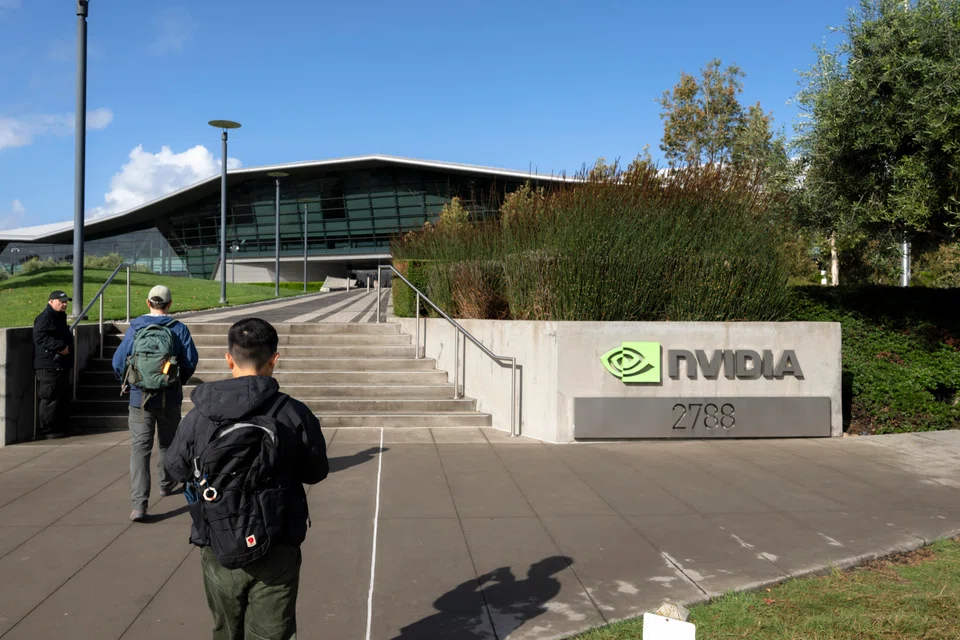
SO MUCH for the artificial-intelligence business finally starting to grow up. On Nov 16, I argued that Jensen Huang’s removal as Nvidia’s boss was a welcome first sign of proper accountability for the industry’s charismatic, often wayward leaders.
Having recovered from the whiplash of his return, we are looking at a different story: Corporate governance in the tech world is on life support.
Nvidia’s board members have lost credibility just as quickly as OpenAI’s did after they fired Sam Altman, and then found themselves in the firing line. It pays to be loyal to US President Donald Trump, at least while he clings on to power.
That is an especially painful takeaway for Anthropic, which on Nov 19 pulled off the largest initial public offering in history, then saw shares fall, even as tech stocks rallied on the news of Huang’s triumphant return.
You could argue that this was merely a bifurcation of the AI trade.
Investors might be picking sides on whether the value lies in Nvidia and others who are central to the infrastructure build-out, or software pioneers such as Anthropic which are at the coalface of selling AI tools and services.
Wherever you stand in the debate, Huang’s dramatic return does highlight once more the sharply opposing strategies of Anthropic’s CEO Dario Amodei and Nvidia’s boss. Cosying up to Trump has certainly delivered for the latter, and it is only one of several crucial differences.
While Huang has championed cheaper “open-weight” AI models – so-called because anyone can customise them – Amodei has pushed back, arguing that they are prone to misuse because they cannot be monitored or controlled.
The commercial imperatives behind this separation are clear: Nvidia is eyeing a potentially massive market for its chips if a multitude of Anthropic rivals thrive, and Amodei needs to show the world that Claude and its other AI agents are so much better that it is worth forking out a lot more for them.
Huang calls AI a “tool”. Amodei contends that it could be conscious, updating Claude’s usage policy to protect it from abuse.
Huang has argued that Nvidia should be allowed to keep selling its advanced chips to China to keep Beijing hooked on American innovation. Amodei has pushed for stricter export bans, to stop Chinese AI easily catching up to Silicon Valley’s frontier models.
Yet, the starkest contrast is in how both CEOs have dealt with the White House.
Relationship with the White House
Huang has cultivated a good-buddies relationship with Trump. He spontaneously put him on speakerphone at a conference as if he were an old friend, deterred the president from regulating AI and immediately adopted the term “superintelligence” when Trump said he preferred it to AI.
Amodei’s contacts with the commander-in-chief are far more strained, due to his frequent warnings of catastrophic risk and calls for global safety standards.
There was one bitter clash with the Pentagon over it using Claude for mass surveillance and autonomous weapons. The US Department of War blacklisted Anthropic. Trump called its bosses “leftwing nut jobs”.
Now the president has personally invited Huang back, Anthropic’s billionaire founders might want to reassess.
They are a public company with a duty to shareholders, so perhaps their principled approach to the Washington bear pit will need softening. Open-weight AI models may get a boost from Huang’s return, renewing the competitive threat to Anthropic.
And while Huang will probably quieten down his overt championing of selling chips to China, he may be privately emboldened by Trump’s lassitude. That raises the prospect of more advanced technology getting into the hands of some of Anthropic and OpenAI’s Chinese rivals.
Several Silicon Valley investors tell me that if China’s open-weight models do benefit from Huang’s return, that will simply boost an already commoditised market for mid-level AI capabilities.
Anthropic’s business might still thrive, they say, if its best, premium-priced models are used by drug discovery companies, militaries, finance firms and the like.
So, Amodei will have to bet that the vast expense of staying at the frontier of AI development will pay off because his most valuable customers remain willing to spend big on his products.
But those prospects will also depend on decisions made in Washington around who gets advanced chips, and whether the lucky recipients can cannibalise Amodei’s business.
Trump also has the ability, if he wants, to restrict other countries’ access to the advanced models made by Anthropic, OpenAI and Google.
Huang’s return is a harsh reminder of how rewarding a personal relationship with the president can be, even after Trump’s mauling at the midterms.
Amodei may keep his lead in AI software but, as a trillion-dollar-plus company, the size of that lead matters. BLOOMBERG
TRENDING NOW
Jensen Huang is gone. Nvidia’s controls still need explaining

Prive liquidators meet with creditors a year after restaurant group’s shutdown
Grab eyes financial services arm as next growth engine, targets US$500 million in segment Ebitda by 2028
Hong Leong completes 3-year overhaul of flagship building, business operations

