The real message behind Beijing’s back-to-back summits
Trump and Putin visits in a week show Xi positioning China at the center of a fractured world order
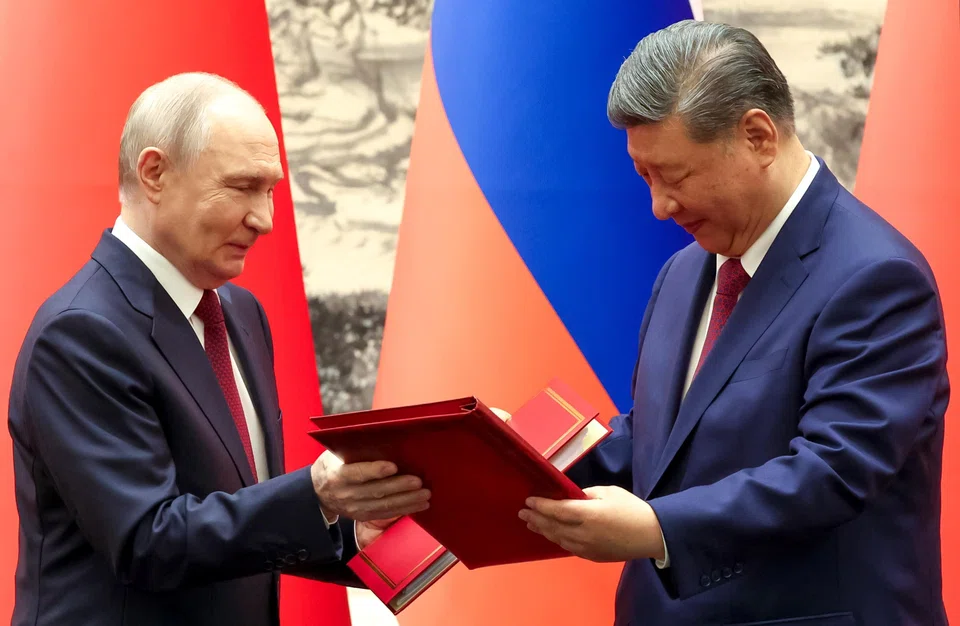
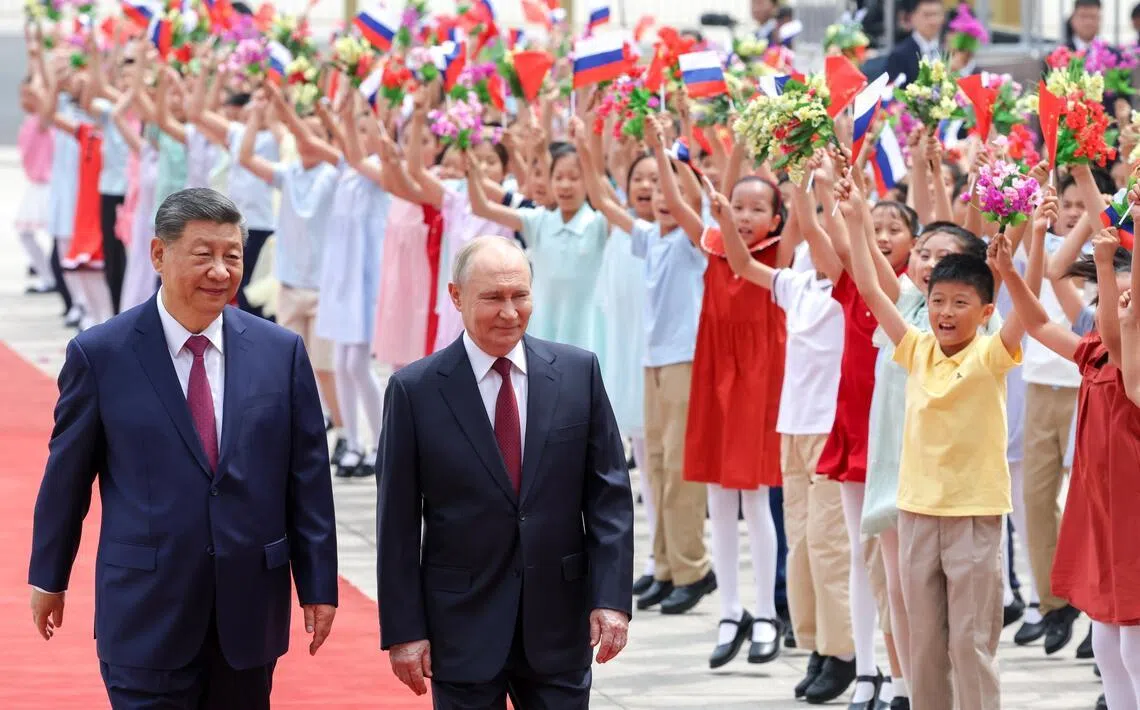
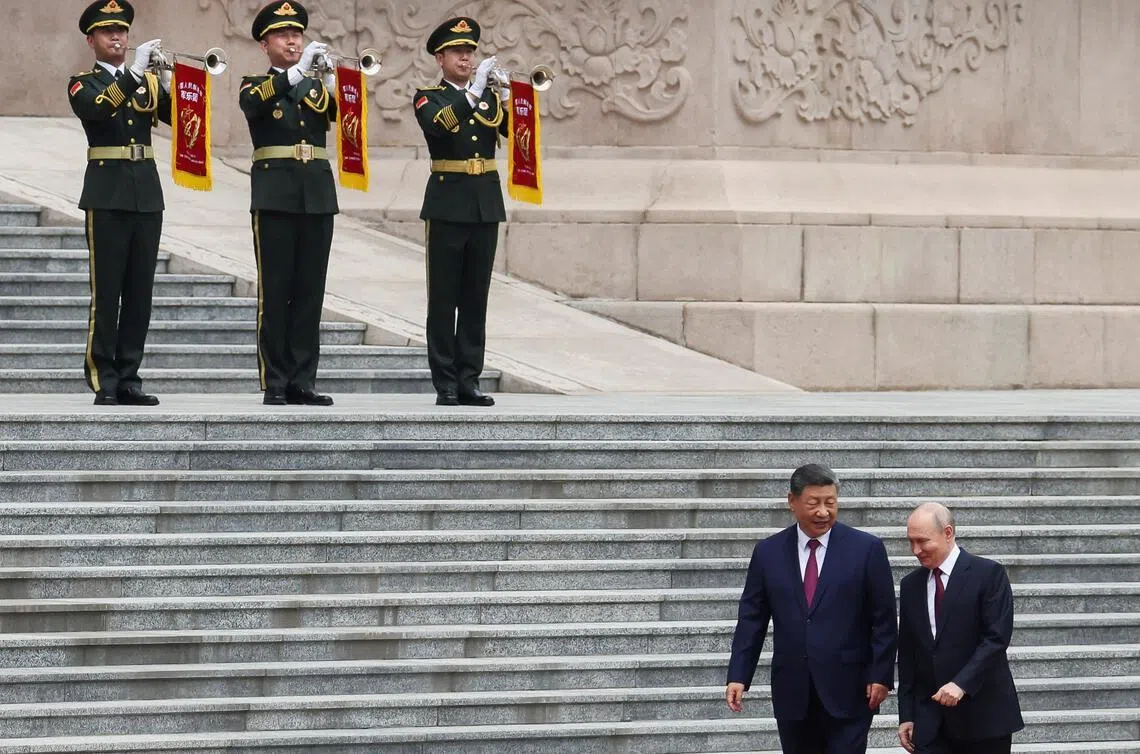
THE honour guards were back on the tarmac, as were the enthusiastic flag-waving young people. It was the same elaborate Great Hall welcome, the same ceremonial troops and gun salute, the same bouncing children.
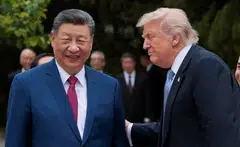
Beijing had essentially recycled the state pageantry it rolled out last week for visiting US President Donald Trump for Russian President Vladimir Putin.
But for all the similarities in optics, the two visits were about very different things.
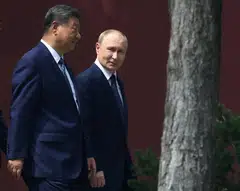
Trump came looking for a reset after months of bruising tensions between Washington and Beijing that have left both countries searching for a way to steady the relationship without appearing weak. Putin arrived to deepen a relationship that has, over the past few years, become far more strategically important for both sides.
And while Beijing gave both men similar VIP treatment, there was little question that one relationship still runs deeper than the other.
Trump’s visit produced a new framework described as “constructive strategic stability” – essentially an attempt to put guardrails around an increasingly rivalrous relationship. The atmospherics helped calm markets and both sides signalled they wanted to avoid outright confrontation while acknowledging competition would remain.
Putin’s visit – his 25th to China – was less about stabilising tensions than reinforcing strategic alignment.
Not just about energy
Even discussions around the long-delayed Power of Siberia 2 gas pipeline project hinted at where the relationship is heading. No deal was signed during the visit, but the Kremlin said both sides had reached “an understanding of the main parameters” – signalling there was at least some movement for a project that had spent years bogged down by disagreements over pricing, volumes and terms.
For years, Moscow was reluctant to become overly dependent on China after decades of viewing Europe as its primary energy customer. Beijing, meanwhile, could afford to wait. China had diversified energy supplies and little urgency to rush into a deal while Russia still had Europe.
SEE ALSO
The Ukraine war changed that equation. Europe’s sharp reduction in purchases of Russian pipeline gas weakened Moscow’s leverage and forced it to look east with far greater impetus. Russia suddenly found itself with fewer major buyers and not many alternatives.
Yet China has also been careful not to overcommit.
Even as Beijing and Moscow draw closer strategically, Chinese policymakers still do not want excessive dependence on any single supplier, including Russia. Beijing has long preferred diversification, spreading energy imports across the Middle East, Central Asia, Africa and Russia rather than putting too many eggs in one basket.
But the latest Middle East crisis has sharpened Beijing’s desire for more overland energy routes that are less vulnerable to maritime disruption. Roughly half of China’s crude imports come from the region, making instability there a major concern for Chinese planners.
For Beijing, deeper energy ties with Russia help reduce some of those vulnerabilities, particularly in any future scenario involving disruption to sea lanes patrolled by the US Navy.
But this relationship was never really just about gas.
Putin repeatedly cast Russia during the visit as a reliable partner at a moment of global uncertainty. Chinese state media, meanwhile, described the China-Russia partnership as being built on “equality, respect and mutual benefit” – principles that have become staples of Beijing’s diplomacy in recent years and are often implicitly or explicitly directed at Washington.
Both China and Russia describe themselves as strategically independent powers cooperating without formal alliance structures or bloc confrontation. Whether that description fully reflects reality is another question.
The balance in the relationship has shifted sharply in China’s favour since the Ukraine war began. Russia today needs Chinese markets, financing, technology and diplomatic cover far more than China needs Russia.
Beijing appears comfortable with that arrangement precisely because it gives China enormous leverage without the formal obligations of an alliance.
This is also where the contrast with Trump’s visit becomes even sharper.
‘Good friends’
During his meetings with Xi, the American President repeatedly emphasised personal chemistry, calling the Chinese leader a “good friend” and highlighting that they had known each other for more than a decade.
Yet the relationship never quite carried the warmth Beijing openly projects with Putin.
The difference was captured in a small moment during Trump’s visit when Xi took him around the grounds of Zhongnanhai, the secretive and heavily guarded compound where the Chinese leadership operates.
At one point, Trump reportedly asked which foreign leaders had been hosted there. Xi replied: very few. Putin was one of them. During this visit, he was hosted to tea at Zhongnanhai again.
Although Beijing rolled out special protocol treatment for Trump – even dispatching Vice-President Han Zheng to receive him at the airport, a gesture above normal practice – the Russia relationship clearly occupies a different category in Chinese political thinking.
Xi and Putin have met more than 40 times. They routinely refer to one another as “old friend” and “dear friend”, language Xi noticeably did not reciprocate with Trump.
While China’s economy remains deeply intertwined with the United States and the West in ways Russia never will be, the bond between China and Russia rests on something else.
Just days after Trump and Xi publicly talked up stability, Xi stood alongside Putin warning that the world was reverting to the “law of the jungle”.
Chinese officials would argue the comment reflected broader concerns about unilateralism, coercion and power politics in international affairs. But it also served as a reminder that beneath the recent thaw with Washington, Beijing’s closest strategic partnerships remain anchored in a deep suspicion of American dominance and the US-led international order.
That world view overlaps heavily with Moscow’s. For years, both China and Russia have accused the US of applying rules selectively, interfering in other countries’ domestic affairs and weaponising economic and security systems for geopolitical purposes.
Yet Beijing is also trying to pull off something rather delicate: maintaining stable enough ties with Washington to avoid economic rupture or military escalation, while keeping Russia close enough to secure strategic depth, energy security and diplomatic alignment against Western pressure.
So far, Xi has largely managed to maintain both tracks simultaneously.
And from Beijing’s perspective, the optics of the past week could hardly have gone better.
Within days, both the American and Russian presidents travelled to China seeking cooperation on issues ranging from trade and strategic stability to energy and geopolitics.
Chinese state media presented the sequencing almost as validation of China’s global standing in an increasingly fragmented world.
That narrative will resonate domestically. It reinforces the image of China not as an isolated challenger to the international system, but as an indispensable power that both rivals and partners must engage.
Still, for all the identical ceremonies and carefully choreographed symmetry, the underlying relationships are no longer symmetrical at all.
Trump arrived trying to steady a volatile relationship. Putin arrived trying to reinforce one that already runs far deeper. THE STRAITS TIMES
Decoding Asia newsletter: your guide to navigating Asia in a new global order. Sign up here to get Decoding Asia newsletter. Delivered to your inbox. Free.
Share with us your feedback on BT's products and services