

South-east Asia’s new battery dependency needs close attention
Asean faces concentration risks across energy storage supply chains. Regional coordination is ever more urgent
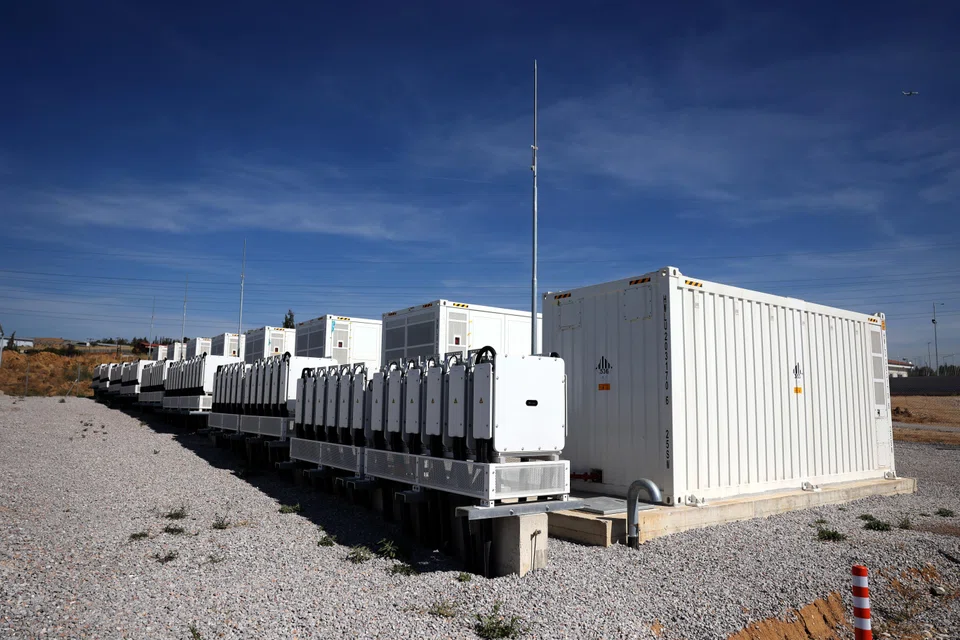
IN THE first seven months of 2026, South-east Asia imported nearly US$7 billion worth of Chinese batteries, according to energy think tank Ember’s analysis of Chinese customs data.
The figure captures a larger shift under way in the region’s electricity system. As renewable generation expands, the equipment used to store electricity is becoming increasingly important to energy security.
Battery storage allows electricity to move across hours of changing supply and demand, absorbing electricity when it is abundant and releasing it when the system needs it.
This is critical as solar generation often peaks before evening consumption, while cooling, industry, electric vehicles and data centres create new demand patterns.
The scale of this transition is accelerating. The world added 108 gigawatts of battery storage in 2025, 40 per cent more than in 2024, according to the International Energy Agency (IEA).
Energy shifting was the primary application for more than 90 per cent of new battery projects in 2025, compared with around 40 per cent a decade earlier.
Batteries are becoming infrastructure. That changes the consequences of depending on a concentrated supply chain.
The IEA’s latest Asean Energy Security Review expects South-east Asia’s electricity demand to grow by about 5.4 per cent annually between 2026 and 2030. Annual investment in grids and storage needs is projected to rise from about US$13 billion today to US$50 billion by 2050 under announced regional pledges.
Today’s choices have longer-term implications
Decisions about battery suppliers, maintenance and technical compatibility will therefore shape the cost and reliability of assets expected to operate for years.
China is central to this process. Between January and July 2026, Asean economies imported more than US$20 billion worth of Chinese clean-energy products, around 50 per cent more than during the same period in 2025.
Nearly US$7 billion of that total consisted of batteries across different applications, including products used in EVs and stationary storage.
Chinese manufacturing scale has helped make this expansion possible. Competition, manufacturing efficiency and substantial production capacity have lowered battery costs and made storage more accessible to emerging electricity systems.
The resulting concentration also matters for resilience. China produces around 80 per cent of the world’s battery cells and holds even larger shares in parts of the upstream supply chain.
Lithium iron phosphate, or LFP, accounts for around 90 per cent of stationary-storage deployments, while China produces about 98 per cent of LFP cathode materials.
For an electricity utility, the practical exposure extends beyond the purchase price. Concentrated sourcing can affect replacement components, delivery schedules, system integration and the bargaining power available when equipment needs upgrading.
Procurement choices made during today’s build-out can influence future operating flexibility and costs.
Growing concentration risks across Asean’s supply chains
The 44th Asean Ministers on Energy Meeting (AMEM) held in Manila on Oct 7 and 8 brought this issue into sharper focus.
The ministers welcomed the completion of a strategic white paper on accelerating battery storage for renewable energy integration and called for follow-up through investment, capacity building and regulatory cooperation.
The newly launched 9th Asean Energy Outlook also identifies dependence on critical equipment, minerals and manufacturing supply chains as an emerging energy security risk.
Significantly, it acknowledges that supply chain concentration remains unquantified in its current modelling and recommends addressing that gap in future work.
Meanwhile, the Asean+3 ministers welcomed the results of an Asean-China clean energy dialogue devoted to scaling storage for resilient power systems. Their statement highlighted investment costs, market rules, grid integration and safety standards.
China’s role in the region’s storage transition thus extends into technical and institutional cooperation as well as manufacturing.
Differing exposures in the region
Singapore illustrates how storage and regional electricity security are becoming connected.
In August, its Energy Market Authority granted conditional approvals for 900 megawatts of electricity imports from peninsular Malaysia. The proposed projects combine solar generation and battery storage in Johor, with commercial operations targeted around 2029.
Such initiatives form part of wider efforts to develop the Asean Power Grid. Planned regional interconnections will require around US$27 billion of investment through 2040, according to IEA estimates.
Notably, the exposure to concentration risks differs across Asean economies.
Indonesia has a substantial position in nickel production and refining, yet around 75 per cent of its refining capacity is linked to Chinese investment, noted the IEA. This creates vulnerabilities involving technology, financing and industrial supply chains.
Malaysia, Thailand and Vietnam have established clean energy manufacturing industries, where integration with Chinese production networks brings opportunities alongside exposure to external suppliers and investment decisions.
For Vietnam, growing renewable generation also increases the importance of grid flexibility and dependable storage support.
Meanwhile, Singapore faces a different set of considerations as it develops cross-border electricity imports. For the country’s electricity buyers, the reliability of imported power will depend on how storage availability, maintenance obligations and equipment replacement are addressed in project contracts.
Regional coordination must progress
Asean governments have practical ways to manage their exposure. In fact, their differing domestic profiles strengthen the case for regional coordination.
Common technical standards and compatible procurement requirements can improve interoperability and resilience across Asean electricity systems.
These should include assessments of life-cycle costs, service commitments and component availability alongside upfront prices. Information sharing on critical components will also be crucial.
Regional manufacturing, recycling, supplier diversification and alternative storage technologies can also gradually widen the options available to utilities and investors.
Cooperation under the Asean Power Grid can also help governments and utilities plan flexibility investments, manage cross-border operational risks, and preserve procurement options as their electricity networks become more interconnected.
Most lithium-ion batteries are designed to shift electricity within the day. Transmission, firm generation and longer-duration storage will remain important complements.
A resilient strategy must account for these different functions as the regional grid expands.
The immediate policy question is how Asean can preserve the affordability that Chinese manufacturing has delivered while securing reliable maintenance, interchangeable components and greater flexibility in future procurement.
Battery purchasing decisions are becoming long-term electricity security decisions. Their consequences will be felt in future costs, maintenance and the ability of power networks to withstand disruption.
The writer is an independent commodities and energy markets analyst specialising in agricultural markets, international trade, food security and geopolitical risk
TRENDING NOW

Once staunchly pro-China, Malaysian Chinese businesses are now distancing themselves from Beijing

Stocks to watch: HPL, Aims Apac Reit, Zico, Advanced Systems Automation, ComfortDelGro

‘How many will survive?’: Bubble fears arise as China’s humanoid robotics face reality check

Smaller board lots can’t fix a market run by three banks

