

Thanks, Trump: Why Canada may become EU’s first-ever ‘associate member’
The idea is both absurd and logical
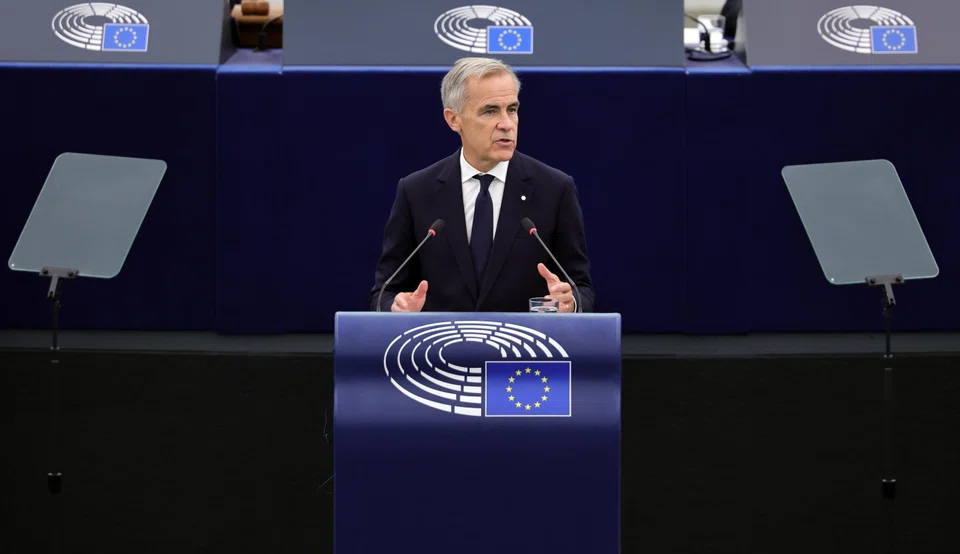
CAN a country change continents? Canada seems set to try.
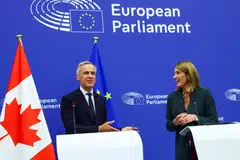
Canadian Prime Minister Mark Carney has announced an intention to seek some novel form of associate membership in the EU. It’s no mere flight of fancy, either, as Ursula von der Leyen, president of the European Commission, has already endorsed the idea.
It’s a proposal that manages to be both absurd and eminently logical, depending on how you frame it. Geographically, Canada remains firmly affixed to North America, sharing a border with its increasingly unpredictable neighbour to the south, the US.
In other important ways, however, Canada clearly has much more in common in recent months with European countries than the unstable US.
That’s because in the space of a year, America has gone from Canada’s most important friend and ally on the world stage to the clearest threat to Canadian sovereignty.
By deepening links with other European democracies, Carney clearly hopes to buy Canada a degree of insurance against continuing American intervention and hostility from US President Donald Trump. There’s a logic to the argument.
Middle powers coming together
In fact, in many ways this proposal is very much in keeping with Canada’s multilateral approach to international politics since the Cold War era.
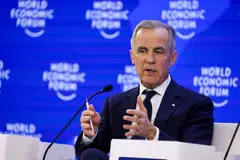
This is a history Carney clearly invoked when he spoke about the need for middle powers to forge their own path together in his landmark speech to Davos earlier in the year.
Canada, then as now, is not a match for the greatest powers in the world. But working with other like-minded states, it can find ways to defend itself and amplify its power.
The difference, of course, is that now the US is no longer one of those allies but, instead, Canada’s biggest threat.
That threat cannot be underestimated, either. While observers such as myself have been warning of the danger ever since the previous prime minister Justin Trudeau’s ill-fated mission of supplication to Mar-a-Lago prompted Trump’s 51st state joke, the scale and severity of the problem has become impossible to ignore.
The latest trade negotiations have made that clear. From ugly jokes and offensive maps, the Trump administration has proceeded to make more concrete demands of fealty.
Even before taking office, Trump was inventing border drug-trafficking problems for Canada to solve – a grievance the president continues to return to.
More recent trade negotiations included demands that amounted to the surrender of Canadian sovereignty.
They included a veto over who Canada trades with internationally, an entrenched dependency on the US for defence procurement and security provision and, incredibly, even an attempt to interfere with official Canadian bilingualism.
Looking for help elsewhere
Along the way, Canada has watched figures close to Trump pumping up the idea of Alberta’s secession and the US ambassador treating Canadians with utter contempt. Worst of all, Canada has had precious little in the way of support even from Americans who are sympathetic.
The message is clear: Americans have been cowed by a bullying administration with no respect for Canada or Canadians. If Canada wishes to defend its sovereignty, it must look for help elsewhere. No country is more vulnerable than the one without allies.
That brings us back to a more European-allied Canada.
The EU is the world’s foremost club of democracies and economic force in the world. When European states can cooperate politically – not always a given – they are a force to rival the other great powers of the world.
Canada also has long ties to Europe, not only cultural connections in the form of a shared heritage for many – though far from all – Canadians, but also through diplomatic and defence collaboration in numerous international institutions.
Those organisations include Nato, the United Nations, the G7, la Francophonie and many others.
As democracies that are facing shared vulnerabilities from increasingly assertive authoritarian regimes, Canada and EU member states have a mutual interest in protecting one another and collaborating to defend democratic values and institutions.
Potential risks, drawbacks
There are many unanswered questions about Canada becoming an associate member of the EU, and some real risks associated with the idea as well. EU membership is not without its drawbacks, as Brexit clearly demonstrated just a decade ago.
The UK voted to leave the EU, and while that was an economically problematic decision, it was not without its logical arguments in favour.
EU membership remains controversial because pooling sovereignty requires sacrifice: Nations trade away unilateral control in exchange for shared, broader gains.
This is not a minor point. The loss of control over decision-making is, in no small measure, what Canada is objecting to in trade negotiations with the US.
While it’s far too early to know what goes into associate membership, Carney will need to be careful to ensure steps are taken to prevent Canadian populists from finding a new distant target in Brussels.
Harmonising policy with European allies would also likely become a further barrier to trade with the US.
While it’s clear Canada can no longer rely on a trusting relationship with its southern neighbour, the two countries will remain joined at the hip, and the US will likely remain Canada’s biggest trading partner as a function not only of geography, but also decades of investment and policy.
As much as Canada needs friends, it’s important for the country to proceed in a way that does not blow up its relationship with the US.
Asian trade
Finally, Canada must be careful not to lose sight of the fact that millions of Canadians trace their heritage to places far beyond Europe.
The Pacific Rim remains Canada’s largest source of trade outside the US, and the democracies of the region are in many ways caught in a situation more analogous to Canada’s own than the countries of the EU.
Japan, South Korea, Australia and Taiwan are, like Canada, caught between US and Chinese influence and must find a way to walk that line. Accordingly, in its search for friends, Canada cannot be too narrow-minded or historically oriented. Europe is Canada’s past, but the Pacific Rim looms large in its future.
One thing is clear, however. Canada’s prime minister understands that the world has changed; the old normal is not coming back. Canada is in a fight for its existence and is acting accordingly. THE CONVERSATION
The writer is lecturer of political science at the University of British Columbia
Decoding Asia newsletter: your guide to navigating Asia in a new global order. Sign up here to get Decoding Asia newsletter. Delivered to your inbox. Free.
Share with us your feedback on BT's products and services
TRENDING NOW

DBS, OCBC, UOB rout lops billions off STI as inflation, rate concerns spook investors

Grab CEO’s wife Chloe Tong on life with Anthony Tan and finding her purpose

OCBC sheds S$8 billion in value as shares close nearly 6% down; analysts cautious on banks

Deal between tycoon friends sparks scrutiny of Philippine power sector

