

Trading in the ‘Year of Geopolitics’
Asian investors should take a more nuanced approach than either pure complacency or panic selling

IN THE Chinese zodiac it’s the Year of the Fire Horse. But in the volatile, fiery crucible that is the markets in 2026, it’s the Year of Geopolitics.
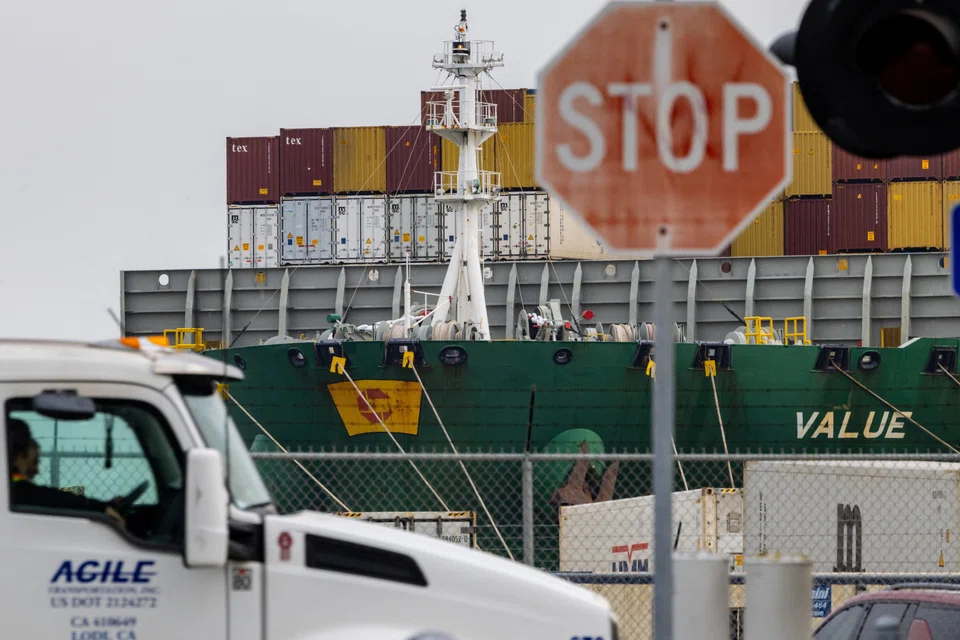
Eight weeks into the year, we’ve had to experience – and anticipate – risks around Ukraine, Israel, Venezuela, Greenland, plus the worrying and current concentration of US military assets off Iran. Simultaneously, we’ve been grappling with concerns around the independence of the US Federal Reserve, and the additional trade tariffs announced by US President Donald Trump following the recent Supreme Court ruling.
It begs the question: In an environment where economic growth remains resilient, how should we price geopolitical risk? Should we sell now and ask questions later? Or should we discount, look through, or simply ignore? Should Asian markets – from Tokyo to Mumbai – treat geopolitical risks as transient noise to be filtered out, or as a material threat requiring active and urgent defensive repositioning?
Inevitably (and unfortunately) there is no easy answer. Our region exhibits specific economic vulnerabilities and thus a unique set of transmission channels through which geopolitical risk flows across asset prices.
These complexities require a more nuanced response than either pure complacency or panic selling. So in this Year of Geopolitics, I share the Lombard Odier framework which analyses and assesses geopolitical risk, and how to position (our Asia-tilted) portfolios accordingly.
Loud headlines, quiet markets
First, to look beyond emotion. Geopolitical events, while heavily covered in media, generate limited and short-lived stress in financial markets. Volatility tends to be episodic, with asset prices recovering within hours (as in the case of “Liberation Day” in 2025), days or weeks – unless fundamental economic channels are disrupted.
'%3e%3cpath%20d='M12.1475%2025.5262C13.7713%2025.4295%2014.94%2023.913%2014.94%2021.8832C14.94%2019.5359%2013.474%2018.093%2011.5917%2018.093C11.3745%2018.093%2010.9582%2018.093%2010.8393%2018.1413V25.2086L11.8891%2025.5745C11.8891%2025.5745%2012.207%2025.5262%2012.1475%2025.5262ZM11.4934%2017.6281C13.2567%2017.6281%2014.3843%2016.4292%2014.3843%2014.4501C14.3843%2012.372%2013.275%2011.2973%2011.4339%2011.2973H10.8393V17.6305H11.4934V17.6281ZM6.66078%2025.6482L7.39265%2025.5492C8.02617%2025.4502%208.26403%2025.3053%208.26403%2025.1097V11.6149C8.26403%2011.4193%208.1451%2011.3709%207.23484%2011.249L6.68137%2011.173L6.6219%2010.7588H11.9508C15.7153%2010.7588%2017.0624%2012.0797%2017.0624%2014.1578C17.0624%2015.9666%2015.7748%2017.1909%2013.4969%2017.6305V17.7041C16.111%2017.948%2017.6571%2019.5382%2017.6571%2021.7636C17.6571%2024.3318%2015.8937%2026.0417%2012.1109%2026.0417H6.60132L6.66078%2025.6482Z'%20fill='%232B2B2B'/%3e%3cpath%20d='M20.6287%2025.6505L21.5596%2025.5515C22.1725%2025.4779%2022.4104%2025.3076%2022.4104%2025.112V11.249H21.9346C20.073%2011.3479%2018.982%2013.0095%2018.408%2014.6227L18.1907%2015.5018H17.6555L18.1701%2010.7588H29.3837L29.6421%2015.4787H29.1664L28.9491%2014.6227C28.3728%2012.8645%2027.3047%2011.2743%2025.5002%2011.249H24.9856V25.1856C24.9856%2025.3812%2025.1251%2025.4548%2025.9965%2025.5515L26.7695%2025.6505L26.829%2026.0417H20.5693L20.6287%2025.6505Z'%20fill='%232B2B2B'/%3e%3c/g%3e%3cdefs%3e%3cclipPath%20id='clip0_5242_21648'%3e%3crect%20width='24'%20height='16.8'%20fill='white'%20transform='translate(6%2010)'/%3e%3c/clipPath%3e%3c/defs%3e%3c/svg%3e)
At Lombard Odier, we believe markets are primarily macro-driven, responding to negative forces such as financial crises, recessions and pandemics rather than geopolitical shocks. This shifts investor focus from predicting the unpredictable – such as wars, elections and diplomatic breakdowns – towards assessing when such events threaten corporate profitability and economic stability.
Second, identify whether key economic transmission channels are disrupted. Markets respond meaningfully when critical technologies such as semiconductors are restricted, and/or when energy and commodity markets face sustained supply constraints; for example, if conflicts in the Strait of Hormuz or Suez Canal closed oil markets or interrupted supply chains.
Finally, assess whether a geopolitical event impairs companies’ ability to generate profits. Outside of recessions, corporate earnings tend to keep growing, and markets look through transient volatility if demand stays intact and cost structures remain undamaged.
Investors should ask a simple, disciplined question: Does this event alter revenue growth or margins in a sustained way? If the answer is no, then geopolitical risk belongs to short-term noise rather than longer-term strategic asset allocation.
Following these three principles offers resilience when applied to portfolio construction. It recognises that markets price economic implications, rather than ethical or moral judgments. By focusing on whether profitability is genuinely threatened rather than forecasting specific shocks, Lombard Odier believes we can navigate our adapting, fragmented world order.
“Investors should ask a simple, disciplined question: Does this event alter revenue growth or margins in a sustained way? If the answer is no, then geopolitical risk belongs to short-term noise rather than longer-term strategic asset allocation.”
Asia tilt
Treating geopolitical risk as a globally “uniform” phenomenon obscures crucial regional distinctions.
Different risks will affect different regions differently. For example, Asian markets face asymmetric exposure to Middle Eastern conflict through (extreme) energy import dependence, concentrated shipping chokepoint vulnerability and complex supply chain integration that compounds during disruption to global trade flows.
Crucially, Japan, South Korea, Taiwan, and India import 80 to 100 per cent of their petroleum requirements, with substantial volumes transiting the Strait of Hormuz. China’s onshore crude inventories – including its strategic petroleum reserve – cover over 90 days of imports, a buffer that does not entirely eliminate vulnerability to (sustained) supply disruption.
The per-barrel price of Brent crude is higher by 18 per cent year to date, suggesting potentially compressed margins for energy-hungry Asian airlines, chemical producers and power utilities.
Yet historical examples suggest that unless physical supply is interrupted, price spikes prove temporary. The 2019 attacks on Saudi Aramco facilities and the 2021 Suez Canal blockage produced initial volatility followed by rapid normalisation as alternative sourcing, inventory draws and demand elasticity restored market balance.
Asian investors must distinguish between the substantial risk premium currently embedded in energy markets and the probability of actual supply curtailment that would transform premium into sustained economic damage.
Seek, discover, decide
The challenge for Asian investors in this Year of Geopolitics is constructing portfolios that endure geopolitical volatility without – as ever – sacrificing performance.
The solution lies neither in blanket defensive positioning nor in naive “all-in” risk appetite, but in differentiation – identifying specific vulnerabilities and opportunities that regional complexities create.
For example, (enduring) US-China geopolitical tensions are giving rise to a new wave of sectoral opportunities. Asian equity markets have commenced significant reallocation towards “strategic autonomy” such as semiconductor manufacturing equipment, rare earth processing, renewables and space-related technologies, creating competitive advantages less susceptible to volatilities in global trade.
This rotation provides a mechanism for reducing portfolio “geopolitical beta” without retreating to cash.
Lombard Odier believes resilience emerges from understanding that markets are discounting machines, rather than moral arbiters. Markets price economic implications; they do not make ethical judgments.
The intelligent allocator builds diversified portfolios that endure shocks through robust strategic and tactical asset allocation, allowing them to navigate an adapting, fragmented order without panic or complacency.
The writer is chief investment officer for Asia at Lombard Odier
Decoding Asia newsletter: your guide to navigating Asia in a new global order. Sign up here to get Decoding Asia newsletter. Delivered to your inbox. Free.
Share with us your feedback on BT's products and services
TRENDING NOW

Once staunchly pro-China, Malaysian Chinese businesses are now distancing themselves from Beijing

Looking beyond looming CEO succession, should UOB potentially pursue a transformative merger?

Could stablecoins be the future of money?

Grab CEO’s wife Chloe Tong on life with Anthony Tan and finding her purpose

