

UltraGreen.ai shares look very depressed, but it’s hard to know whether they’ve hit rock bottom
Its opportunistic buyback could mop up 72.5% of the new shares issued in its IPO

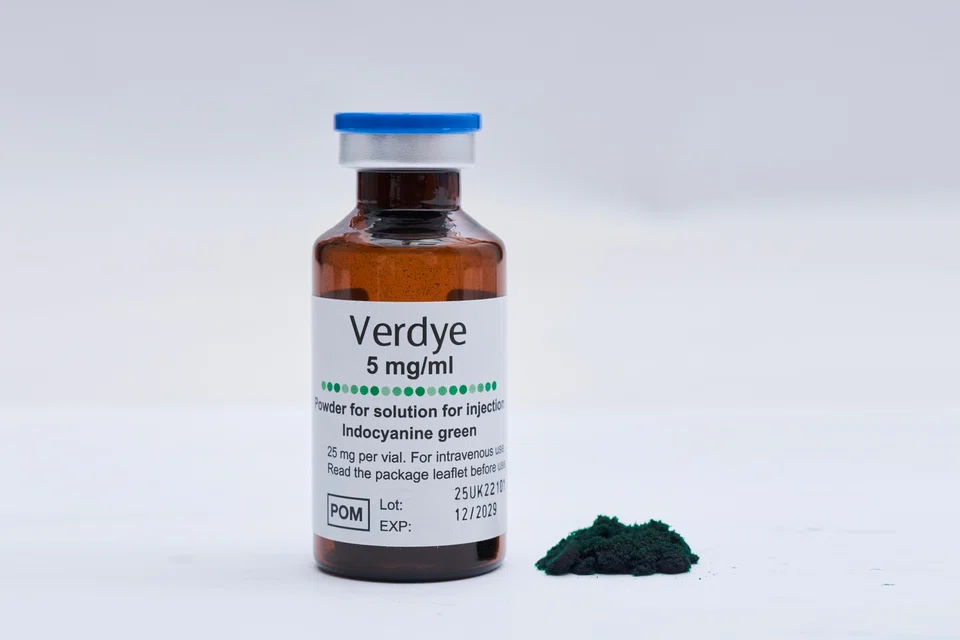
[SINGAPORE] Over the past week, UltraGreen.ai finally disclosed a concrete plan to cope with competition posed by Zydus Lifesciences and Provepharm in the supply of indocyanine green (ICG) dye in the US.
Rather than revive its seemingly depressed share price, however, it may just keep investors on the sidelines for several more months.
In its third-quarter business update on Oct 29, the company said it had relaunched its own generic ICG product to preserve its market share. This is expected to weigh on its profit margins in Q4 2026 and 2027, and cause its full-year revenue for 2026 to miss its previous guidance of US$175 million to US$185 million.
UltraGreen.ai said it would not be providing a revised revenue forecast for 2026, given the evolving competitive environment it faces. It will no longer disclose operating metrics such as sales volumes and average selling prices with the same level of detail as before.
The company also unveiled a capital management policy, laying out a balanced and structured approach to building its business and delivering investment returns in the more uncertain period ahead.
The company said its top priority was reinvestment in its operations, followed by sustainable dividends, strategic acquisitions and share buybacks.
It is targeting an annual dividend of at least 30 per cent of its net profit excluding exceptional items. It has also put in place a multi-year, opportunistic share buyback programme of up to US$30 million.
Meanwhile, financial numbers in its Q3 update indicated it is entering the tougher competitive environment ahead from a position of strength. For the first nine months of 2026, revenue increased 35 per cent to US$131.8 million.
As at Sep 30, the group held US$214 million in cash and short-term investments, and no debt.
Finally, UltraGreen.ai seemed to double down on its effort to educate investors about its business. The group operates in the burgeoning field of fluorescence-guided surgery, where it is attempting to build an integrated ecosystem that combines the sale of ICG with imaging hardware and software.
In its Q3 update, the group said it was expanding its geographical footprint, accelerating the commercial roll-out of its imaging systems, and expanding its clinical opportunities – including in outpatient care and wound management.
Earlier missteps, lingering scepticism
UltraGreen.ai probably still has more work to do winning over investors. Since its Q3 update, its shares have tumbled nearly 30 per cent.
One reason for the scepticism may be that the company initially seemed to downplay the impact of increased competition in the ICG space. In fact, it was not UltraGreen.ai’s management that first flagged the emerging competition from Zydus and Provepharm, but an independent analyst named Jamal Aliyev.
As its share price sank precipitously on the news in August, the company affirmed its revenue guidance for 2026 and bought back its shares.
Its shares did not stop falling, though. UltraGreen.ai now has a market cap of just US$439.6 million, or 5.6 times its annualised H1 2026 net profit.
At the point of its listing in December, following an initial public offering at US$1.45 per share, it was valued at US$1.6 billion, or 31.2 times its annualised H1 2025 net profit.
At its current share price, the US$30 million share buyback programme announced last week could mop up 75 million shares from the market – equivalent to 72.5 per cent of the 103.4 million new shares the company sold to investors at its IPO.
A further 8.6 million vendor shares were sold as part of the offering. On top of that, the vendor sold 163.8 million shares to cornerstone investors.
All in, investors stumped up US$400 million buying UltraGreen.ai shares when it went public – nearly equivalent to its entire market cap now. The net proceeds were estimated to be US$377.1 million, after costs of US$22.9 million. UltraGreen.ai’s share of those costs was estimated to be US$8.2 million.
Citigroup and DBS were joint issue managers, underwriters and bookrunners for the deal.
Clarity and consensus required
What will it take for UltraGreen.ai’s shares to break out of their downtrend? Clearly, much depends on how resilient or otherwise the company’s revenue and earnings prove to be in the face of competition in the ICG space.
The company said last week that it expects to book a one-off US$8.5 million reversal of tax provisions in H2, which should support its full-year earnings. The real test will come in 2027 and beyond.
For now, there seems to be a wide variety of views in the market, reflecting differences in assumptions of the company’s ICG volume sales and average selling prices.
Citi said in a research note last week that it expects the group’s earnings to come in at US$70 million in 2027, and US$68.8 million in 2028. It has a target price of US$0.90 for UltraGreen.ai’s shares.
DBS seems much less optimistic. It is forecasting earnings of just US$45.7 million for 2027, and US$44.9 million for 2028. Its target price for the stock is US$0.50.
On Tuesday (Nov 3), UltraGreen.ai repurchased 250,000 shares in the market at between US$0.395 and US$0.40 apiece.
While that may be a signal that its shares have become too cheap, it is worth keeping in mind that the last share buyback prior to that took place on Sep 2, when the company scooped up 640,000 shares at between US$0.696 and US$0.735 each.
Without clarity and consensus on where UltraGreen.ai’s margins will finally settle, it is hard to know where the bottom is for its share price.
The writer owns UltraGreen.ai shares






