

The Venezuela oil deal: Historic win or deferred reckoning?
The US now has a majority right to about one-fifth of Venezuelan crude. Yet many questions remain unanswered
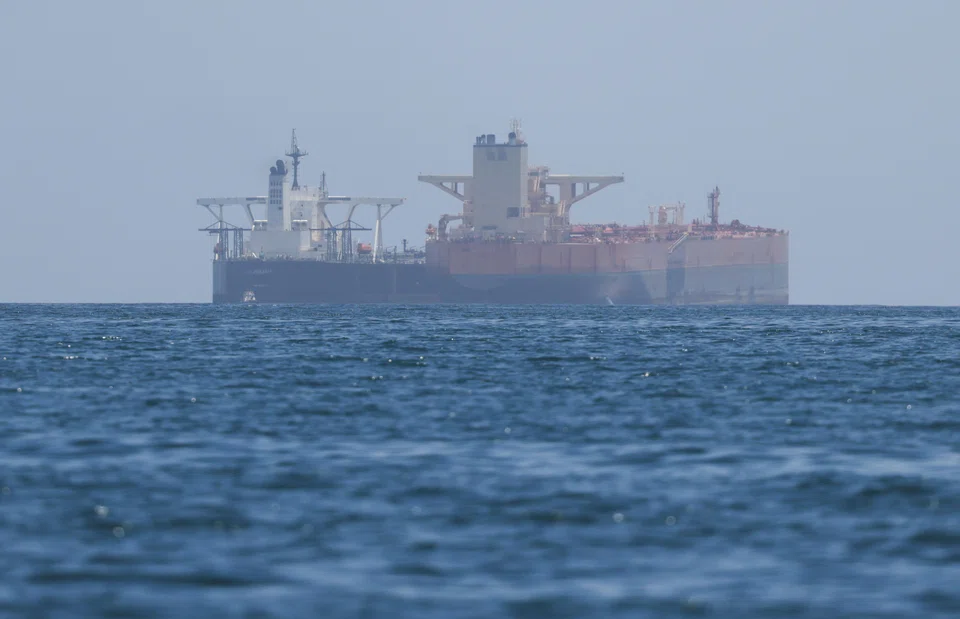
ON AUG 28, 2026, US President Donald Trump announced what he called “the biggest oil deal in world history”: a US-brokered agreement giving American interests majority control (55 per cent) of a new joint venture holding rights to more than 65 billion barrels of Venezuelan crude.
Negotiated by Secretary of State Marco Rubio and Secretary of War Pete Hegseth with Delcy Rodriguez, Venezuela’s interim president, the arrangement is structured not as a purchase but as an equity stake, a public-private partnership overseen by the Pentagon’s Office of Strategic Capital, with private companies holding the operating side of the venture.
The deal lands at a fraught moment. Petrol prices have jumped more than 20 per cent since the US entered its confrontation with Iran, the Strategic Petroleum Reserve sits near 1980s-era lows, and Trump is under real political pressure to show he can bring pump prices down.
It also arrives eight months after US forces captured then-president Nicolas Maduro in a January raid and flew him to New York to face narco-trafficking charges – an operation that was controversial in its own right and that set the stage for everything that has followed.
Understood on its own terms or in that context, the deal looks markedly different.
A win-win?
The strategic logic is straightforward. Venezuela’s reserves have sat largely undeveloped for two decades under a state oil company hollowed out by mismanagement, sanctions and capital flight.
Giving US-aligned capital majority control of that resource, without, Trump insists, spending taxpayer money to do it, more than doubles the reserve base the US can call on, at a moment when Middle Eastern supply is genuinely unsettled by the Iran conflict.
Venezuela has the world’s largest proven crude oil reserves, with an estimated 303 billion barrels. Saudi Arabia has 267 billion and Iran has 209 billion. The South American country is the US’ second-largest source of imported oil, after Canada, according to the Energy Information Association.
Rubio has argued the deal is a two-way win. Close to US$100 billion in private investment and roughly US$209 billion in additional tax revenue will purportedly flow into a Venezuelan economy that desperately needs it after years of hyperinflation and mass emigration.
Supporters also point to the geopolitical dimension. Before 2026, Venezuelan crude was flowing to China at steep discounts. They argue this arrangement redirects that value towards the US and its allies rather than Beijing and Moscow, which had deepened their footholds in Venezuela’s energy and security sectors during the Maduro years.
There is also a rebuilding argument that’s easy to overlook amid the geopolitics: Venezuela’s oil infrastructure is dilapidated after years of underinvestment, and a large infusion of private capital and technical expertise – the kind Chevron, Repsol and Shell could bring if follow-on deals materialise – is arguably what it will take to get output back towards the country’s real potential.
Rodriguez herself has framed the deal partly in these terms, tying oil revenue to concrete domestic needs such as housing.
Unresolved questions
The scepticism starts with sequencing. This deal did not emerge from an ordinary commercial negotiation; it followed a US military operation that removed a sitting head of state and installed the interim government now signing away majority control of the country’s most valuable asset.
Critics, including some Republicans, have pointed out the discomfort of that timeline. They note the tension between the administration’s legal justification for the strike and the way it was carried out.
Others in both parties have asked whether Congress should have had a say before US forces acted, and now ask the same about a deal of this scale being struck without formal congressional review.
Congressional Democrats have separately raised questions about financial oversight of Venezuelan oil proceeds and any potential conflicts of interest among officials or companies involved, sending letters to major banks asking whether the administration solicited them to hold related funds.
Details on the joint venture’s ownership structure, tax treatment and long-term obligations remain thin, which is itself a source of concern for anyone trying to evaluate whether the terms are actually favourable to either country’s public.
Then there is the democracy question, which cuts across the political spectrum. Venezuela’s opposition leader, Maria Corina Machado, was not part of the negotiations.
Critics, including some Chavista hardliners within Rodriguez’s own political coalition, have accused the interim government of surrendering sovereignty over the nation’s signature resource before any democratic transition has actually occurred.
Analysts have suggested the arrangement may reduce Washington’s incentive to push for near-term elections, since a durable working relationship with Rodriguez’s government is now bound up in the deal’s success.
Ordinary Venezuelans, per early reporting, have expressed real scepticism that a deal negotiated at the top will translate into the housing, jobs and services officials are promising.
What it comes down to
Strip away the rhetoric on both sides, and the honest assessment is that the deal is both significant and unresolved.
It is significant because it reshapes, in one stroke, who controls access to a major share of the world’s largest proven oil reserves, at a moment of real strategic competition over energy with China and Russia.
Yet it is unresolved because so much of what would make it a clear success or a clear cautionary tale – the actual pricing terms, the oversight structure, the pace of investment, whether Venezuela sees a genuine economic recovery or a new dependency, and whether political liberalisation follows or stalls – simply hasn’t played out yet.
The administration’s framing treats the deal as a triumphant capstone to the Maduro operation: security and prosperity delivered in one package.
The critics’ framing treats it as the predictable next step in a sequence that started with a legally contested use of force and now risks entrenching an unelected government in exchange for resource access.
Both framings can be true in the sense that they emphasise real, verifiable facts, the scale of the reserves and investment on the one hand, the absence of transparency and democratic participation on the other.
What is missing from the public record are critical details. Contract terms, oversight mechanisms and a real accounting of who benefits and how much would let anyone outside the negotiating room judge the deal on the merits rather than on priors about the administration or about resource nationalism more broadly.
Until such details surface, “biggest oil deal in world history” and “sovereignty for sale” are both, at this point, more slogan than verdict.






