What the World Cup can tell us about finance
World Cup prediction models highlight how hard forecasting in finance is
THERE’S a memorial to Paul the octopus at the Sea Life Centre in Oberhausen after the cephalopod seer earned worldwide fame by correctly predicting the outcome of all Germany’s seven games at the 2010 World Cup.
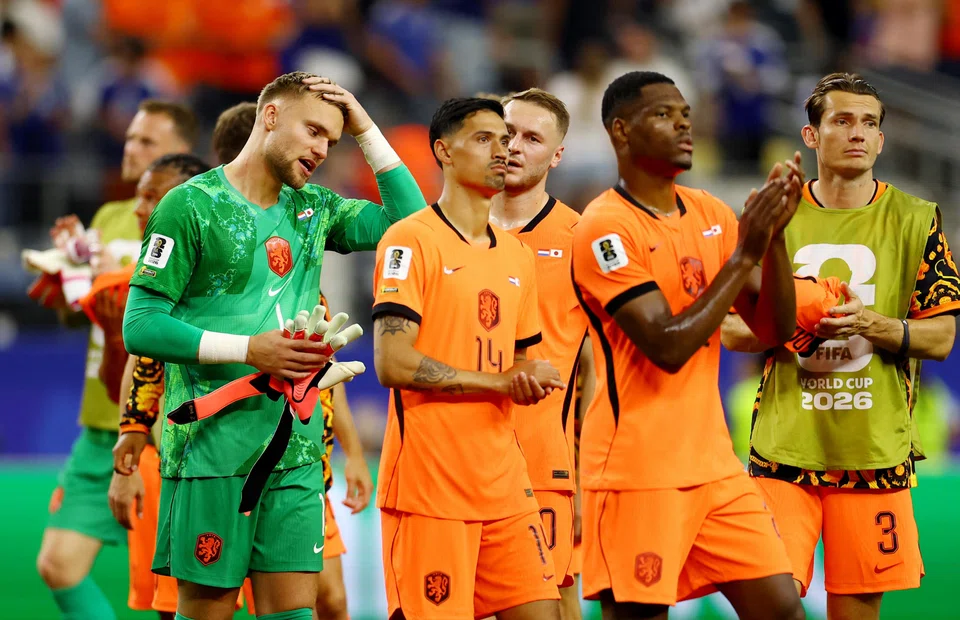
If the Netherlands win the 2026 tournament that kicked off on Thursday (Jun 11) in Mexico, there may be calls for a statue of Panmure Liberum’s Joachim Klement, the finance world’s reluctant oracle of World Cup forecasting.
Klement, a managing director at the London-based investment bank, is on a roll after the model he designed in 2014 successfully predicted Germany as the winner of that year’s tournament, followed by France in 2018 and Argentina in 2022.
The German investment strategist has been in demand on the media circuit in the run-up to this year’s extravaganza, threatening to overshadow more serious work on the market implications of the artificial intelligence boom.
Expect that to go into overdrive if his model’s 2026 pick – the Netherlands, a relative outsider rated as a 4 per cent chance on Polymarket – goes on to lift the trophy in July.
The irony is that the model was supposed to fail.
“Originally, this was supposed to be an exercise in humility to show the world how stupid and unreliable economic models are,” Klement writes in his report, which is not the longest but is certainly the most entertaining of the various World Cup-themed research notes pumped out by investment banks.
In a plot with echoes of The Producers, after his third straight correct prediction he was inundated with questions and requests to forecast other sporting tournaments. How life likes to play tricks on us. One way to short-circuit the hype would be to deliberately pick a likely loser in 2026 – but Klement insists that is not happening and “the model is the model”.
I wondered whether the report, which satirises the finance industry’s tendency to find excuses for faulty predictions, had drawn any flak for disloyalty from the economics fraternity?



“To be honest, every economist I ever talked to about these forecasts agrees with me,” Klement told me. “We are aware that we are generally trying to do something that is super hard and we pretend to be more confident than we truly are.”
There is a lesson here, often repeated but easily forgotten: Do not underestimate the role of randomness in markets and life. A monkey throwing darts at the stock pages of the Wall Street Journal outperforms the average active fund manager (or did until the publication moved online). Luck can easily be mistaken for skill. That may be obvious when watching a football tournament punctuated by lotteries such as penalty shootouts. It is less evident when confronted with the apparent precision of economic and market forecasts produced by complex mathematical formulas.
Klement’s model is rooted in a 2002 study by researchers at Nottingham University titled “The Socio-Economic Determinants of International Soccer Performance”.
Its variables include gross domestic product per capita (football can be played anywhere but you need some decent infrastructure to be a World Cup contender); population size (though that has not worked for China or India); temperature (you can’t play when it is too hot); and being a host country (which helps). It also weights Fifa’s current ranking points to reflect squad strength.
Rivals to Klement can eat their hearts out.
On the face of things, Goldman Sachs Group’s method looks more sophisticated. It crunches almost 20,000 matches since 1978 for a regression model that predicts the number of goals scored by each team against a particular opponent. The system uses Elo ratings, originally designed to rank chess players, and builds in variables such as scoring talent, momentum, mentality (reigning champions typically underperform), and geography (home advantage). It also ran 50,000 Monte Carlo simulations to yield probabilities of success for each team.
So much for all that. Goldman named Brazil as its top pick in the past three World Cups, drawing a blank. In 2026, its model gives Spain a 26 per cent chance of winning the trophy, followed by France on 19 per cent, Argentina at 14 per cent, Brazil at 8 per cent and England at 5 per cent.
Goldman foresees Spain (the current favourite in betting markets) prevailing over Argentina in the final; Klement has Portugal tasting defeat in the climactic match.
Tempting though it may be to aim some terrace banter at the Goldman model, there is not much to learn here. The role of chance is too great.
Klement says his model can explain 55 per cent of the variation in success across nations in a World Cup. That is perfectly respectable for a financial model that will be used across thousands of trades, enough volume for the signal to come through.
It cannot reliably forecast a one-off knockout football tournament in which the winning team will play a total of eight games: The sample is too small.
That’s why these exercises are meant to be light-hearted. “If you take this model and these forecasts seriously, you are deluding yourself,” Klement writes.
There’s still useful information to be gleaned. For one thing, take economic forecasts with a pinch of salt. Also, there was only one Paul. BLOOMBERG
Decoding Asia newsletter: your guide to navigating Asia in a new global order. Sign up here to get Decoding Asia newsletter. Delivered to your inbox. Free.
Share with us your feedback on BT's products and services