

Why a professional baseline for HR is a reasonable expectation
Amid rapid workforce transformation, advising on employment practices demands a solid foundation
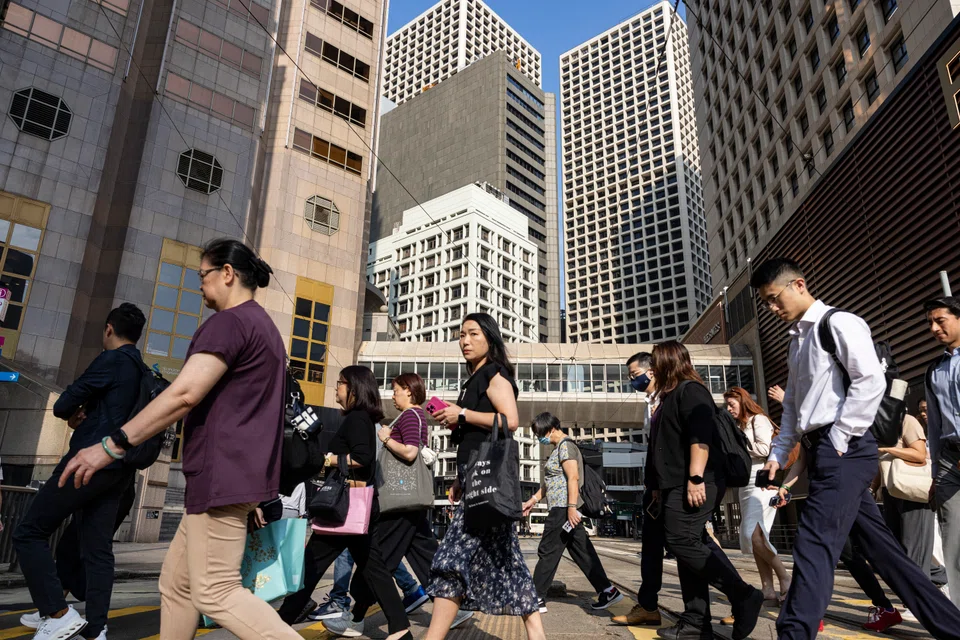
IF THE pace of change feels faster, it is because it is. New artificial intelligence systems are arriving at speed and organisations are moving them from experiments into everyday workflows.
In conversations with business and human resources (HR) leaders, I hear the same questions: Which tasks should be automated? How should decisions be made? And how must operating models evolve to ensure that technology improves performance without leaving people behind?
For workers, these are not abstract questions. Familiar tasks may disappear while new ones emerge. Skills built over many years may no longer be enough.
The result is a mixture of anticipation and anxiety, particularly when change affects a person’s livelihood, career prospects and sense of what lies ahead.
Technology is only one part of this transformation. Singapore is also facing rapid population ageing.
In 2026, citizens aged 65 and above made up 21.4 per cent of Singapore’s citizen population, placing the country above the threshold commonly used to define a super-aged society.
As more people remain in the workforce for longer, employers will need to redesign jobs, provide flexible work arrangements and build workplaces where different generations can contribute and learn from one another.
The regulatory landscape is also evolving. Parliament has passed the Workplace Fairness Act and the accompanying dispute-resolution legislation, both of which are scheduled to take effect at the end of 2027.
Employers will need stronger systems for fair employment decisions, grievance handling and documentation. What was once guided mainly by tripartite norms will increasingly carry statutory obligations and consequences.
Taken together, these shifts raise a straightforward question: What should employers and workers be able to expect from the professionals who advise on decisions that carry legal risk and can alter working lives?
This question lies at the heart of the recent report by the Tripartite Workgroup on Human Capital Capability Development, which sets out five recommendations to strengthen Singapore’s human capital capabilities.
One proposal has attracted particular attention: from Jul 1, 2028, organisations with more than 200 employees will need at least one HR professional certified at the Institute for Human Resource Practitioners (IHRP) Certified Professional level or higher.
Recognised equivalent accreditations may also qualify, subject to applicable bridging requirements.
These concerns are understandable. A certificate cannot capture everything that makes a good HR professional. It cannot fully measure empathy, courage or judgment, nor predict how someone will respond when an employee’s role is at risk or a business faces a painful restructuring.
Neither should experienced practitioners without certification be dismissed as incapable; many have built deep expertise over decades.
However, the limits of certification are not an argument against a professional baseline.
When someone advises on employment rights, workplace fairness, grievances or restructuring, employers and workers should have confidence that the individual has demonstrated a recognised foundation of HR knowledge, ethics and professional judgment.
A baseline should also not be mistaken for a one-off examination that divides the capable from the incapable. Professional certification should be a continuing commitment: a standard that evolves with business, technology, regulation and workforce expectations.
IHRP’s framework is anchored in its Body of Competencies, which was first introduced in 2016 and subsequently refreshed in 2020 and 2024 through engagement with business and HR leaders, tripartite partners and the wider ecosystem.
Some have pointed out that experience matters more. Indeed, experience remains indispensable. It deepens perspective and helps practitioners recognise patterns that no textbook can teach.
Yet, experience can also harden into familiar assumptions. Pairing it with an evolving professional standard gives practitioners reason to test what they think they know, update their knowledge and keep their judgment current.
There is a broader point here about the standing of HR I hope can be further debated. When people think of the professions on which society depends, they often cite medicine, law, accountancy and engineering.
HR should be part of this conversation too. HR practitioners apply specialised knowledge, exercise professional judgment, uphold ethical standards and advise on decisions with serious consequences for individuals and organisations.
Professional recognition should reflect this level of responsibility. This requirement is an important step towards positioning HR alongside other recognised professions – a profession that our community can be proud of.
IHRP, for its part, has work to do. Certification must remain rigorous, accessible and relevant. The standards must keep pace with generative AI, flexible work, new workforce models and the responsible use of people data.
Recertification must reflect genuine professional development rather than become a passive pay-to-maintain exercise. Together with learning and ecosystem partners, we must give practitioners practical ways to learn, find mentors, exchange experience and support one another.
Ultimately, the measure of professionalisation will not be the number of certificates issued. It will be whether employment practices become fairer, workforce planning improves, difficult decisions are handled more responsibly and trust in HR grows.
A professional baseline cannot guarantee these outcomes. However, at a time when employers face increasingly complex and consequential decisions, it is a reasonable place to start.
The writer is chief executive officer of the IHRP
TRENDING NOW
New rules on gross floor area to free up building space for developers
Keppel CEO on telco merger: S$34 million StarHub dividend beats M1’s S$3 million contribution

High costs, cautious shoppers: DFI, Food Empire in favour as Sheng Siong, Delfi face margin squeeze
Morgan Stanley trims tech exposure amid tensions, flags S’pore, other Asian defensive winners

