

Report okayed by government calls for certified HR professional for larger firms from July 2028
Also accepted are the proposals calling for more HR professionalism, leadership, workforce planning and AI adoption


[SINGAPORE] The government has accepted a set of recommendations aimed at helping Singapore’s workforce adapt to rapid economic and technological change, while creating better opportunities for workers to grow and progress in their careers.
The five recommendations are detailed in a report by the Tripartite Workgroup on Human Capital Capability Development, released on Thursday (Sep 24).
One key proposal is the establishment of the Singapore Opportunity Index (SOI) as a national benchmark for workplace opportunities.
Another proposal is to require, from Jul 1, 2028, organisations with more than 200 employees to have at least one human resource (HR) professional holding at least the Institute for Human Resource Professionals (IHRP) Certified Professional qualification.
The workgroup was co-chaired by Kenny Tan, the Ministry of Manpower’s deputy secretary for workforce; Benjamin Boh, a council member of the Singapore National Employers Federation (SNEF); and Patrick Tay, assistant secretary-general of the National Trades Union Congress (NTUC).
In a letter to Acting Minister for Manpower Jasmin Lau published in the report, the co-chairs said that Singapore “must provide constant opportunity” in a more dynamic and uncertain world, as artificial intelligence accelerates the pace of change and Singaporeans live and work for longer.
The letter said: “Creating opportunities by design requires a shift in how organisations think about people and work.
“Workforce strategy cannot be treated as separate from business strategy. Nor can the responsibility for workforce outcomes rest solely with the human resource function.”
Instead, business leaders, HR professionals and people managers must “drive enterprise and workforce transformation together”, it noted.
SEE ALSO
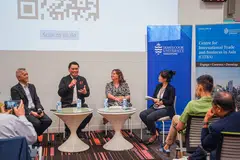
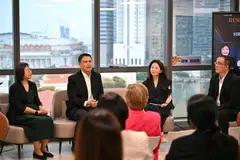

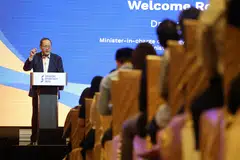
In response, Lau said the recommendations provided a “practical path forward” that the government supports, and urged HR leaders and professionals to “step forward to lead the change”.
Thursday’s announcement comes ahead of the Workplace Fairness Act, which is scheduled to take effect by end-2027, and potential changes to the Employment Act. The latter is currently under review, with recommendations expected to be submitted to the government in the second half of 2026.
The workgroup said that the recommendations are intended to benefit more than two million workers, support at least 2,000 enterprises and build the capabilities of around 20,000 HR professionals and people leaders.
Professionalising human resource
Speaking to the media ahead of the launch of the report, NTUC’s Tay said that the certification of HR professionals has been a key tripartite recommendation for several years.
“HR professionals play a very important role in every company, as well as in the workplace transformation process,” he added.
“We hope that this certification will better equip HR professionals with the relevant knowledge to operate in a local context, because at the end of the day, we want our Singaporean workers to benefit.”
At a panel discussion in September, Tay noted that about 10 per cent of HR practitioners in Singapore are foreigners, some of whom may be less familiar with local employment practices and the support measures available to workers.
The report said that certification is intended to provide a “trusted baseline” for HR practitioners, who are increasingly expected to advise business leaders on complex workforce decisions and support companies through transformation.
Among organisations with more than 200 employees, 45 per cent already have at least one certified HR professional.
To date, more than 9,000 working professionals – comprising over a fifth of the HR workforce – are certified. The workgroup aims to double this pool to 18,000 by 2030.
To support early adoption, the tripartite partners said in a joint statement that Singapore residents can tap “significant” government subsidies to work towards the IHRP certification.
On top of these subsidies, an additional S$100 will be provided from Oct 1, 2026, to Jun 30, 2028. The statement added that this will bring certification fees down to S$163.50 for IHRP Certified Professional certification, and S$272.50 for IHRP Senior Professionals certification, which are both valid for three years.
Organisations may also use their SkillsFuture Enterprise Credits to offset remaining out-of-pocket fees for their HR professionals.
The other recommendations
Beyond professionalising HR practice, the workgroup also recommended developing stronger people leaders.
This will better equip HR professionals, managers and business leaders to manage workers through changes in their organisations.
It proposed training more than 4,000 HR professionals and people leaders, as well as launching a nine-month programme for senior HR and people leaders from 2027.
Another recommendation is to help businesses consider their workforce needs earlier when planning for growth or transformation, rather than only after key decisions have been made.
This is intended to help companies anticipate the changes to their business that will affect jobs and skills.
SNEF and IHRP will develop practical guides and case studies for businesses, and a six-month pilot is under way to give small and medium-sized enterprises part-time access to experienced HR leaders.
The workgroup also recommended helping businesses manage how AI changes jobs and work, so that adoption of the technology does not focus solely on productivity or technology needs.
The tripartite partners will introduce an AI “starter kit” that brings together suitable AI solutions with implementation guidance, consultancy, training and funding support for businesses adopting AI for HR functions.
IHRP will also work with training partners to introduce more accredited programmes aligned with 12 new AI Fluency Skills Badges, aimed at helping HR professionals play a more active role in their organisations’ AI transformation.
Finally, the workgroup recommended expanding the use of SOI, introduced last year, as the national benchmark for workplace opportunities.
The index is intended to help workers make more informed career decisions, while enabling employers to assess the impact of their human capital strategies.
Tripartite and industry partners will provide advisory services and resources to help companies understand their SOI reports and strengthen these strategies.
Decoding Asia newsletter: your guide to navigating Asia in a new global order. Sign up here to get Decoding Asia newsletter. Delivered to your inbox. Free.
Copyright SPH Media. All rights reserved.
TRENDING NOW

Once staunchly pro-China, Malaysian Chinese businesses are now distancing themselves from Beijing

Looking beyond looming CEO succession, should UOB potentially pursue a transformative merger?

Could stablecoins be the future of money?

Grab CEO’s wife Chloe Tong on life with Anthony Tan and finding her purpose

