

Why Singapore cannot bank on the Asean Power Grid just yet
Cross-boundary electricity market cooperation is still nascent
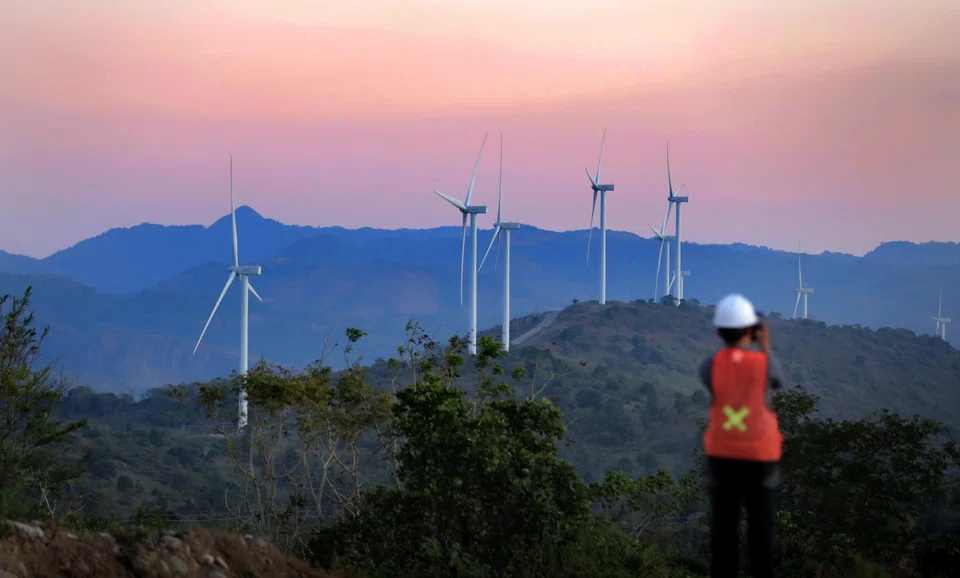
“IF RENEWABLES are the heart of the energy transition, grids are its arteries,” United Nations Secretary-General Antonio Guterres told world leaders at COP31 on Thursday (Nov 12).
Pointing to 3,000 gigawatts (GW) of clean energy projects stuck in gridlock, he called for a 50 per cent surge in global grid investment by 2030. He also highlighted the Asean Power Grid (APG) as a priority for regional energy security.
But while the UN urges governments “to cut red tape and fast-track priority projects”, it risks overlooking a key bottleneck in South-east Asia: regulatory risk.
Cross-boundary electricity market cooperation is still developing among Asean members, amid some positive developments.
For instance, Singapore’s Energy Market Authority (EMA) in October granted conditional approval for the Vietnam-Malaysia-Singapore (VMS) renewable electricity initiative.
The VMS project would link the three countries in a renewable electricity corridor designed to deliver up to 1.3 GW of power into Singapore, while also supplying Malaysia.
It would tap into Vietnam’s offshore wind potential, alongside solar power generation and battery energy storage systems (BESS) in Malaysia.
However, the initiative is a long-term play, given that Vietnam’s offshore wind power sector remains undeveloped, while Malaysia still needs more build-out in its battery energy storage sector.
The agreement comes as the region continues to develop a functioning regional electricity market through the APG.
The Laos-Thailand-Malaysia-Singapore Power Integration Project (LTMS-PIP), which began exporting electricity from Lao hydropower to Singapore in 2022 through Thai and Malaysian transmission networks, was the first multilateral trade project.
Trading capacity has since expanded from an initial 100 megawatts (MW) to 200 MW, with Malaysia also supplying power to Singapore.
So far, so good. However, actual cross-border electricity trading remains modest. Even the LTMS-PIP required regulatory coordination across four countries and relied on pre-existing transmission infrastructure.
As at August 2026, Singapore had granted conditional approval to 9.25 GW of low-carbon electricity imports, although those projects include supply from outside Asean and remain largely prospective.
Regulatory fragmentation
An International Energy Agency (IEA) report in March, Financing the Asean Power Grid, flagged numerous hurdles to overcome to scale up regional power trading. These include regulatory fragmentation, technical incompatibility, and financing and commercial arrangements.
Regulatory and institutional hurdles create major bankability bottlenecks. The problem is not a lack of private capital or global liquidity – it’s there.
But fragmented regulatory risk is directly killing financing.
Lenders will not fund multibillion-dollar cross-border transmission assets without long-term legal predictability over third-party grid access, standardised risk allocation and licences that outlast the maturity of a commercial loan.
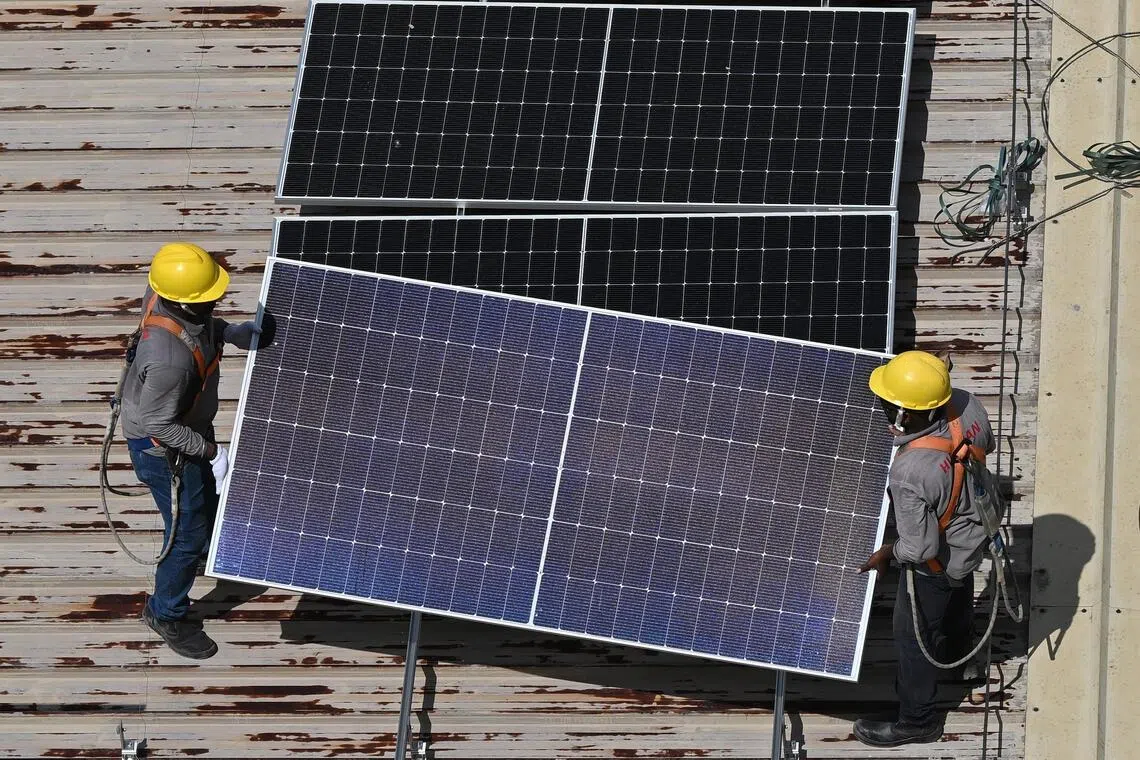
Unfortunately, in most Asean member markets, transmission infrastructure remains dominated by vertically integrated state monopolies.
Those structural problems are not theoretical. They have already surfaced in disputes across several Asean markets.
In 2025, Vietnamese state-run power company EVN slashed power purchase rates for 12 GW of renewable capacity over alleged administrative technicalities.
After negotiations with investors stalled, five foreign chambers of commerce (from the EU, UK, Japan, South Korea and Thailand) threatened legal action over projects with a combined capacity of 12 GW.
This begs the question: If international lenders cannot trust domestic contracts, how can they bankroll regional corridors?
Vietnam is not alone. Indonesia and Malaysia have also faced energy-sector contractual and regulatory disputes, raising concerns about investment certainty.
This August, Siamgas and Petrochemicals, a Thai liquefied petroleum gas (LPG) company, launched international arbitration against Malaysia through the International Centre for Settlement of Investment Disputes (ICSID).
The dispute followed Sarawak’s decision not to renew its LPG distribution licence, shifting distribution to state-owned Petrosniaga.
This illustrates how abruptly state actors can alter the operating environment for foreign energy investors.
Indonesian state utility PLN overestimated electricity demand when it launched its ambitious 35 GW power expansion programme in 2015, leaving the country with substantial excess generating capacity.
Facing mounting take-or-pay obligations, PLN renegotiated contracts with 17 independent power producers (IPPs), delaying commercial operations and reducing contractual commitments.
The lesson is clear. When domestic economic and political pressures collide with long-term power agreements, even signed contracts can come under pressure.
These disputes also raise questions about how financial risks would be allocated among participating countries if electricity exports were delayed, curtailed or interrupted after cross-border transmission infrastructure had already been built.
Singapore’s energy security dilemma
These developments come full circle, intersecting Singapore’s announcement in October that five new gas-fired power plants are scheduled to come online by 2031 to help meet its growing energy demand.
Combined, they will inject around 3.1 GW of capacity into the city-state’s power grid, expanding generation capacity by roughly 26 per cent and helping secure its baseline electricity requirements.
Some have criticised the move, highlighting that it runs counter to the city-state’s decarbonisation efforts and net-zero 2050 target.
This argument is fair. Since gas-fired power projects often have an operational life of up to 30 years, the new plants could plausibly still be in operation after 2050.
Ultimately, the decision is pragmatic. Singapore has little choice but to grant more gas-fired power projects.
Given its geographical limitations to develop both domestic solar and offshore wind power projects, the city-state simply cannot base its near-term energy security on regional electricity imports that have not materialised yet.
New gas-fired power projects serve as a hedge against the slow development of the APG, while also mitigating any unforeseen regulatory, legal or financial hurdles that could arise.
The writer is an Asia-Pacific energy markets and sustainability journalist, analyst and consultant with nearly 20 years of experience in the energy sector, including commercial advisory work. He is the founder of Apac Energy Consultancy.
TRENDING NOW

Ex-Nvidia CEO Jensen Huang carried a secret for more than a year. It led to his downfall

Higher rates, weaker spending: Is the Philippines entering stagflation?

As Indonesia picks new vice-president to succeed Gibran, investors see risks and opportunities
Singapore to inherit South China Sea code talks with key issues unresolved

