The quiet decision that helped Singapore weather the Hormuz shock
As the city-state takes chairmanship of Asean, it can help the region prepare for future disruptions
WHEN Singapore GasCo was established in May 2025, few could have predicted how quickly it would prove its worth.
Conceived after Russia’s 2022 invasion of Ukraine exposed the risks of piecemeal liquefied natural gas (LNG) contracting by individual power generators, the centralised gas buyer began operating with little fanfare.
Yet, by March 2026, it had come to the forefront of Singapore’s response to an energy crisis in the Middle East.
The closure of the Strait of Hormuz cut Asia off from 60 per cent of its crude oil and more than a quarter of its LNG supply. Few economies looked more exposed than Singapore, which generates about 95 per cent of its electricity from gas and sourced nearly half of its LNG imports from Qatar in 2025.
GasCo moved quickly. Within weeks, additional cargoes were arriving from Australia and Mozambique. Prime Minister Lawrence Wong noted that GasCo’s creation “could not have come at a better time”.
Singapore’s new procurement model – as highlighted in the Asia Natural Gas and Energy Association’s Rethinking Energy Security in Asia white paper – offers two key lessons for other LNG buyers in the region.
The first is the importance of scale to optionality. Larger buyers carry more weight with suppliers and are better placed to build a diverse portfolio that avoids reliance on known choke points.
The second is the value of being able to respond quickly.
When supply from the Middle East was cut, Singapore had a single, well-resourced buyer able to go to market immediately to keep the economy powered.
For Singapore, reliable supply has never mattered more. At the recent Singapore International Energy Week (SIEW), the Energy Market Authority (EMA) outlined “unprecedented” future power demand, with peak electricity consumption forecast to rise from 8.6 gigawatts (GW) to as much as 13 GW by 2031.
As data centres, semiconductor manufacturing and electric transport expand, gas and LNG play a pivotal role in the EMA’s new five-year infrastructure plan.
Five new gas-fired power plants are due by 2031, lifting generation capacity by about 26 per cent, with bids for further plants by 2032 now being assessed.
Meanwhile, about half of Singapore’s gas already arrives as LNG, a share set to grow. Even with a second LNG terminal set to lift import capacity to 15 million tonnes a year by 2030, EMA is already studying further expansion of the existing terminal on Jurong Island and a potential new terminal on Pulau Tekong.
Decarbonisation remains on the agenda too, with Singapore launching South-east Asia’s first biomethane import pilot in October, using renewable gas that can flow through existing infrastructure.
Minister for Energy, Trade and Industry (Energy and Industry) Tan See Leng made a telling point at SIEW when he described energy as “an existential priority” for Singapore. Conflict in the Middle East has only reinforced that national security and energy security are one and the same.
Prioritising regional energy security
Singapore has a strong opportunity to act on that conviction. In 2027, the country takes the chair of Asean as the bloc marks its 60th anniversary. There could be no better moment to put regional energy security at the heart of the agenda.
A natural place to start is making Asean’s new petroleum security agreement work in practice. Endorsed by member states in 2025, it now covers natural gas alongside crude oil and petroleum products – a vital update given the growing role of gas and LNG across the region.
Six of Asean’s 11 members have ratified it, with the rest targeted before the upcoming Asean summit in November.
Under the agreement, members endeavour to collectively supply the equivalent of 10 per cent of a distressed country’s normal needs. Once it is in force, the real work begins: developing the response protocols and drills that turn commitments on paper into cargoes when they are needed.
Infrastructure that strengthens both national and regional resilience must follow. At their annual meeting in Manila in October, Asean energy ministers welcomed progress on LNG connectivity and regasification capacity, and stressed the need for continued investment in the regional oil and gas sector.
Alongside Singapore’s push to advance the Asean Power Grid, that investment will help neighbours draw on one another in a crisis. Singapore’s experience with terminals, storage and central procurement offers valuable lessons for newer importers building their systems.
This year has shown how much collaboration matters. Energy resilience also requires countries to look beyond their immediate neighbours.
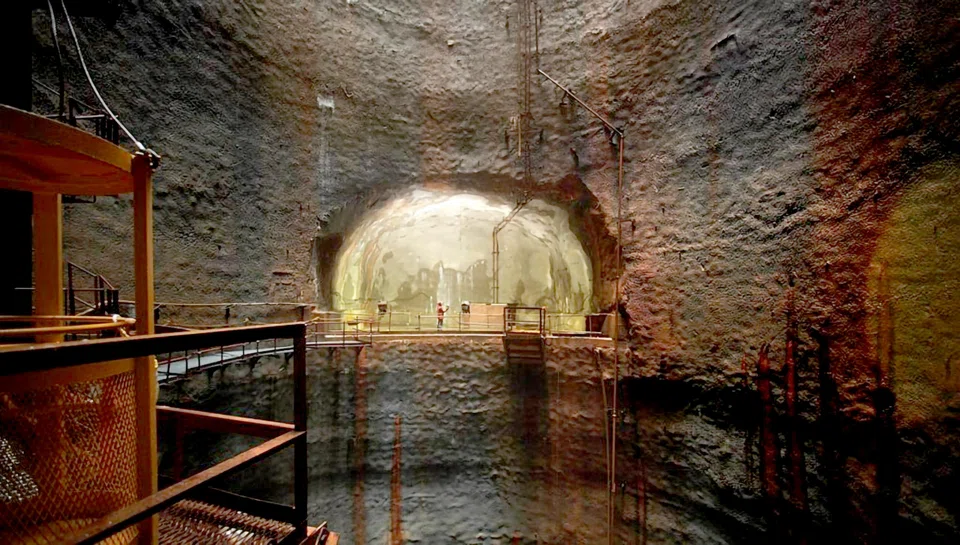
After the Hormuz closure, Singapore and Australia signed a landmark protocol that kept LNG and refined fuels flowing in both directions. At SIEW 2026, Singapore announced that Saudi crude will be stored at the Jurong Rock Caverns from 2027.
Partnerships such as these are worth deepening, and replicating across the region, in quieter times.
“We cannot predict every disruption,” Dr Tan told SIEW delegates. “But we will always ensure that Singapore is prepared for them.”
As incoming Asean chair and a proven energy leader, Singapore now has the chance to help the whole region do the same.
The writer is acting CEO of the Asia Natural Gas and Energy Association, headquartered in Singapore