

Room for more offices, homes and green spaces to make Orchard Road more vibrant
Beyond tourists and shoppers, the precinct needs a stronger base of residents, workers and repeat visitors: analysts

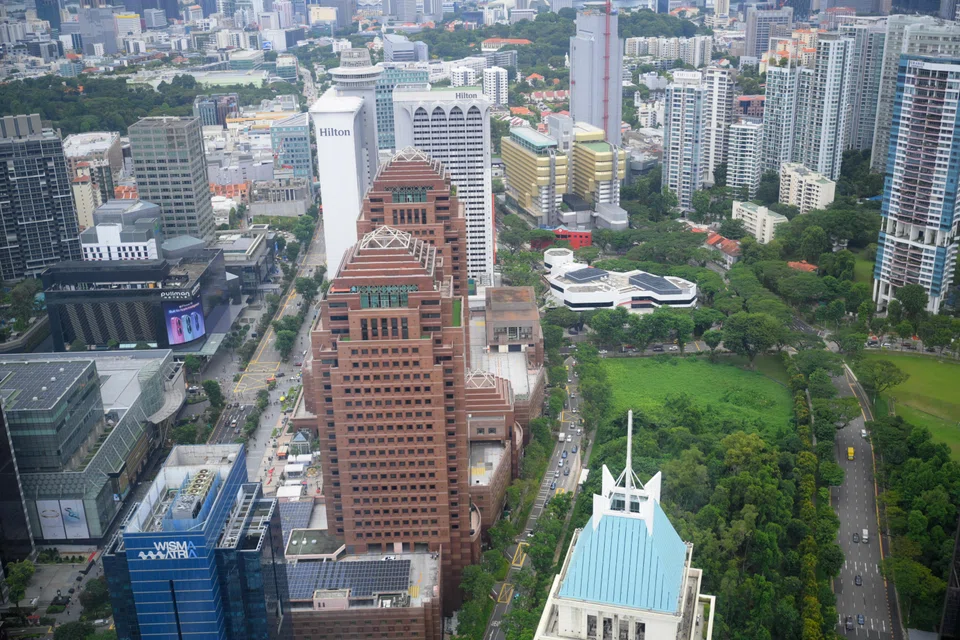
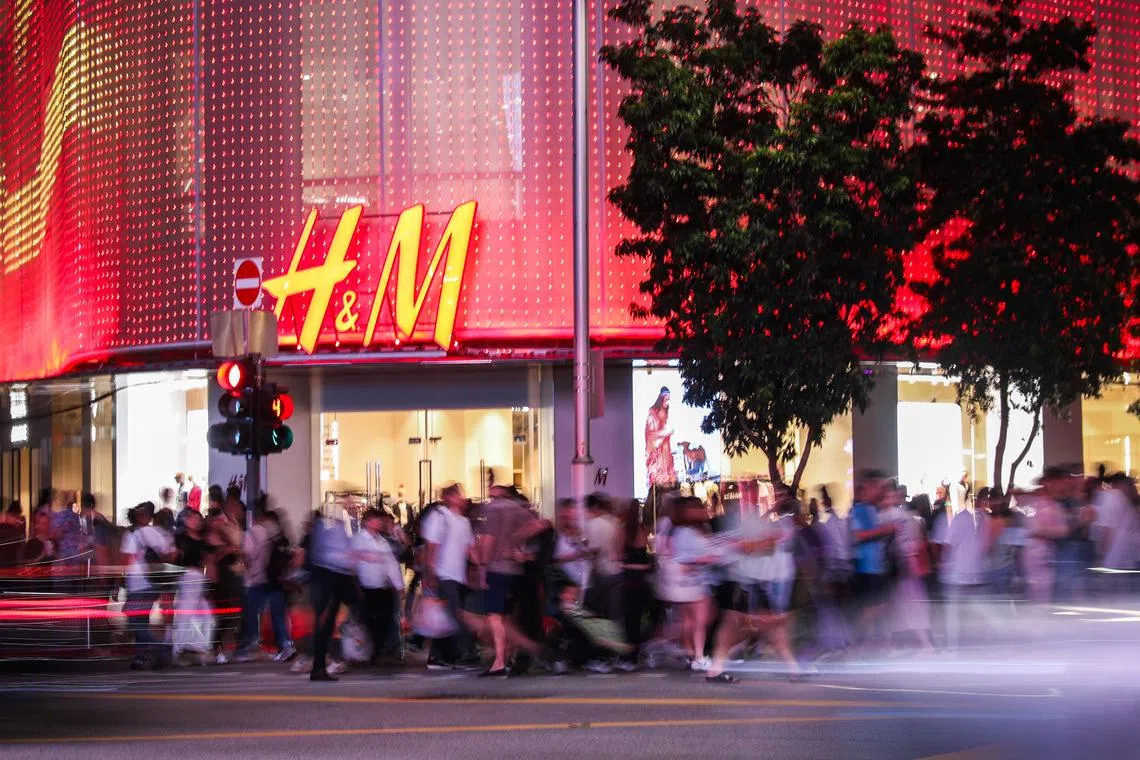
[SINGAPORE] As the government ramps up efforts to rejuvenate Orchard Road as a lifestyle and tourism destination, some industry watchers believe more residential and office developments could help create a more vibrant precinct.
Others, however, argue that the answer lies elsewhere – in more green spaces and in preserving diverse and “informal” uses that add character to a largely planned stretch.
Fresh initiatives aim to add momentum to renewal, including plans for pop-up spaces, hotels and a major new mixed-use project at Tanglin Road integrating retail, office, wellness and cultural uses.
While these could improve footfall and spending, Knight Frank Singapore head of research Leonard Tay thinks that they are “not enough to bring about a transformational increase in shopper traffic that will elevate Singapore’s premier shopping belt into a new phase of growth activity”.
“Footfall is event-driven, increasing during Christmas light-ups, new mall or shop openings, and viral promotions. Orchard Road has become a place people go to for special occasions, but less habitually,” he said.
“This does not make for a fertile base that catalyses growth.”
New retail concepts alone are insufficient to generate stable, year-round footfall as tourists are transient while discretionary local patronage tends to fall on weekends, said CBRE Singapore and South-east Asia head of research Tricia Song.
“It needs to be complemented by structural demand drivers, namely, people who live and work there.”
Marc Boey, executive director of property services at Far East Organization, said: “Bringing more homes, offices and office workers into and around Orchard Road will be key to making the precinct more vibrant and sustainable, rather than relying solely on tourists.”
“The way of thinking that Orchard Road should be heavily skewed towards retail and F&B is becoming dinosauric.”
Alan Cheong, executive director of research and consultancy at Savills Singapore
Chua Yang Liang, JLL South-east Asia head of research and consultancy, agreed, saying a sustained office and residential population would create baseline demand for F&B, services and convenience retail.
Citing data from the Urban Redevelopment Authority (URA), Knight Frank’s Tay noted that the precinct has 3.3 million square feet (sq ft) of office stock, a fraction of the roughly 32 million sq ft of Grade A office space in the Central Business District (CBD).
Overall vacancy of Orchard Road office space was 7.2 per cent in the first quarter of 2026, according to Tay.
Alan Cheong, executive director of research and consultancy at Savills Singapore, said: “The way of thinking that Orchard Road should be heavily skewed towards retail and F&B is becoming dinosauric.”
He added: “Having more office workers in the district would go a long way for F&B operators to increase breakfast, lunch, tea break and dinner revenues on weekdays instead of seeing a concentration of income on weekends.”
Moreover, Orchard Road is “more likely to be accepted by multinational companies over regional centres”, he said.
Still, CBRE’s Song cautioned that injecting more office space into the area “requires careful curation and zoning discipline”.
“We need to maintain critical mass of retail frontage at street level, avoid dilution into a generic mixed-use commercial strip, and curate tenant mix to reinforce positioning.”
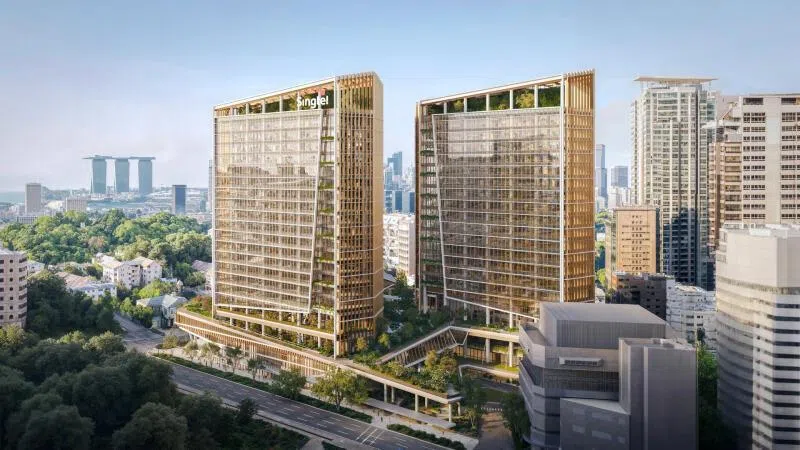
A big boost to supply in the area is slated for completion in 2028, with the redevelopment of Singtel’s Comcentre headquarters into One Comcentre.
This will add about 800,000 sq ft of office space, making it the first major Grade A office development in Orchard Road since 9 Penang Road was completed in 2019, said Song.
Other projects in the pipeline include the Tanglin Shopping Centre redevelopment that will come onstream in 2028, and an integrated revamp of Forum, voco Orchard hotel and HPL House.
Since Hotel Properties Ltd obtained provisional permission in 2023 to rebuild the sites into a massive mixed-use project with a hotel, residential towers as well as retail and office space, little news has emerged on the progress of the plans.
The company is said to be looking to sell majority stakes in the project.
In the Orchard fringe, the redevelopment of Peace Centre and Peace Mansion into One Sophia is expected to be completed in 2029. The project combines residential and commercial components, including a 13-storey office block with 122 strata-titled office units.
While having more office space could make Orchard Road more vibrant, real estate consultancy Cistri’s regional director Jack Backen reckons that “URA’s decentralisation agenda makes it harder for the government to support this”.
More homes in the pipeline
Notably, URA’s Master Plan 2025 paves a path for whole new neighbourhoods near Orchard Road.
The Newton area is earmarked for an “urban village”, with 5,000 private homes planned for the 26-hectare precinct comprising Newton Circus, Scotts Road and Monk’s Hill.
Another 1,000 new homes are envisioned along Paterson Road.
Two prime plots of land have been released at Orchard Boulevard in the heart of Orchard Road. The first parcel, sold in 2024, is being developed into the 301-unit UpperHouse. A second Orchard Boulevard site which can yield 110 new homes is expected to be offered in August.
JLL’s Chua said that larger residential populations could help create neighbourhood-style offerings that become attractions in their own right.
“These very residential precincts could... drive demand for more interesting trades that themselves serve as additional points of interest for tourists,” he said, pointing to districts such as Tiong Bahru and Joo Chiat, which have become popular with visitors seeking distinctive experiences.
But Knight Frank’s Tay cautioned that injecting more residents and office workers “is not the silver bullet that transforms Orchard Road into a 24/7 precinct”.
“Singapore’s urban framework is highly distributed, where people commute efficiently and leave just as efficiently. The cost structure of Orchard also means that many everyday services that sustain neighbourhood life will tend to be priced higher,” he said.
Introducing homes and offices to create a critical mass of residents and workers has become a common planning approach across Singapore, he added, pointing to efforts to develop Jurong East as a decentralised employment centre and plans to bring more housing into business districts such as one-north and the CBD.
“Painting Orchard Road with the same urban planning brush could result in Orchard Road looking similar to everywhere else on the island, with the shopping belt’s core identity diluted.”
More green spaces
Others believe that more green spaces are needed.
Stamford Land’s senior vice-president of special projects Derek Goh argued that the rezoning of land in the Paterson area was a missed opportunity to create a public park of meaningful size in the centre of the Orchard Road strip.
The Paterson area has been earmarked for about 1,000 new private homes, alongside a mixed-use hub with retail and office space, as well as public spaces. The government is also studying plans for a park in the area.
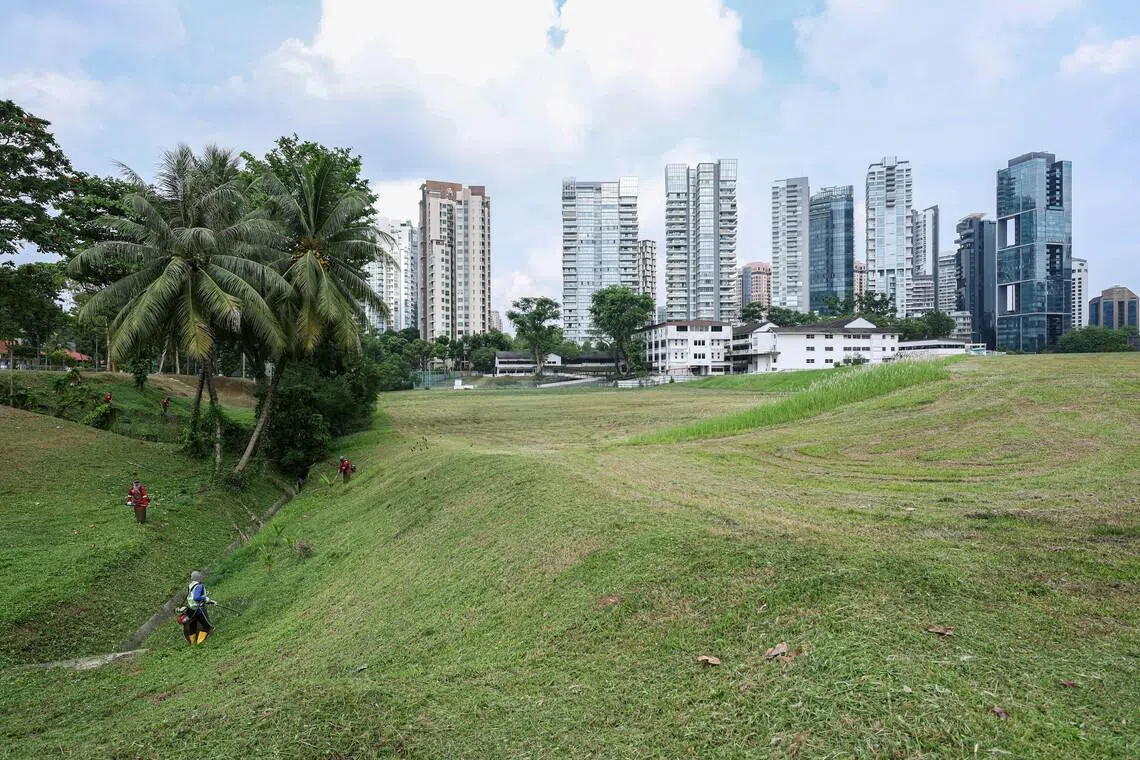
Goh said: “Paterson is uniquely positioned within Orchard’s core activity belt, where footfall is highest and where a central green space would have the greatest impact.
“This is a rare opportunity. Once these plots are built up, the chance to create meaningful green space in central Orchard will be permanently lost.”
Singapore “needs a bold idea”, he added, “beyond just adding more commercial space and some pocket parks”.
The government plans to pedestrianise a 500 m stretch from Buyong Road to Handy Road, expanding Istana Park to three times its current size.
Goh believes a park at Paterson Road would be a more practical option as the land is already vacant and sits within Orchard Road’s core activity belt.
“I’m not saying don’t build any homes at all. I’m just saying set aside a considerable portion for a big park. Maybe not the scale of the Botanic Gardens, but something close to it, like Hyde Park in London, for instance – that’s a good example.”
Hyde Park, a long stretch of green that has become a tourist destination in itself, runs parallel to London’s main shopping belt, Oxford Street.
Preserving diversity
What will be key to the discussion is how – and why – one mode of use is favoured over another for the limited 2.2 km run of prime commercial real estate in the centre of Singapore.
In the words of one real estate player: “It always depends on whether it is incremental or if it replaces something else. Always about trade-offs.”
Another industry observer noted that the precinct has become increasingly “formal” and planned over the years, with older and informal spaces gradually replaced by large, professionally managed malls.
In other major global capitals, side streets, smaller buildings, public parks and heritage buildings complement the main shopping belt and create a richer urban experience.
Allowing some older malls to evolve organically, rather than pushing for them to be torn down and redeveloped, could help Orchard Road retain that diversity, he added.
Sing Tien Foo, provost’s chair professor at the National University of Singapore Business School’s department of real estate, said: “Strata malls attract smaller retailers (which) may not have the same resources as the bigger chain stores, and they could still find space to set up their businesses at cheaper rents and reach the larger shopping crowd in Orchard Road.”
Tay also noted that strata commercial properties can accommodate a broad range of uses.
“Older but less occupationally costly buildings at Orchard Road offer space that is economically inefficient in the short term, such as student workspaces, informal performance zones, repair shops and hobbyist clubs,” he said.
“These are not footfall drivers in the profit-making sense, but they create repeat users. They anchor daily presence.”
Decoding Asia newsletter: your guide to navigating Asia in a new global order. Sign up here to get Decoding Asia newsletter. Delivered to your inbox. Free.
Copyright SPH Media. All rights reserved.
TRENDING NOW

Once staunchly pro-China, Malaysian Chinese businesses are now distancing themselves from Beijing

Looking beyond looming CEO succession, should UOB potentially pursue a transformative merger?

Could stablecoins be the future of money?

Grab CEO’s wife Chloe Tong on life with Anthony Tan and finding her purpose

