Singapore real estate deal wave set to subside after record 2026 on higher borrowing costs
Major transactions face longer negotiations and pricing gaps, even as investor appetite remains healthy

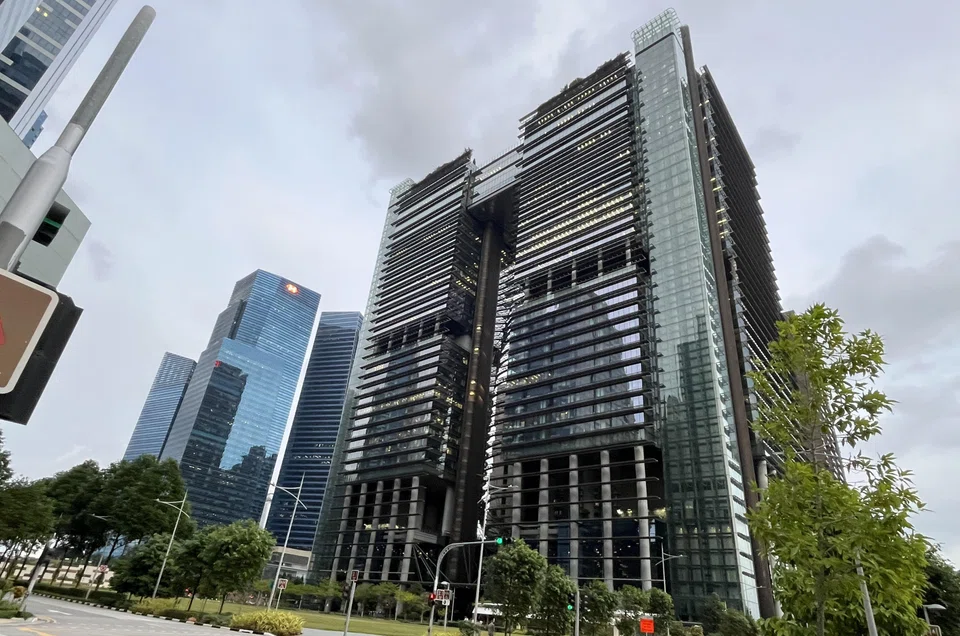
[SINGAPORE] Three months ago, real estate circles swirled with anticipation of a deal for prime downtown complex Marina One's commercial component, said to be destined for Hongkong Land’s new private fund.
The S$5.7 billion price tag would have made it the biggest single-asset transaction done in Singapore. It was widely expected to close in August, after Hongkong Land was shortlisted in the months after Marina One was first marketed in January.
Early in October, talk started circulating that the deal was off.
The mega-deal could have stalled simply because of the sheer size of the ticket, or specific terms tied to the acquisition, or issues raising fresh capital for funding.
But the backdown comes against a backdrop of growing caution and expectations of higher financing costs as interest rates move into a fresh cycle of rate hikes.
Jeremy Lake, Savills Singapore managing director of investment sales and capital markets, said: “The spread between net yields and borrowing costs has narrowed again and resulted in buyers re-evaluating their pricing assumptions for some deals, particularly for offices which have the lowest net yields and thinnest positive carry margin.”

Investors are also weighing geopolitical uncertainty, the impact of artificial intelligence and US politics following the midterm elections, he added.
The US Federal Reserve raised its benchmark interest rate by 25 basis points in September to a target range of 3.75 to 4 per cent, its first increase since 2023, before holding rates steady in October.
Besides Marina One, other major office assets now on the market include Lazada One, 30 Raffles Place, Bugis Junction Towers, Paya Lebar Green and One Raffles Place.

Lake said some deals have been delayed as buyers reassess pricing amid higher borrowing costs, while others have attracted “no bids or low bids”.
Singapore dealmakers came out of a strong first half into a slower third quarter, but are still headed for a record year in 2026.
“Relatively generous yield spreads have made the city-state a magnet for core capital,” MSCI said in a report released on Tuesday (Nov 10). Major deals closed include CapitaLand Integrated Commercial Trust’s S$3.9 billion purchase of Paragon and Hongkong Land’s acquisition of Wheelock Place for S$1.1 billion.
But with borrowing costs now on the rise, investors are starting to hit pause on deals, industry players said.
Savills Singapore expects total investment sales, spanning commercial real estate as well as residential deals and government land sales (GLS), to moderate to between S$35 billion and S$45 billion next year, below its projected tally of about S$55 billion for 2026.
Alan Cheong, executive director of research and consultancy at Savills Singapore, said the prospect of further rate hikes make a repeat of 2026’s record sales unlikely.
Nevertheless, volume should ring in close to the upper end of levels recorded between 2022 and 2024, supported by transactions initiated this year that could be completed in 2027, he added.
Record year, but slowing momentum
The outlook follows an exceptionally strong year for Singapore. Stripping out GLS, investment sales totalled between S$28.8 billion and S$34 billion in the first nine months of 2026, based on estimates from various consultancies.
But momentum slowed in Q3, with investment sales falling to between S$3.8 billion and S$6.9 billion.
Lake said the slowdown was partly due to rising borrowing costs and partly as sales declined from a high base in H1.
Wong Xian Yang, head of research for Singapore and South-east Asia at Cushman & Wakefield (C&W), did not see the quarterly decline as a sign of a sharp deterioration in investor sentiment.
“While some investors remain cautious amid uncertainty over the interest rate outlook and broader macroeconomic conditions, most investors are still actively evaluating opportunities that are supported by clear income visibility or positive long-term growth prospects,” he said.
Higher borrowing costs complicate deals
The pool of potential buyers for some large office assets also remains limited, with many investors favouring those in the industrial, retail, living, data centre and life sciences sectors.
Terry Wong, head of capital markets and investment services at Colliers Singapore, pointed out that a pricing gap has also emerged, with sellers referencing strong 2026 market conditions while buyers factor in higher financing costs and required returns.
Financing costs in Singapore remain relatively attractive, C&W’s Wong noted.
As at Nov 5, the three-month compounded Singapore Overnight Rate Average stood at 1.3157 per cent, broadly unchanged from a year earlier and well below the roughly 3.3 per cent recorded in November 2024, he said.
Similarly, Leonard Tay, head of research at Knight Frank Singapore, said: “At the moment, borrowing costs in Singapore remain competitive compared with other markets in the region and around the world. There is still positive carry in many of the investible assets available in Singapore, with investors continuing to look for opportunities.”
C&W’s Wong added: “However, should borrowing costs continue to rise and the interest rate outlook become more uncertain, similar to the environment experienced in 2023 and 2024, financing costs could become a more significant concern for investors in 2027.”
Tay expects a quieter 2027, as much of the available capital would already have been deployed this year.
Major deals remain in the pipeline
Lake said private-sector investment activity could lift in H1 2027 if major office deals involving Marina One, One Raffles Place and Frasers Tower are completed.
A number of large industrial transactions are also in the pipeline, while GLS are expected to remain strong as developers seek to replenish their land banks, he added.
Colliers’ Wong remains cautiously optimistic about several large transactions currently undergoing due diligence.
“There is some urgency among buyers and sellers to conclude transactions before the year end, particularly those already at advanced stages of negotiation,” he said.
But he stressed that buyers were more concerned about their entry prices than interest rates alone, with the key consideration being whether parties could agree on pricing under current financing conditions.
C&W’s Wong said investors were unlikely to rush acquisitions simply to secure marginally lower borrowing costs, given the extensive due diligence involved.
A more selective investment market
Investment returns in a higher-for-longer interest rate environment are likely to be underpinned by rental growth, occupancy improvements and optimisation of operating costs, rather than capitalisation rate compression, said C&W’s Wong.
“Should borrowing costs rise significantly, assets would need to offer higher yields or demonstrate stronger rental growth potential to offset the increase in financing costs and remain attractive to investors,” he added.
CBD Grade A offices’ relatively low yields of around 3 to 4 per cent could make them more sensitive to significant increases in financing costs, even with returns supported by constrained supply and resilient occupier demand, he noted.
Retail and industrial properties, meanwhile, could prove relatively resilient to moderate increases in borrowing costs.
Savills said in its Q3 report that retail assets on 99-year leasehold tenures typically offer net yields of 4 to 5 per cent, while industrial properties with remaining lease tenures of 20 to 25 years can generate yields of 6 to 6.5 per cent.
Colliers expects hospitality assets, serviced residences, co-living properties and logistics facilities to remain attractive, alongside redevelopment and repositioning opportunities.
“We see 2027 as a transition from a record volume market to one in which asset selection, entry price and the ability to create income growth will matter considerably more,” said Colliers’ Wong.
Decoding Asia newsletter: your guide to navigating Asia in a new global order. Sign up here to get Decoding Asia newsletter. Delivered to your inbox. Free.
Copyright SPH Media. All rights reserved.