Asean social security members meet in Singapore to discuss ageing, digitalisation and new work trends
By 2050, all Asean countries are projected to be ageing, aged or super-aged societies
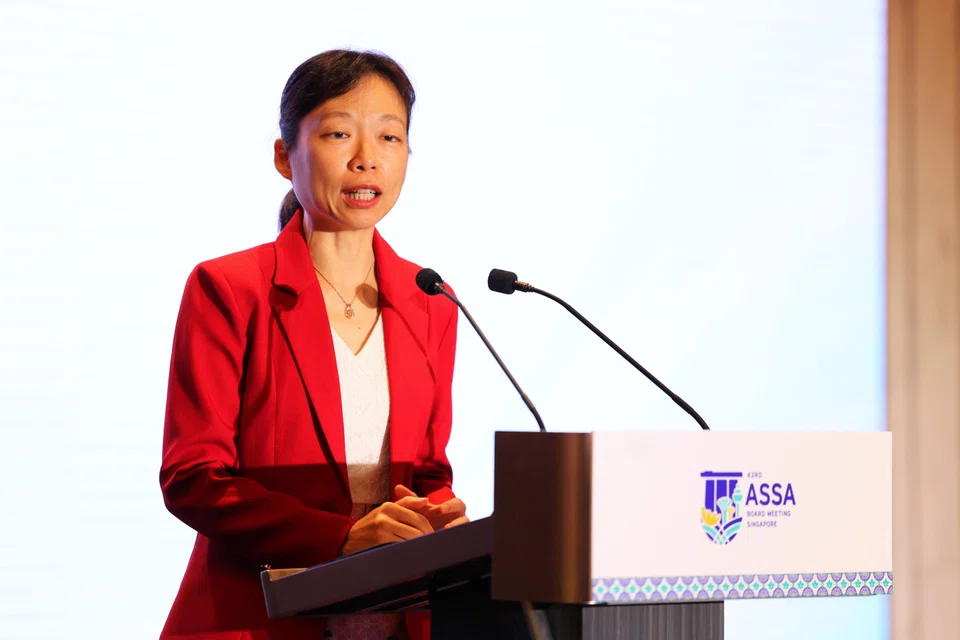
[SINGAPORE] Singapore takes the helm of the Asean Social Security Association (ASSA) for 2026/2027 from Brunei, at a time when the region is dealing with an ageing population, the changing nature of work and digitalisation.
The handover took place at the 43rd ASSA Conference and Meeting, which is being held at Orchard Hotel Singapore from Nov 17 to 19.
About 90 delegates from 21 social security organisations across Asean, as well as regional and international experts, are attending the three-day conference. They will exchange experiences and explore practical ways to strengthen social safety nets for their populations.
Jasmin Lau, Acting Minister for Manpower and Senior Minister of State for Digital Development and Information, was guest of honour at the event.
In her opening speech, she noted that the Asean countries are at “different stages of demographic transition”.
Some still have young populations while others – such as Singapore, with 21.4% of its citizens aged 65 or older – have already crossed the United Nations’ 21 per cent threshold for a super-aged society.

She added that by 2050, all Asean countries are projected to be ageing, aged or super-aged societies, with around one in six people in the region aged 65 or older.
“Longer lives are something for us all to celebrate. But because none of us knows whether we will live to 75 or 95, or whether we will need years of care at the end – that uncertainty is the part that is too much for us to bear, and that is why we pool risk,” she said.
CPF LIFE, Singapore’s national longevity insurance annuity scheme, shares the risks across members, so everyone receives a steady monthly payout for life.


To ensure these payouts keep pace with inflation, rising living standards and longer lifespans, the Government has been increasing retirement sums by about 3.5 per cent annually from 2023 to 2027.
The full retirement sum (FRS) will rise from S$220,400 for those turning 55 in 2026 to S$228,200 in 2027.
The FRS for 2028 and beyond is not yet available as the Government is currently reviewing the figures, Lau said.
The nature of work is also evolving as the rise of platform jobs and other non-traditional work arrangements creates new opportunities, while making it more challenging for workers to build up retirement savings.
Before January 2025, platform workers contributed only to MediSave for healthcare needs, and lacked mandatory work injury compensation and collective representation.
The Government introduced the Platform Workers Act in January 2025 to close these gaps.
Under the Act, those born on or after January 1995, or older workers who opt in, make CPF contributions in increments, with their employers having to do so as well.
Their contribution rates will reach standard employee-employer rates of 20 per cent and 17 per cent by 2029.
This Platform Workers project has been nominated for the Insurance Coverage Recognition Award.
During the conference, Singapore will share its learnings in strengthening retirement and housing adequacy for platform workers.
Lastly, Lau touched on the digitalisation trend. She said that while technology can speed up transactions – for example, eligible CPF members can now withdraw their CPF savings online almost instantaneously – greater digital convenience also brings more risks.
Member organisations will discuss how they strengthen digital safeguards without making the services too difficult for people to use.
“Digital-first must never mean digital-only. Not everyone is equally comfortable with technology, particularly our seniors,” Lau added.
As Asean countries navigate these triple challenges, she sees value in learning from one another.
There are hardly perfect solutions to complex problems and Singapore does not claim to have all the answers, she said, adding that the Republic can learn from some of the solutions that Asean peers are trying out.
Ultimately, it is through mutual learning and sharing that Asean can build a resilient social security system that is here to stay.
“The real test of a social security system is not whether it works today. It is whether a 25-year-old starting work today can trust that it will work for him when he turns 85,” Lau said.
“That is what all of us are building together.” THE STRAITS TIMES
Decoding Asia newsletter: your guide to navigating Asia in a new global order. Sign up here to get Decoding Asia newsletter. Delivered to your inbox. Free.
Share with us your feedback on BT's products and services