

The next chapter for Singapore equities
All local stock sectors are expected to record positive earnings-per-share growth in the next financial year
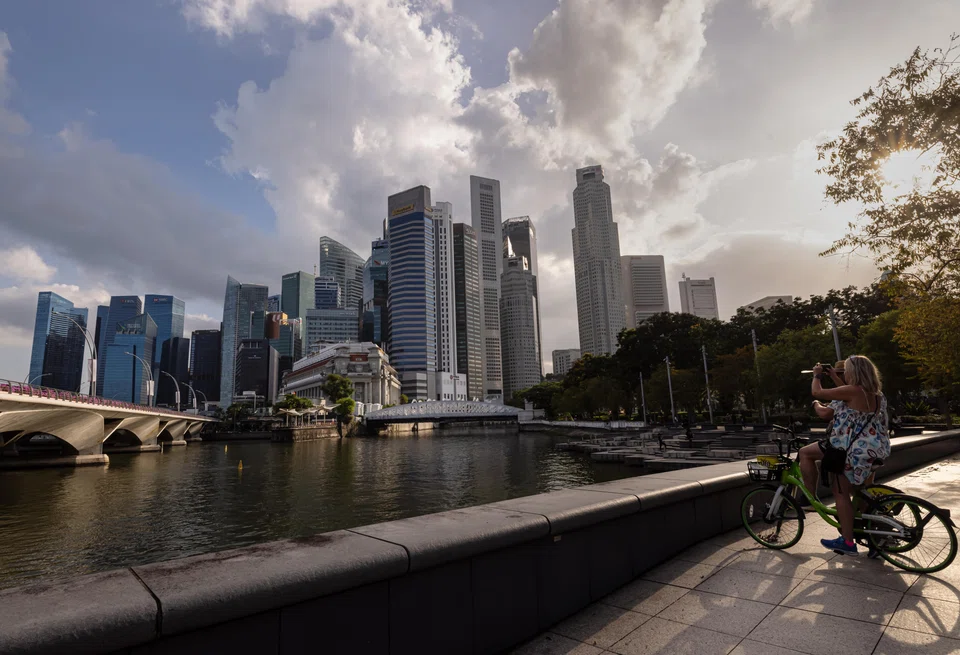
OVER the past five decades, Singapore’s stock market has developed alongside the country’s rise as a global business and financial centre, while The Business Times has helped investors follow the companies, industries and market developments behind that progress.
The paper’s golden jubilee comes at a time when Singapore equities are entering a new phase, supported by stronger economic growth, broader earnings momentum, rising investor participation and measures aimed at strengthening capital formation, liquidity and research coverage.
The timing is significant. Singapore’s 2026 gross domestic product growth forecast has been raised to 5 per cent from 3.5 per cent in June, reflecting stronger expectations for manufacturing, non-oil domestic exports, bank lending, and finance and insurance.
The improvement is also showing up in company earnings. All local stock sectors are currently expected to record positive earnings-per-share growth in the following financial year, with technology, financial services and industrials among the stronger performers, while around 25 listed companies returned to profit in the latest reporting season.
With the Straits Times Index’s (STI) discount to analysts’ weighted target prices now much narrower than the average since end-2021, the market’s next gains will depend less on valuation catch-up and more on earnings, cash flow, capital returns and execution.
The STI tells only part of the story. Investors ultimately commit capital to companies, assessing their earnings, cash flow, balance sheets and ability to create value over time.
As listed companies report results, raise fresh capital, expand operations, pursue acquisitions and return cash to shareholders, clear reporting helps investors separate short-term market moves from longer-term business performance.
That is where BT has remained relevant over the past five decades, following the companies behind the headlines and helping investors understand what is changing and why it matters.
One measure of a market’s relevance is whether companies continue to use it to support their growth. Since 2017, about S$90 billion has been raised through Singapore’s equity market, with secondary fundraisings accounting for about four-fifths of the total.
SEE ALSO








Most are undertaken with a specific purpose, whether to fund acquisitions, increase capacity, enter new markets or support new growth initiatives.
Investors are rarely focused on fundraising alone. They want to understand what management intends to do with the capital and whether those plans can deliver stronger business performance over time.
That places greater importance on investor engagement, company communication and guidance. A fundraising may be completed in a matter of days, but investors often spend months and years assessing how the proceeds are deployed and whether the expected benefits are realised.
As companies provide updates on strategy, execution and performance, investors are better able to judge whether management is delivering on the objectives presented at the time capital was raised.
As more market activity becomes linked to business expansion, acquisitions, capacity investment and corporate transformation, the value of clear reporting and analysis will only increase.
The steady flow of results, disclosures and corporate developments creates a greater need for investors to understand not just what has happened, but also why it matters.
For five decades, BT has helped investors follow the developments shaping Singapore’s listed companies and capital markets. That role remains just as relevant today as investors assess not only what companies have done, but what they intend to do next.
The market itself is also becoming easier to follow.
Research coverage has expanded significantly in recent years, bringing more listed companies into the news and into investor discussion.
More initiations are being published, and more investors are gaining access to detailed analysis on business performance, industry developments and company strategy.
This is particularly relevant for small and mid-cap companies.
Many operate in industries that have benefited from Singapore’s economic development and regional growth, yet often receive less attention than the market’s largest names.
Broader research coverage gives investors more opportunities to study these companies while helping management teams communicate how they are deploying capital, growing earnings and building shareholder value over time.
Together with company disclosures, results announcements and investor engagement, broader research coverage helps investors stay informed and better understand the companies they follow.
BT continues to report on, scrutinise and provide context around these developments.
The changing profile of Singapore’s stock market is also worth noting. Financials remain its largest sector, reflecting the Republic’s position as a regional financial centre and one of the world’s leading wealth management hubs.
The three local banks account for close to 60 per cent of the STI, just over 20 per cent of the FTSE Asean All-Share Index, and continue to provide investors with exposure to regional growth, wealth management and cross-border capital flows. Their scale and profitability reflect decades of economic development, regulatory strength and international connectivity.
As Singapore’s market evolves, investors are also gaining exposure to a broader range of structural themes, including:
- Digitalisation and artificial intelligence;
- Advanced manufacturing;
- Regionalisation;
- Energy transition; and
- The Republic’s continued growth as a financial, wealth management and capital-raising hub.
While the underlying drivers may differ, all five themes are reshaping industries, capital allocation decisions and investment opportunities across our market.
However, themes alone do not create shareholder returns. Investors still need to assess how individual companies convert opportunities into results. In recent years, this has become increasingly apparent through a wider range of corporate actions and strategic initiatives.
Capital formation, capital returns, growth and transformation, asset optimisation, financial optimisation, value unlock, market recognition and corporate restructuring have all contributed to how companies create shareholder value and how investors assess them.
Many of the developments taking place across our market today can be viewed through these lenses.
Whether a company is raising capital to fund expansion, pursuing acquisitions, optimising assets, accelerating earnings growth or returning excess capital to shareholders, investors are increasingly looking beyond simple earnings metrics to understand the broader drivers of value creation.
The first 50 years established BT as a trusted observer of Singapore’s corporate and market development. The next 50 years should provide no shortage of companies, decisions and market developments worth following.
The writer is market strategist at SGX Group
Decoding Asia newsletter: your guide to navigating Asia in a new global order. Sign up here to get Decoding Asia newsletter. Delivered to your inbox. Free.
Share with us your feedback on BT's products and services
TRENDING NOW

GCash parent Mynt rises in market debut after South-east Asia’s top 2026 IPO

In the age of AI, what is a university education for?

Singapore to use ‘every legal and regulatory lever’ against companies linked to haze: Shanmugam
‘IPOs are not the only vehicle’: KKR heads for record exits even as firms stay private for longer

