

The Business Times at 50: Chronicler, convener and partner in Singapore’s economic transformation
As the Republic reinvents itself for the road ahead, BT must follow that story with clarity, curiosity and depth
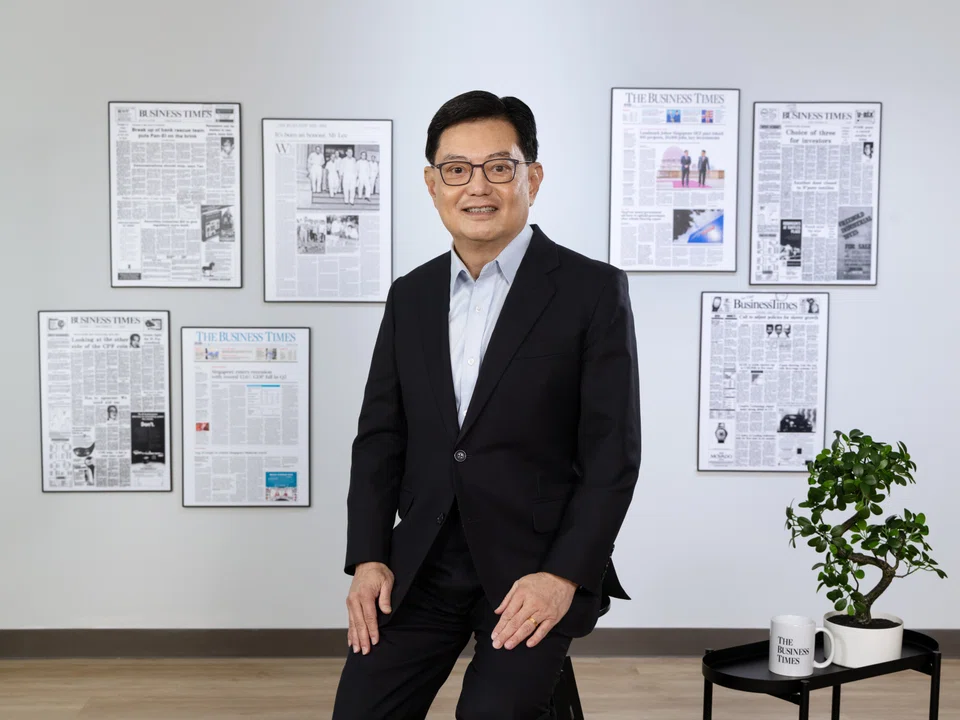
IN 2026, The Business Times marks 50 years as Singapore’s premier financial daily. The first standalone issue of BT appeared on Oct 1, 1976, as a modest publication of about a dozen pages, with an initial daily circulation of around 2,500 copies.
Its stated mission was profound: to bring the business community the news it “wants and needs”. Half a century later, that mission has not only endured – it has also expanded.
BT is no longer merely a newspaper recording market prices, company results and policy announcements. It has become a trusted interpreter of change, a forum for ideas, and a bridge between policymakers, business leaders, investors, entrepreneurs and professionals.
Its stories of companies and markets really tell the story of Singapore itself.
The Singapore of 1976 was a newly independent nation, but the economy was losing its hinterland – “a heart without a body”.
The government was focused on attracting multinational corporations, creating jobs, developing infrastructure and establishing Singapore as a “first-world oasis in a third-world region”, as founding prime minister Lee Kuan Yew put it.
BT’s arrival was timely. Singapore needed a publication that could speak the language of finance, trade and industry to both global and domestic audiences.
Over the next five decades, Singapore’s economy and society were transformed through successive waves of economic restructuring.
The country moved from entrepot trade and basic manufacturing into electronics, petrochemicals, logistics, financial services, private banking, biotechnology, advanced manufacturing, digital services and innovation-led growth.
SEE ALSO








New economic infrastructure – from dedicated industrial estates and Jurong Island to one-north and Marina Bay Financial Centre – was built, along with new digital infrastructure such as 5G.
As Asia developed, Singapore grew an external wing, attracting local and global investors to use the Republic as a base to invest in Asia, and to run regional and even global operations from here.
From an entrepot port, we became a globally connected city – an aviation and maritime hub, a financial centre, and a base from which companies could reach Asia and the world.
BT’s coverage reflected each stage of this journey. In the early decades, it covered the inflow of foreign direct investment, the rise of Jurong, the growth of industrial estates, the development of Changi Airport and the Port of Singapore, and the emergence of the country as a financial centre.
“Policy documents may set direction, but journalism shows how that direction plays out in boardrooms, factories, offices, startups and family businesses.”
The paper helped readers understand why multinationals were coming, what they needed, and how local companies could plug into their supply chains.
Its reports went beyond companies to the ecosystem around them: banks, regulators, professional services, property markets, shipping lines, airlines, technology providers and talent.
As Singapore matured, BT’s role grew more complex. Where it had to cover success, it also had to cover stress. It chronicled major economic events and market shocks, from the Pan-El crisis and the Clob International saga to the fall of Barings Bank, the Asian financial crisis, the dotcom crash, the global financial crisis and the Covid-19 pandemic.
Through such episodes, business journalism becomes more than reporting. It records what went wrong, what lessons were learnt and how institutions responded. It becomes a form of public memory.
Serving stakeholders
For the business community, BT has provided essential information: company earnings, market trends, policy shifts, regulatory changes, leadership moves, mergers and acquisitions, property cycles, interest-rate developments and regional opportunities.
But information alone is not enough. How do we act on the information?
BT’s service to readers is its ability to provide context. A Budget measure is not just a fiscal announcement; it is also a signal of national priorities.
A company’s overseas acquisition is not just a transaction; it reflects the direction of the company as well. A new technology is not just a product; it could also reshape jobs, productivity and competitiveness.
For policymakers, too, BT has played an important role. It has offered a window into business sentiment, investor concerns and industry realities.
Good economic policy requires feedback from the ground. Through interviews, commentaries, editorials, sector reports and forums, BT has helped surface the questions that matter: Are companies investing? Are small and medium-sized enterprises transforming? Are workers being trained quickly enough?
Is regulation keeping pace with innovation? Are Singapore firms ready for regional and global competition?
One of the major themes in Singapore’s economic story has been to make itself relevant and useful to the world.
As the economies in our region were taking off, the Republic embarked on its regionalisation drive, to contribute to and benefit from this growth, and to reposition itself as a base for regional operations for companies based here.
BT has followed this transition closely. Its coverage of the regionalisation drive captured the ambition – and difficulty – of taking Singapore companies into Asean, China, India and beyond.
It looked behind the opportunities of fast-growing markets to show the realities: political risk, currency volatility, unfamiliar regulations, talent challenges, local partnerships and cultural differences.
In doing so, BT helped business readers understand that internationalisation was not a slogan, but a discipline. To go regional and global, firms would have to build capabilities, brands, intellectual property, talent and international networks.
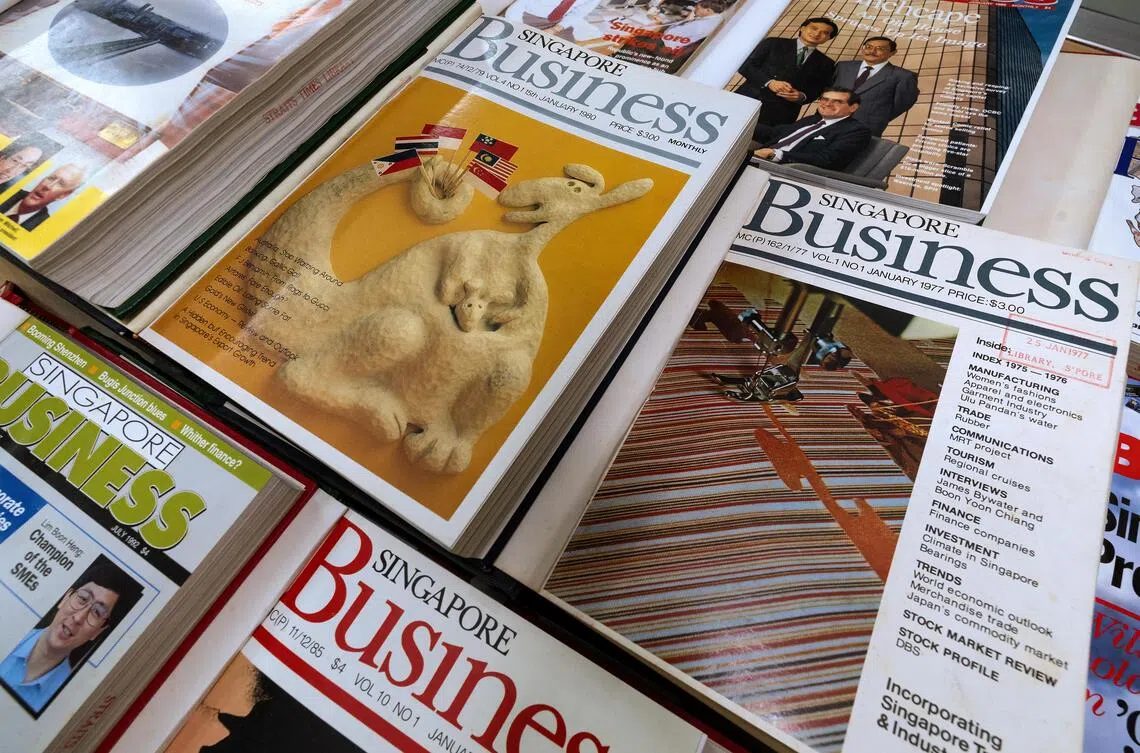
Through the decades, Singapore has not hesitated to conduct comprehensive reviews of its economic strategy in step with world changes, including the Committee on Singapore’s Competitiveness from 1997 to 1998 and the Economic Strategy Review that presented its recommendations in the same year that BT turns 50.
As I chaired the Committee on the Future Economy, convened in 2016 to restructure the Singapore economy for a world of slower labour-force growth, technological disruption and sharper global competition, I can attest to the valuable role that BT plays, telling the stories of how companies big and small, global and domestic, are building skills, innovative capacities and restructuring their operations.
BT’s coverage helped translate national strategy into business relevance.
It examined productivity, digitalisation, SkillsFuture, industry transformation maps, enterprise financing, innovation grants, restructuring pressures and the changing nature of work.
It also gave a voice to companies that were trying to transform – some successfully, some painfully.
I appreciated BT’s valuable contribution in making transformation tangible. Policy documents may set direction, but journalism shows how that direction plays out in boardrooms, factories, offices, startups and family businesses.
During the Covid-19 pandemic, I had to unveil an unprecedented series of five Budgets in one year. I am grateful that BT covered these well, enabling businesses to make the best use of these measures, to overcome one of the worst economic crises in our history.
This collective effort to build resilience will stand Singapore businesses in good stead, to stay strong through good and bad times.
The threshold of another transition
Today, as BT celebrates 50 years, Singapore and the world stand at the threshold of another profound transition, driven by four powerful forces, the four Ds: deglobalisation, digitalisation, decarbonisation and distribution.
- Deglobalisation: While support for globalisation is still strong in many parts of the world, geopolitical fragmentation, “friendshoring” and resilience are reshaping global supply chains and the division of labour.
- Digitalisation: All the technological advances – in digital technology, artificial intelligence, quantum computing, robotics, biotech, communication, space and other new technologies – are reshaping competitiveness in fundamental ways.
- Decarbonisation: Climate change, energy transition, renewables, green technology and sustainability are all areas that are critical to Singapore and the world as we seek to slow the existential threat of global warming.
- Distribution: Inequality, in both income and wealth distribution, has risen sharply. In 2026, the fortune of the world’s first trillionaire exceeded the combined wealth of the poorest 3.8 billion people – almost half of humanity. Globally, the richest 0.1 per cent, about eight million people, get as much annual income as the poorest half of humanity, or some 4.1 billion people. This sharp skew in distribution is causing discontent and the rise of political extremism in many parts of the world.
How Singapore responds as a country, how our economic actors react to these changes, and how our people are prepared to do the necessary to navigate these changes, will determine our success or failure.
Singapore businesses and BT can play a critical role in this story.
First, I am convinced that the next phase of national competitiveness will be driven increasingly by science, technology and innovation.
We must compete on the breadth and depth of our research and our talent pool, on intellectual property and on the speed at which ideas move from laboratory to market.
Singapore is determined to make another successful transition. Under the Research, Innovation and Enterprise 2030 plan, the government has committed S$37 billion over five years from April to advance research, innovation and enterprise.
The plan aims to deepen research capabilities, grow talent and drive innovation in areas of national and economic priority.
This investment matters deeply. Basic research in universities forms the foundation of future industries.
Singapore’s universities have risen in global standing over the decades because the country invested consistently in higher education and research. The next challenge is to connect this research base even more powerfully with enterprise creation, industrial transformation and national needs.
The opportunities are vast: in AI, in robotics and embodied intelligence, in new energy and sustainability.
In healthcare, as Singapore and the world age, innovation must improve prevention, diagnosis, treatment, caregiving and health financing.
Biomedical research, medtech, AI-enabled diagnostics, robotics-assisted care and population health analytics can help Singapore turn a challenge into an area of capability and contribution.
Modern services – financial, legal, accounting, auditing, consulting and advisory – will be transformed in this AI and quantum computing future.
In the coming world of global fragmentation, we must position Singapore as a trusted, neutral global-Asia node of technology, innovation and enterprise.
In particular, the Republic must position itself as a major node in AI – in enabling frontier models developed around the world to find a trusted hub where powerful technologies can be applied to uplift humanity, where ethical issues can be debated and refined.
BT can provide a forum for in-depth discussion on these technology trends, and transform itself from the traditional newspaper to a digital intelligence platform.
Second, connectivity will remain fundamental. Singapore’s traditional strengths in air and sea connectivity must now be matched by digital connectivity: data centres, subsea cables, cybersecurity, cloud infrastructure, trusted data flows and AI-ready compute.
The future global hub will not only move passengers and containers; it will also move data, capital, ideas and digital services securely and efficiently. BT can provide useful coverage and analyses of how new connectivity and networks of ideas and capital are evolving.
Third, drawing lessons from the last few financial crises, Singapore can serve as a key node where the vast pool of savings, especially in Asia, can be best allocated to productive purposes while maintaining financial stability, and where innovations in finance can be piloted and scaled.
The next frontier lies in digital finance, AI-driven risk management, tokenisation, quantum-safe security and eventually quantum computing applications.
These technologies will raise difficult questions about regulation, resilience, ethics and systemic risk. They will require informed public discussion – precisely the kind of discussion that a serious business publication can lead.
The next 50 years
At 50, BT can look back with pride. It has chronicled Singapore’s rise from a young industrialising economy to a sophisticated global hub. It has informed business decisions, explained policy shifts, recorded crises, celebrated enterprise and challenged readers to think beyond the immediate.
Certainly, BT has served all its stakeholders well in the last 50 years. What next?
In the coming years, while Asia’s growth rates will slow, its share of the world economy is likely to continue rising. The region will be the largest arena where the forces of the four Ds – deglobalisation, digitalisation, decarbonisation and distribution – will play out.
The future is exciting for BT.
Readers will need speed, with depth. They will need breaking news, with explanation. They will need data, with judgment.
In an age of AI-generated content, misinformation and information overload, trust will become more valuable, not less.
In this age of contestation, on trade, technology and innovation, where the future will be shaped by technology, trust, talent and the ability to execute, BT can play a key role in supporting Singapore businesses to rise to the challenges ahead.
It can do so by developing stories with clarity, curiosity and depth, by highlighting successes and setbacks, by exploring new frontiers, and by providing critical and creative analysis.
BT’s expansion of attention to the global stage, with a focus on South-east Asia’s complex business environment and diverse profiles, is a good move.
In the next 50 years, BT can expand its coverage and partnership, from Asean to Asia, and position itself as a source of trusted data and analysis – an independent voice – to bring countries and businesses in the region together to forge collaboration, make sound decisions in capital allocation, and develop new capabilities.
It can also partner other media in Singapore, as well as other credible media in the region. It can work with think tanks and academics to develop greater depth in understanding strategic issues as well as immediate opportunities.
Beyond reporting, BT can play a stronger convening role, through conferences, forums and roundtables to bring together policymakers, business leaders, scientists, investors, entrepreneurs and academics to discuss critical issues, build networks and encourage collaboration.
As Singapore, Asia and the world enter a new era of innovation-led transformation, we look forward to BT not only reporting and chronicling the future, but also bringing to the page the best minds around the world, and building and shaping the future – for Singapore, for the region, for the world.
The writer is chairman of the National Research Foundation. He was Singapore’s deputy prime minister between 2019 and 2025, and coordinating minister for economic policies from 2020 to 2024.
Explore 50 years of stories that shaped Singapore’s business landscape at bt.sg/bt50
Decoding Asia newsletter: your guide to navigating Asia in a new global order. Sign up here to get Decoding Asia newsletter. Delivered to your inbox. Free.
Share with us your feedback on BT's products and services






