Bus, train fares to rise by up to 13 cents for adults from Dec 26 due to higher energy prices
This is the highest fare increase so far after fares rose by up to 11 cents in the 2023 fare review exercise
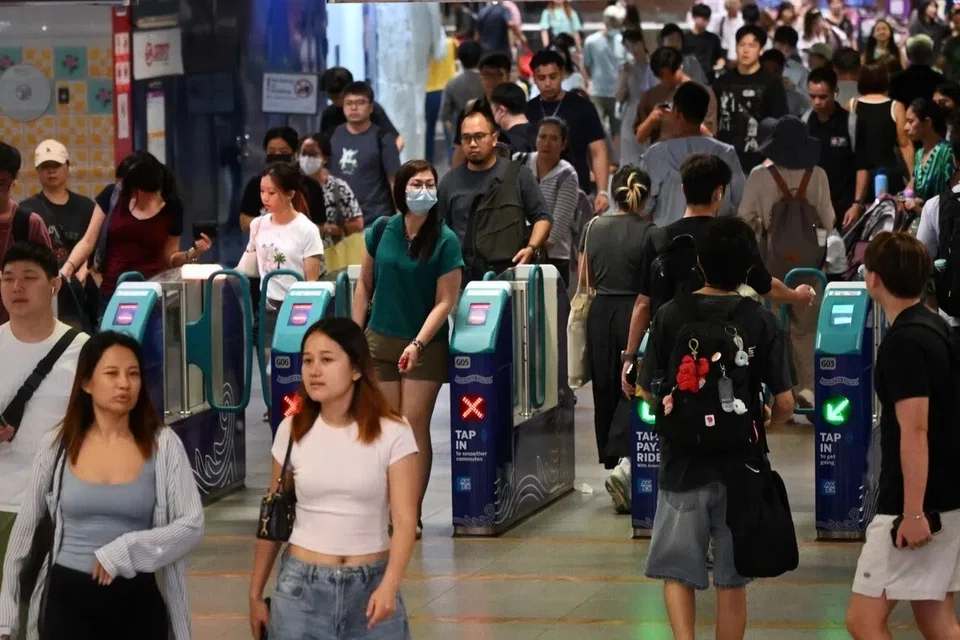
[SINGAPORE] Adult commuters will pay 12 or 13 cents more for bus and train rides from Dec 26, as public transport fares climb by 7 per cent on the back of higher energy costs driven by the Middle East crisis.
Seniors, students, as well as commuters with disabilities who use the Persons with Disabilities card will pay 5 cents more for each journey.
This is the highest fare increase so far, after fares rose by up to 11 cents in the 2023 fare review exercise.
If using cash, adults will pay 20 cents more for each journey, while seniors, students and people with disabilities will pay 10 cents more.
There will be no change in fares for low-wage workers who are charged concession fares under the Workfare Transport Concession scheme, the Public Transport Council (PTC) said on Sept 29.
The price of a monthly travel pass will also remain unchanged, at S$122 for adults and S$55 for seniors and those with disabilities.
At a press briefing on Sept 29, the PTC said it approved a fare increase of 7 per cent this year, which is less than half of the allowable maximum hike of 14.7 per cent.
PTC said: “Over the past five years, the PTC has moderated fare increases to strike a balance between keeping public transport fares affordable for commuters and ensuring the financial sustainability of Singapore’s public transport system amid rising operating and energy costs.
“Commuters have been shielded from the full increase in costs, whenever fares were not fully adjusted by the quantum determined by the fare formula.”

To cushion the impact of the higher fares for low-income families, Public Transport Vouchers will go up in value from S$60 to S$80.
Eligibility criteria for the vouchers has been widened this year, with households with a per capita income of S$2,100 qualifying for the vouchers, instead of the current per capita income of S$1,800.
This works out to 60,000 more households becoming eligible for the vouchers, said the Transport Ministry in a statement.
Adult commuters will pay an additional 12 cents for shorter journeys of up to 3.2km, while any distance further than that will cost an extra 13 cents.
When the fare rise kicks in, an MRT ride from Tanah Merah to Bedok, which is about 2km, will cost S$1.40, up from S$1.28 for an adult commuter who pays by card.
If the adult commuter heads from Tanah Merah to Jurong East – a 26.2km ride – the fare will be S$2.55 instead of the current S$2.42.
Seniors will pay 74 cents for journeys of up to 3.2km, instead of 69 cents currently, while any journey longer than 7.2km will cost S$1.12, up from S$1.07 now.
The 7 per cent fare increase comprises a 5.3 per cent quantum determined by the fare adjustment formula, and 1.7 per cent quantum that the PTC granted out of the 9.4 per cent that was deferred from 2025.
In 2025, the fare formula output was 1.5 per cent, with fares rising by 5 per cent overall.
To cover the 7.7 per cent portion that will be deferred to future fare review exercises, the Government will provide additional fare subsidies amounting to nearly S$200 million in 2027.
This is in addition to the more than S$2 billion it provides in operating subsidies for public transport annually.
The PTC said the largest contributor to the higher fare formula output in its latest review was a “substantial increase in energy prices” between July 2025 and June 2026 due to the Middle East conflict.
Energy prices worldwide have soared since the conflict broke out at the end of February 2026, and a chokehold on the Strait of Hormuz disrupted the flow of a fifth of the world’s oil and natural gas supplies.
PTC chairperson Janet Ang said the year-on-year change in the monthly price of diesel fluctuated drastically during the time period taken into account for the fare review exercise, swinging from -14 per cent to 138 per cent.
“We recognise that it’s a difficult and challenging environment for everyone, but… public transport is a very energy-intensive industry,” she added.
Commuters affected by the fare increases will be given support, she said, but at the same time, there is also a need to look ahead.
“The objective of keeping fares affordable must go hand in hand with sustaining a high-quality transport system that Singaporeans can continue to depend on in the years ahead, and none of those are a walk in the park,” she said.
PTC, in its statement, said the share of monthly household income spent on public transport has remained low over the past ten years.
It said: “The proportion of household income spent on public transport by lower income households has held steady at 2.4 per cent.
“For average-income households, this proportion has also held steady at 1.7 per cent. Relative to other cities, our public transport fares remain one of the lowest in the world.”
PTC added that it will continue to monitor fare affordability closely to ensure that Singapore’s public transport system remains both affordable for commuters and financially sustainable for the long term.
Engineer Luqman Hakim, 40, who lives in Yishun, said he understood how energy costs will have an impact on transport fares but asked if a bigger portion of the fare increase could have been deferred amid higher cost-of-living pressures. THE STRAITS TIMES
Decoding Asia newsletter: your guide to navigating Asia in a new global order. Sign up here to get Decoding Asia newsletter. Delivered to your inbox. Free.
Share with us your feedback on BT's products and services