

Singapore business groups contest US overcapacity claims, flag risks to investment and hiring
America’s proposed tariffs could squeeze manufacturers’ margins and erode their competitiveness

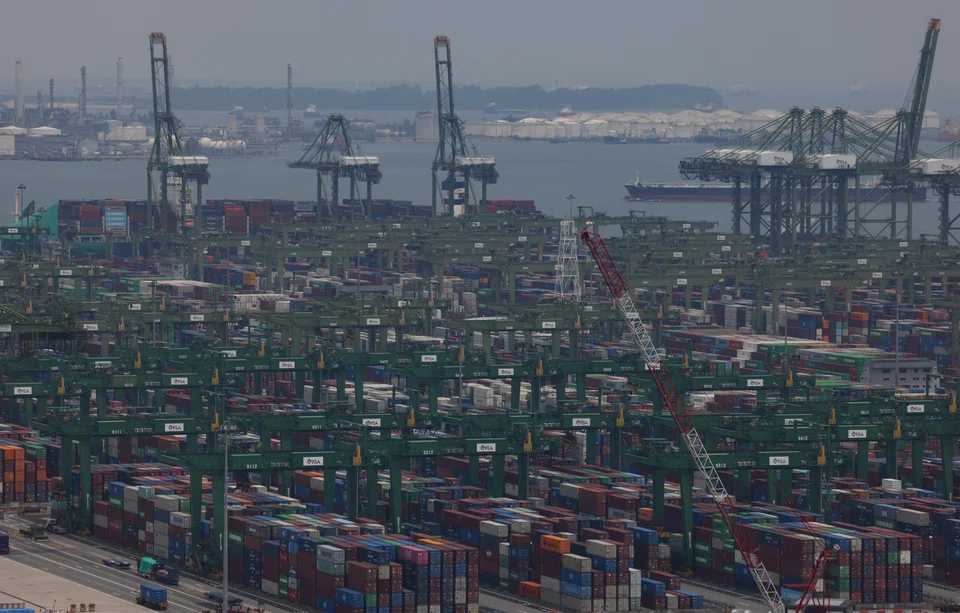
[SINGAPORE] Singapore business groups pushed back on Thursday (Nov 26) against US claims that the Republic’s policies contribute to excess manufacturing capacity.
Proposed US tariffs of up to 20 per cent could both erode manufacturers’ competitiveness and unfairly influence where companies invest and produce, they warned.
The Singapore Business Federation (SBF) said that it was “disappointed” by the content of a report released a day earlier by the Office of the US Trade Representative (USTR).
“We do not believe the findings accurately reflect Singapore’s market-driven economy, our role as a global trading and logistics hub, or the mutually beneficial nature of US-Singapore economic relations,” SBF noted.
It added that the US has consistently run a trade surplus with Singapore, reaching about US$33.3 billion in 2025, including surpluses in sectors cited in the investigation, including semiconductors, electrical equipment and petrochemicals.
SBF pointed out that global demand drives manufacturing investment in Singapore, and rejected the criticism that the Republic’s industrial policies, which focus on raising productivity and competitiveness, sustain “idle or uneconomic capacity”.

The Singapore Semiconductor Industry Association (SSIA) also disputed the finding that Singapore’s support for chipmakers contributed to structural overcapacity.
Growth in manufacturing capacity should not necessarily be equated with structural overcapacity, executive director Ang Wee Seng told The Business Times.
Small, open economy
SBF also warned that a lack of parity across the tariff rates proposed for different economies could affect Singapore firms’ competitiveness and shape investment, production and supply chain decisions.
SEE ALSO
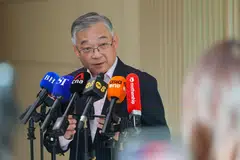

“We recognise that there remains room for further negotiations,” the federation said, adding that it hoped talks would take into account Singapore’s circumstances as a small, open economy.
Singapore Manufacturing Federation (SMF) group CEO Wayne Yap said that the proposed tariffs could “further erode manufacturers’ competitiveness”.
SMF found in a recent poll that more than eight in 10 respondents already expect operating costs to rise in 2027; Yap said any additional tariffs could further squeeze margins, as well as affect investment and hiring.
He flagged the precision engineering components, industrial equipment, medical devices, plastics and processed food industries as vulnerable, with exposure varying by product.
Some 65 per cent of SMF members have already reported direct or indirect exposure to US tariffs and other trade measures, with 59 per cent of these companies reporting lower revenue in 2026 due to tariffs or trade disruptions.
“Manufacturers cannot continue absorbing additional costs without consequences for Singapore’s manufacturing competitiveness,” said Yap.
Though proposed exemptions for chips, chipmaking equipment and certain parts offered SSIA’s Ang some reassurance, he highlighted that the semiconductor industry “operates within a highly interconnected global ecosystem”.
Tariffs affecting downstream products such as electronics, automotive systems, industrial equipment and data centre infrastructure can influence overall semiconductor demand, he noted, while duties on unexempted goods could also raise costs and complicate supply chain planning for smaller equipment, materials and precision engineering suppliers.
Feedback wanted
Ang acknowledged that it is too early to assess the impact on individual companies, as semiconductor investments take years to plan and require substantial capital. The USTR has yet to specify when the proposed tariffs will take effect.
“Prolonged uncertainty could influence the pace and timing of investment, capacity expansion and hiring decisions,” he said.
Companies told BT that their exposure to the US varies.
Mainboard-listed Addvalue Technologies , which develops satellite communications equipment, counts the US as an important market.
CEO Tan Khai Pang observed that the US is also important to the “inherently global” satellite communications and space industry and its “highly specialised technology and supply chains”.
On the other hand, Ray Goh, general manager of mainboard-listed semiconductor and electronics equipment supplier Ellipsiz , expects limited direct impact.
The company distributes equipment and supplies across the Asia-Pacific, including some equipment imported from the US, and does not ship goods there.
The Ministry of Energy, Trade and Industry has encouraged affected companies to share their concerns; SBF, SSIA and SMF confirmed to BT that they will consult businesses to assess exposure, share feedback with the government and offer advice.
“While we cannot control developments in the global trade environment, we can determine how we respond,” said SBF CEO Kok Ping Soon. “Our businesses must continue to remain agile, adapt to changing circumstances and actively seek out new opportunities.”
Decoding Asia newsletter: your guide to navigating Asia in a new global order. Sign up here to get Decoding Asia newsletter. Delivered to your inbox. Free.
Copyright SPH Media. All rights reserved.
TRENDING NOW

Keppel CEO on telco merger: S$34 million StarHub dividend beats M1’s S$3 million contribution

Could Jensen Huang work for Elon Musk? It would be ‘a titanic ego death match’, says biographer

New rules on gross floor area to free up building space for developers

Nvidia halts chip shipments to 4 countries in South-east Asia, including Singapore: FT

