

ESR’s push for AI welcomed by observers, but they say it could put the heat on fresh grads
Market watchers, reacting to the ideas the Economic Strategic Review panels have put forward, say the heavier use of artificial intelligence must be managed

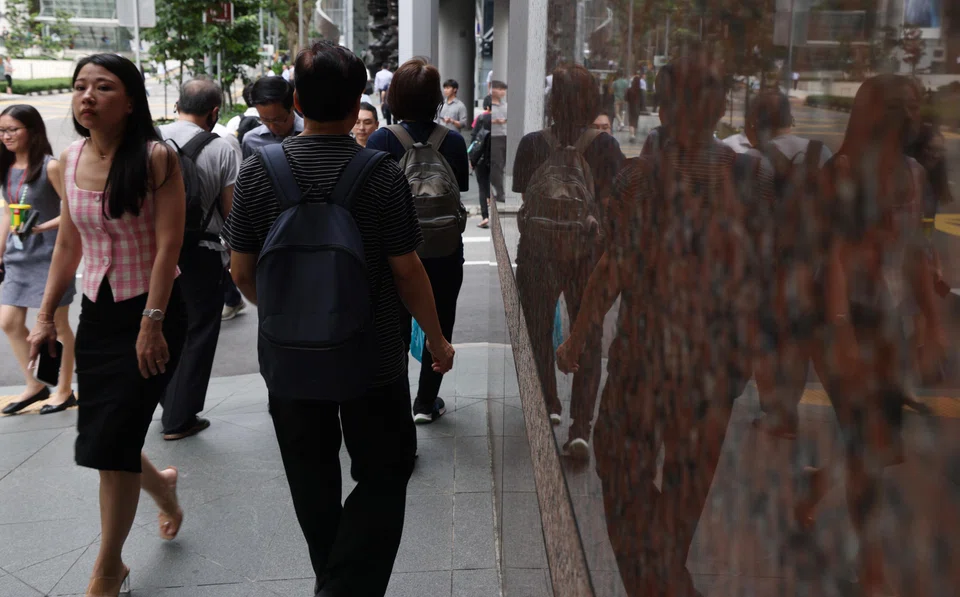
[SINGAPORE] Observers have broadly welcomed recommendations from the Economic Strategy Review’s (ESR) committees, but some cautioned that a wider adoption of artificial intelligence (AI) could weigh on fresh graduates’ job prospects if not carefully managed.
Market watchers told The Business Times that they support Singapore’s push to harness AI to lift productivity, but said that increased automation could curb entry-level hiring in certain sectors, raising questions over whether enough “meaningful” roles will remain for new entrants, as well as workers displaced by restructuring.
On Friday (Jan 30), the ESR’s five committees, first convened last August, issued a mid-term update, publishing seven recommendations to Singapore’s government aimed at helping the Republic achieve 2 to 3 per cent annual growth in the medium to long term.
Chua Han Teng, senior economist at DBS, said: “AI featured prominently within the seven key recommendations of the ESR midterm update.”
In particular, the third recommendation calls for Singapore to establish itself as a leader in AI, and push adoption across the economy to drive overall productivity. Other AI-related proposals called for broadening the range of “good jobs” – such as those in skilled trades and in care and social services – and strengthening career-transition support for workers affected by economic restructuring.
Still, deeper automation and AI deployment could mean fewer workers are needed in some firms, particularly at the entry level.
Selena Ling, chief economist at OCBC, said: “The more sophisticated manufacturing or even advanced services (get), the less manpower is needed, and the manpower that is needed is highly skilled due to the adoption of technology, automation, robotics and now AI.”
She added: “The question is whether there is sufficient and meaningful employment for fresh graduates and existing workers, or (if) there is a rise in structural unemployment. The last thing you want is disenfranchisement, especially among the youth.”
Key labour market indicators to watch include fresh graduate employment, transitional and long-term unemployment, job friction and labour participation and engagement figures, she said.
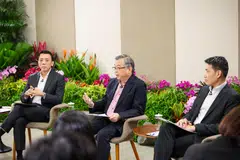

Terence Ho, an adjunct associate professor in practice at the Lee Kuan Yew School of Public Policy, said that business restructuring will “inevitably result in winners and losers”. He noted: “It is therefore important to strengthen safeguards and assurance for those affected, and in particular to support displaced or at-risk workers through reskilling, professional conversion and job placements.”
Ang Yuit, president of the Association of Small and Medium Enterprises (Asme), pointed to anxieties among graduating students about job availability and “whether they can have opportunities when they graduate”. This is in light of the ESR’s call for a national AI workforce strategy to build AI literacy, since there may not be enough roles to absorb a newly trained pipeline of workers.
“Our worry is that it isn’t just about skill transformations and workforce transformations, but that the enterprises also need to transform together,” said Ang. On that front, Asme has been working with the government to encourage more small businesses to digitalise, including through initiatives such as its two-day AI Festival Asia held in mid-January, he added.
‘Massive showcase’
Cybersecurity firm AvePoint’s CEO Jiang Tianyi, who sits on one of the ESR committees, said that most businesses in Singapore already have “some sort of AI deployment”, including the use of tools such as Microsoft’s Copilot and Google’s Gemini. However, he added: “Having said that, the number that actually have rigorous, production-scale AI deployments that (are) actually making very, very concrete business impacts – that is still very few and far in between.”
The “big opportunity” for Singapore, therefore, is for companies to develop AI solutions that enable them to apply the technology more deeply within their specific domains. For the Republic, success is less about which country has the best large-language model, and more about who can diffuse AI use across as many industries as possible to raise global competitiveness, said Dr Jiang. “I think in that regard, Singapore can become a massive showcase for industry-leading AI implementations.”
Decoding Asia newsletter: your guide to navigating Asia in a new global order. Sign up here to get Decoding Asia newsletter. Delivered to your inbox. Free.
Copyright SPH Media. All rights reserved.
TRENDING NOW

Once staunchly pro-China, Malaysian Chinese businesses are now distancing themselves from Beijing

Looking beyond looming CEO succession, should UOB potentially pursue a transformative merger?

Could stablecoins be the future of money?

Grab CEO’s wife Chloe Tong on life with Anthony Tan and finding her purpose

