Most Singapore households expect inflation to rise over next year: survey
But most do not see their economic and financial conditions changing over the next 12 months
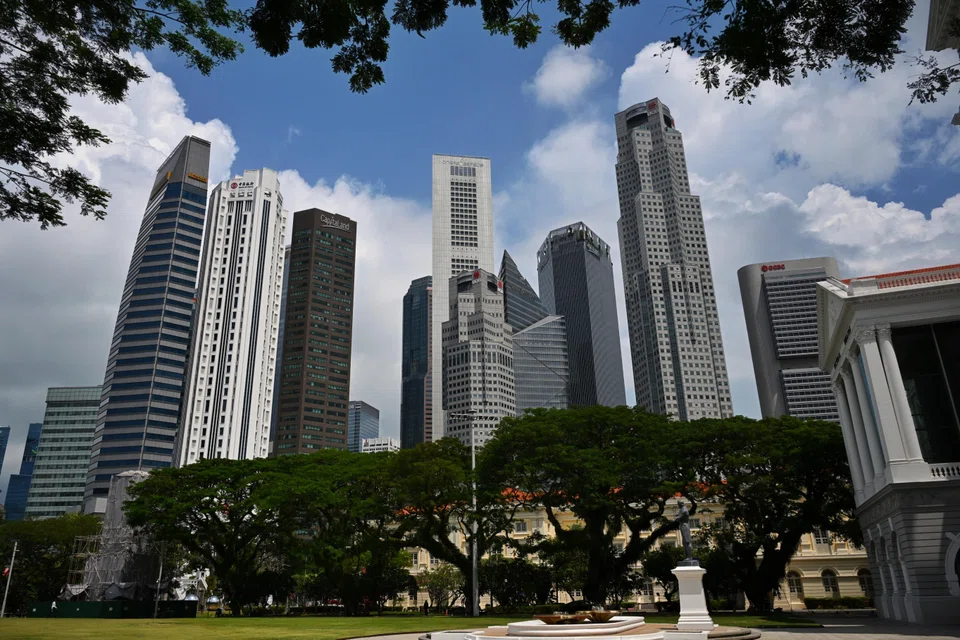
[SINGAPORE] Most Singapore households expect domestic and global economic developments to push up inflation over the next year, a quarterly survey by DBS and Singapore Management University (SMU) has found.
Still, headline inflation expectations for the coming year came in at 3.4 per cent in the latest Singapore Index of Inflation Expectations survey, unchanged from the previous quarter’s reading.
The latest print, released on Tuesday (Oct 20), comes amid geopolitical uncertainties and trade policy concerns.
Of the 510 respondents polled in September, 87.1 per cent expect these developments to raise inflation over the next 12 months, down slightly from 87.7 per cent in June. Only 3.9 per cent expect them to lower inflation, compared with 4.3 per cent previously.
Core inflation expectations, which exclude accommodation and private transportation costs, rose to 3.6 per cent from 3.4 per cent in June.
Among respondents expecting higher inflation, 59 per cent cited geopolitical uncertainties and conflicts involving Hamas and Israel, Ukraine and Russia, and Iran and Israel as the main reason.
This was followed by trade policy uncertainty, including tariffs, at 14.2 per cent, up from 9.4 per cent in June. Supply chain disruptions were cited by 11.3 per cent of respondents.
DBS chief economist Taimur Baig noted that Singapore’s inflation “has been modest this year”, despite price pressures from the Iran war, the artificial intelligence cycle and El Nino.
Concerns about accumulating price shocks are “amply illustrated” in the survey results, he said, though he noted that “respondents do not see matters worsening from how they were a quarter ago”.

He added: “The inflation outlook may be characterised by lingering uncertainties, but high policy credibility continues to keep expectations well-anchored.”
Meanwhile, fewer Singapore households expect their financial situation to worsen over the next year.
The proportion of respondents anticipating a deterioration in their household finances fell to 38.6 per cent in September, from 46 per cent in June.
Overall, respondents expect their household economic and financial conditions to remain unchanged over the next 12 months, even as they anticipate a “slight increase” in expenses.
However, they expect business conditions to worsen slightly over the same period, while conditions for purchasing big-ticket items such as household appliances and furniture are also expected to deteriorate marginally.
Over a five-year horizon, respondents expect business conditions to be stable.
Transport inflation expectations climb
Expectations for price increases varied across spending categories, with transport recording the largest rise.
One-year-ahead transport inflation expectations climbed to 5 per cent in September from 3.8 per cent in June.
Expectations for clothing and footwear inflation rose to 2.7 per cent from 2 per cent, while information and communication inflation expectations increased to 3 per cent from 2.5 per cent.
Expectations were unchanged for food at 3 per cent, healthcare at 4 per cent and education at 3 per cent.
Professor Zhang Hong, who led the survey, noted that different household spending patterns could result in varying cost-of-living pressures.
“Although one-year-ahead headline inflation expectations held at 3.4 per cent, expected transport inflation rose from 3.8 to 5 per cent, while healthcare expectations remained at 4 per cent,” said the professor, who is SMU’s Keppel professor in financial economics and director of the Sim Kee Boon Institute for Financial Economics.
“Different spending patterns can therefore produce different expected pressures on household budgets.”
Longer-term inflation expectations rise
Looking further ahead, five-year headline inflation expectations increased to 4.4 per cent in September from 4.3 per cent in June. Five-year core inflation expectations rose more sharply to 4.2 per cent from 3.8 per cent.
The stronger rise in longer-term core inflation expectations was worth watching, as expectations about future prices could influence how households save and spend, said Prof Zhang.
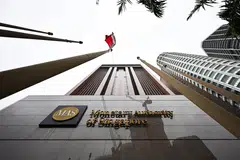
The survey findings come as the Monetary Authority of Singapore (MAS) expects inflation to remain slightly elevated in the near term before easing more noticeably from the middle of 2027.
In its latest monetary policy statement on Oct 14, MAS projected core inflation to average between 1.5 and 2 per cent in 2026, while headline inflation is expected to come in at around 2 per cent.
For 2027, both core and headline inflation are forecast to average between 1.5 and 2.5 per cent.
Decoding Asia newsletter: your guide to navigating Asia in a new global order. Sign up here to get Decoding Asia newsletter. Delivered to your inbox. Free.
Copyright SPH Media. All rights reserved.