

Singapore PMI ticks up to 51.7 on continued AI-related demand
But rising input costs and prolonged supplier lead times are intensifying operational pressures

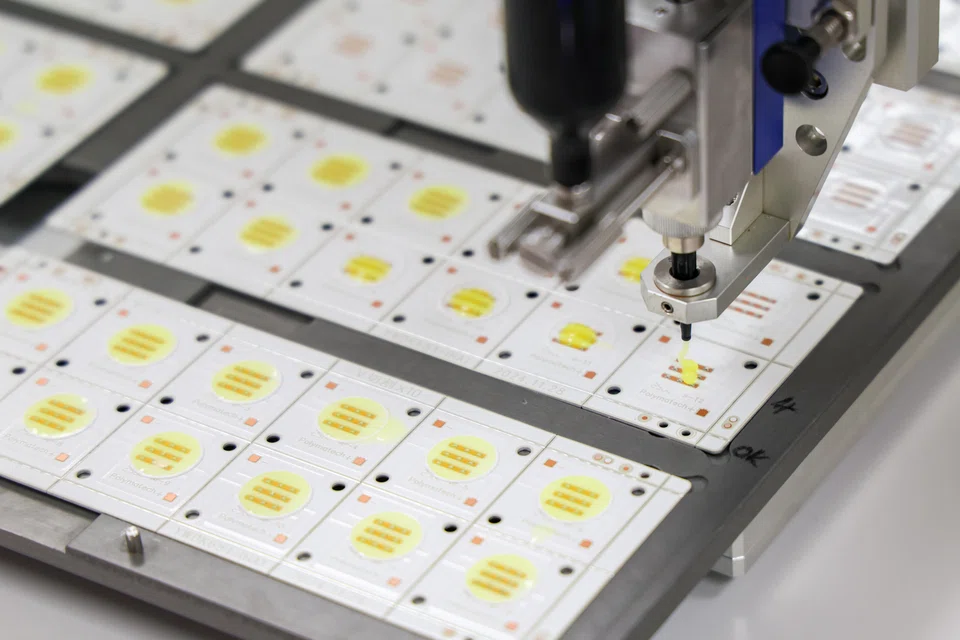
[SINGAPORE] The Republic’s manufacturing activity expanded at a slightly faster pace in September, led by still strong artificial intelligence-related demand, even as operational pressures intensify.
The purchasing managers’ index (PMI) edged up 0.2 point from August to 51.7 last month, marking 14 consecutive months of expansion, data from the Singapore Institute of Purchasing and Materials Management (SIPMM) showed on Friday (Oct 2).
A reading above 50 indicates expansion, while one below 50 indicates a decline.
Within manufacturing, the PMI for the linchpin electronics sector gained 0.3 point to 52.9, indicating a faster pace of expansion and marking a 16th straight month of growth.
DBS senior economist Chua Han Teng noted that the headline and electronics PMIs reached their highest levels since October 2018 and January 2018, respectively.
Stephen Poh, executive director of SIPMM, said that electronics is supporting stronger orders, production and employment.
Chua added that this is corroborated by stronger September PMIs in South Korea and Taiwan, which are major beneficiaries of the global AI boom and key upstream players in the global semiconductor supply chain.
“Singapore has benefited indirectly from close trade linkages to these regional economies, given the city-state’s position as a critical node in the global electronics supply chain,” he pointed out.
He also flagged a widening positive gap between the Republic’s electronics and headline PMIs, which he noted reflects broad-based outperformance across the electronics sub-indices.


The strong demand for Singapore’s electronics has meant that supply has not kept pace despite rising production, Chua said.
The electronics finished goods sub-index fell to 48.7, while new export orders, order backlogs and production remained on an uptrend.
OCBC chief economist Selena Ling said that the finished goods indices were lower for the 11th and fifth consecutive months for the manufacturing and electronics PMI, respectively. She attributed this to supply-side disruptions and higher import costs rather than demand constraints.
SIPMM’s Poh said: “Growing order backlogs and declining finished goods inventories suggest that manufacturers are working to meet demand while managing persistent supply constraints.”
Rising input costs and prolonged supplier lead times are intensifying operational pressures, he added.
Ling said that supplier deliveries have declined for nine straight months for overall manufacturing, and 11 months for electronics, pointing to supply chain disruptions.
The economists agreed that continued improvement in Singapore’s PMI at the end of the third quarter suggests that momentum remains intact.
Chua acknowledged the overall positive sentiment among Singapore’s manufacturers, but warned that unevenness will persist within the sector, with certain clusters, such as chemicals and general manufacturing, grappling with rising energy and input costs as well as supply chain disruptions.
“The constraints faced by petrochemical firms are well known, given the feedstock shortages arising from the persistent closure of the Strait of Hormuz amid the unresolved conflict in the Middle East,” he said.
Regional trends
Manufacturing in Asean lost momentum in September, though it remained in expansionary territory. It dipped to 52.1, from 52.3 in August, reflecting easing output and new order growth.
Maryam Baluch, economist at S&P Global Market Intelligence, said: “Renewed tensions in the Middle East and the resulting rebound in oil prices have prompted manufacturers to temper their expectations for the year ahead.”
Still, manufacturing growth remained solid, helping to revive hiring and raising purchasing activity further. Still, Baluch noted that part of the latter was due to some firms’ efforts to get ahead of potential raw material shortages and subsequent price hikes.
In September, the Philippines posted a PMI of 49.6, declining at the sharpest rate since November 2025. Output, new orders, employment and input buying returned to contraction territory amid weak demand and pressure from international competition.
Malaysia’s PMI fell below the neutral 50 mark to 49.9, ending a three-month sequence of improving operating conditions, but signalling a broadly stable environment at the end of the third quarter.
Thailand’s manufacturing PMI, meanwhile, reached a nine-month high of 54.3 in September.
Indonesia reported the strongest improvement in manufacturing business conditions since February, just prior to the outbreak of the Middle East crisis. The headline PMI rose from August’s 49.8 to 52.4.
Outside of South-east Asia, China’s official PMI rose to 50.1 in September from 49.8 in August.
The RatingDog China General Manufacturing PMI, a private index compiled by S&P Global, similarly saw manufacturing output pick up. At 52.1, the latest PMI reading was the highest in five months.
It was positively influenced by all five sub-indices apart from the stocks of purchases component, which fell slightly.
Elsewhere in Asia, Taiwan’s business conditions improved at the sharpest rate in more than five years, bringing PMI to 56.7; South Korea’s PMI reached 53.9 as growth momentum strengthened.
Meanwhile, Japan’s PMI slid to a six-month low in September, to 54.1.
Decoding Asia newsletter: your guide to navigating Asia in a new global order. Sign up here to get Decoding Asia newsletter. Delivered to your inbox. Free.
Copyright SPH Media. All rights reserved.






